
About Morton Gould
Lived 1913 – 1996 (aged 82). Morton Gould was an American conductor, pianist, composer, film score composer, television presenter and musician.
Morton Gould (December 10, 1913 – February 21, 1996) was an American composer, conductor, arranger, and pianist.
Biography Morton Gould was born in Richmond Hill, New York, United States. radio program, Keep 'Em Rolling, and Major Bowes' Shower of Stars, as well as The Chrysler Hour on CBS, where he reached an audience of millions. In 1942, he composed music for the short film Ring of Steel, directed by Garson Kanin and produced by the Film Unit of the U.S. Office for Emergency Management. In 1943, he was hired by the William H. Weintraub advertising agency as its musical director, believed to be the first position of its kind in the advertising field.
In 1936, Gould married Shirley Uzin, and lived in apartment with her and her sister on Austin Street in Forest Hills, Queens. The marriage ended in divorce in 1943, and Gould moved into an apartment on nearby 78th Avenue with his brother, Walter Gould, adjacent to Flushing Meadows-Corona Park. In the following year, Gould married Shirley Bank. This marriage, too, ended in divorce.
Gould had four children with Shirley Bank. On February 16, 1945, their son Eric was born. Their first daughter, Abby, was born on February 3, 1950,
Gould composed Broadway scores such as Billion Dollar Baby and Arms and the Girl; film music such as Delightfully Dangerous, Cinerama Holiday, and Windjammer; music for television series such as World War One and the miniseries Holocaust; and ballet scores including Interplay, Fall River Legend, and I'm Old Fashioned. With his own orchestra, he recorded many classical standards, including Gershwin's Rhapsody in Blue, on which he also played the piano. Gould arranged and conducted instrumental music from many genres (classical, light classics, "pops", Broadway, jazz standards, and Latin American) on dozens of LP record albums for major record labels (often RCA Victor), usually credited to Morton Gould and his Orchestra. He won a Grammy Award in 1966 for his recording of Charles Ives' first symphony, with the Chicago Symphony Orchestra. In 1983, Gould received the American Symphony Orchestra League's Gold Baton Award. In 1986 he was elected to the American Academy and Institute of Arts and Letters.
For many decades Gould was an active member of ASCAP (American Society of Composers, Authors and Publishers). He sat on its board from 1959 and served as president from 1986 until 1994. In 1994, Gould received the Kennedy Center Honor in recognition of lifetime contributions to American culture.
In 1995, Gould was awarded the Pulitzer Prize for Music for Stringmusic, a composition commissioned by the National Symphony Orchestra in recognition of the final season of director Mstislav Rostropovich.
Gould died on February 21, 1996, in Orlando, Florida,
Work on Broadway Interplay (1945), ballet to the choreography of Jerome Robbins - composer Billion Dollar Baby (1945), musical - composer and orchestrator Arms and the Girl (1950), musical - composer and orchestrator Jerome Robbins' Broadway (1989), revue - featured songwriter for "Billion Dollar Baby"
Work in film and television Delightfully Dangerous (1945), composer and actor Casey, Crime Photographer (1951–1952), composer and music Cinerama Holiday (1955), composer, additional music by Jack Shaindlin and Nathan Van Cleave Windjammer (1958), composer, orchestra conducted by Jack Shaindlin In Search of the Castaways (1962), composer, additional music by Van Cleave World War One (CBS - 1964), composer, CBS Symphony Orchestra conducted by Alfredo Antonini.
Works
Abby Variations (piano) (1964) A Capella (1987) Adeste Fidelis American Ballads, Settings of American Tunes for Orchestra (1976) American Caprice American Salute (1942) American Sing: Settings of Folk Songs (1984) American Symphonette no 2 (1939) American Youth March Americana The Anniversary Rag (piano) (1994) Apple Waltzes (In Tribute to George Balanchine) (7 movements from Audubon) (1969) At the Piano (1964) Audubon (Birds of America) (1969) Ballad for Band (1946) Battle Hymn (1950) Benny's Gig (1962) Big City Blues (1950) Boogie Woogie Etude (for piano and orchestra) (1943) Buckaroo Blues (1954) Burchfield Gallery (1978–1979) Café Rio (1957) Calypso Souvenir (1964) Celebration Strut for Orchestra (1981) 'Cellos (1984) Centennial Symphony, Gala for Band (1983) Cheers! — A Celebration March (1979) Christmas Time (1992) Cinerama Holiday: Suite (1955) Classical Variations on Colonial Themes (1984) Columbia: Broadsides for Orchestra (1967) Come Up From the Valley, Children (1964) Concertette for Viola and Band (1943) Concerto Concertante (for violin and orchestra) (1981–1982) Concerto for Flute (1984) Concerto for Orchestra (1944) Concerto for Piano (1938) Concerto for Viola (1943) Cowboy Rhapsody (1943) Dance Gallery Dance Variations for Two Pianos & Orchestra (1953) Dancing Days (1966) Declaration: Suite (1956) Derivations for Solo Clarinet and Band (1955) Deserted Ballroom (1936) Dialogues (for piano and orchestra) (1958) Diversions: for Tenor Saxophone and Orchestra (1990) Dixie (1949) Dramatic Fanfares from CBS-TV documentary “World War I” (orchestra) (1964) Duo for Flute and Clarinet (1982) Fall River Legend (1947) Family Album: Suite (1951) Fanfare for Freedom (1942) Festive Fanfare (1991) Festive Music (1964) Flares and Declamations (1987) Flourishes and Galop (1983) Folk Suite (1941) Formations (1964) Foster Gallery (1939) Ghost Waltzes (piano) (1991) Global Greetings for Symphonic Band (1994) Guajira (for clarinet and orchestra) (1949) Hail to a First Lady (1991) Hamma'ariv aravim (1947) Harvest (1945) Holiday Music (1947) Holocaust: Suite (from the NBC-TV series) (1978) Home for Christmas A Homespun Overture (1939) Hoofer Suite (for Tap Dancer and Orchestra) (1956) Hosedown: A Firefighter Fable (1995) Housewarming (1982) I'm Old Fashioned, The Astaire Variations (1983) In Search of the Castaways Suite (from the Walt Disney film) (1962) Interplay (American Concertette) (for piano and orchestra) (1945) Inventions (for Four Pianos and Orchestra)(1953) It's A Living Jeeps and Peeps (1944) Jekyll and Hyde Variations (1956) Jericho Jingle Bells (1952) The Jogger and the Dinosaur (for rapper and orchestra) (1992) Latin-American Symphonette (Symphonette No. 4) (1940) Lincoln Legend (1942) Main Street March Main Street Waltz March of The Leathernecks (1946 first performed) Mini-Suite for Band (1968) Minstrel Show (1946) Minute-Plus Waltz/Rag (1990) New China March No Longer Very Clear (for baritone or mezzo-soprano and piano) (1994) Notes of Remembrance (1989) Of Time and the River (1945) Parade (for Percussion) (1956) Patterns (piano) (1984) Philharmonic Waltzes (1948) Pieces of China (piano) (1985) Prelude and Toccata (piano) (1945) Prisms (1962) Quotations (1983) Rag Waltz (piano) (1984) Recovery Music (for Clarinet) (1984) Red Cavalry March Rhythm Gallery (1959) Saint Lawrence Suite for Band (1958) Salutations (1966) Santa Fé Saga (1956) Serenade of Carols (1949) Show Piece for Orchestra (1954) Something To Do—Labor Cantata (1976) Sonata No. 1 (piano) (1930) Sonata No. 2 (piano) (1932) Sonata No. 3 (piano) (1936) A Song of Freedom (1941) Soundings (1969) Spirituals for String Choir and Orchestra (1941) Spirituals for String Orchestra and Harp (1959) StringMusic (1995) Suite (for Cello and Piano) (1981) Suite (for Violin and Piano) (1945) Symphonette No. 3 (Third American Symphonette) Symphonette No. 4 (Latin-American Symphonette) (1933) Symphonic Serenade (1956) Symphony No. 1 (1943) Symphony No. 2 "Symphony on Marching Tunes" (1944) Symphony No. 3 (1946) Symphony No. 4 "West Point" (1952) Symphony of Spirituals (1975) Tap Dance Concerto (1952) Ten for Deborah (piano) (1965) There Are (No) Children Here (1996) Troubadour Music (1969) Tuba Suite (1971) Two for Chorus (1966) Two Pianos (1987) Venice for Double Orchestra and Brass Choirs (1967) Vivaldi Gallery for String Quartet and Divided Orchestra (1968) Windjammer (1958) World War I: Selections (Music for the CBS-TV series) (1964) Yankee Doodle (1945)
Studio albums Morton Gould Showcase and his Orchestra (Columbia Masterworks, 1947) Christmas Music for Orchestra (Columbia Records, 1949) Wagon Wheels (Columbia Masterworks, 1954) Symphonic Serenade (Columbia Records, 1954) The Serious Gershwin (RCA Victor, 1955) --start of RCA period Jungle Drums (1956) Brass and Percussion (1957) Blues in the Night (1957) Copland: Billy the Kid; Rodeo (1957) Kern/Porter Favorites (1958) Coffee Time (1958) Moon, Wind and Stars (1958) Doubling in Brass (1959) Beethoven: Wellington's Victory; Grofé: Grand Canyon Suite (1960) Moonlight Sonata (1960) Carmen for Orchestra (1960) Beyond the Blue Horizon (1961) Sousa Forever! (1961) Love Walked In (1962) Good Night Sweetheart (1963) Finlandia: Music of Sibelius (1963) More Jungle Drums (1964) Latin, Lush and Lovely (1964) Makes the Scene (1967) Morton Gould Twin Pack (1969) A Musical Christmas Tree (1969)
Don’t just read it —
keep it.
Full-length biographies made to live with: read them, listen on the way to work, watch them tonight.
- E-book
- Audio
- Video
Instant download · yours to keep · every purchase keeps this site free
Important facts
People in Morton Gould's life
Named in this biography and alive at the same time




Related people
Same field, nearest in time


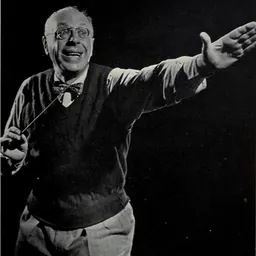
Contemporaries
People whose lives overlapped Morton Gould's


Frequently asked questions
Who was Morton Gould?
American composer, conductor, arranger, and pianist (1913–1996)
When was Morton Gould born?
Morton Gould was born on 10 December 1913 in Richmond Hill.
When did Morton Gould die?
Morton Gould died on 21 February 1996 in Orlando.
What was Morton Gould's occupation?
Morton Gould was a conductor, pianist, composer, film score composer, television presenter and musician.
What nationality was Morton Gould?
Morton Gould was American.
Sources & further reading
Cite this page
APA: Biography.guide. (2026). Morton Gould. https://biography.guide/morton-gould/
MLA: "Morton Gould." Biography.guide, https://biography.guide/morton-gould/.
Chicago: "Morton Gould." Biography.guide. https://biography.guide/morton-gould/.
Data last updated: 2026-09-20 · Spot an error? Report a correction.
Page generated 2026-09-27 05:08 UTC