
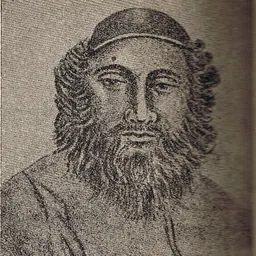
Mordechai Yosef Leiner
Polish rabbi
About Mordechai Yosef Leiner
Lived 1802 – 1854 (aged 51–52). Mordechai Yosef Leiner was a Polish and Russian rebbe.
Mordechai Yosef Leiner of Izbica (מרדכי יוסף ליינר) known as "the Ishbitzer" ( Izhbitze, Izbitse, Ishbitze) (1801-1854 ) was a rabbinic Hasidic thinker and founder of the Izhbitza-Radzyn dynasty of Hasidic Judaism. He is best known for his work Mei Hashiloach.
Biography Mordechai Yosef Leiner was born in Tomashov in 1801. His father Yaakov, who died when he was two, was the son of Mordechai of Sekul, a descendant of Rabbi Saul Wahl. He became a disciple of Simcha Bunim of Peshischa where he joined Rabbi Menachem Mendel of Kotzk and Rabbi Yosef of Yartshev; both were also born in Tomashov. When Menachem Mendel became Rebbe in Kotzk, Leiner became his disciple there; then in 1839 became himself a rebbe in Tomaszów, moving subsequently to Izbica.
His leading disciple was Rabbi Yehuda Leib Eiger (1816-1888 ), grandson of Rabbi Akiva Eiger. His students included Rabbi Zadok HaKohen of Lublin (1823–1900), his son, Rabbi Yaakov Leiner (1828–1878) and his grandson Rabbi Gershon Henoch Leiner of Radzyn.
Leiner is buried in an ohel in the Jewish cemetery in Izbica.
Relationship with the Kotzker Rebbe Leiner was the right-hand man of the Menachem Mendel of Kotzk, by whom he was charged with overseeing the Hasidim. In 1840 Leiner had a public and dramatic falling out with him. On the day after Simchat Torah of that year, Leiner left Kotzk with many of his followers to form his own hasidic circle. The reasons given for the break are varied.
Thought Leiner is best known for his work Mei Hashiloach ("מי השילוח") a popular collection of his teachings on the weekly Torah portion and Jewish holidays, published by his grandson, Rabbi Gershon Leiner, and usually printed in 2 volumes. It has twice been translated into English.
The work was however controversial; attempts were even made to sabotage the press on which it was being printed. In particular Leiner's view regarding Free will was at serious odds with the standard Jewish view.
Here Leiner expressed the doctrine that all events, including human actions, are absolutely under God's control, or as Rabbinic discourse would phrase it, by "hashgacha pratis." Thus, if everything is determined by God, then even sin is done in accordance with God's will. He presents defenses of various Biblical sins, such as Korach's rebellion, Zimri during the Heresy of Peor, and Judah's incident with Tamar.
One of his most cited comments is on Leviticus 21:1 "None shall defile himself for any [dead] person among his kin." Rabbi Leiner read the verse as a warning against the defilement of the soul. The soul is defiled when it is infected with the bitterness and rage that comes with senseless suffering and tragedy. Those who — like the Kohanim— would serve God, are commanded to find the resources to resist the defilements of despair and darkness. Despair is the ultimate denial of God, and surrender to darkness is the ultimate blasphemy.
Influence Leiner's thought influenced (mostly indirectly, through the work of his student, Tzadok Hakohen) the mussar of Rabbi Isaac Hutner and Rabbi Moshe Wolfson. Leiner's thought continued to have influence in the twentieth century, especially on Neo-Hasidism, and the teachings of Rabbi Shlomo Carlebach.
Carlebach is credited with the recent popularization of Rabbi Leiner's teachings. He apparently came across Leiner's work in an old Jewish book store. He is quoted as saying that after initially being perplexed as to the peculiar nature of the teachings he quickly realized that in it lay the "secret for turning Jews on to the deeper meanings of Judaism".
Don’t just read it —
keep it.
Full-length biographies made to live with: read them, listen on the way to work, watch them tonight.
- E-book
- Audio
- Video
Instant download · yours to keep · every purchase keeps this site free
Important facts
People in Mordechai Yosef Leiner's life
Named in this biography and alive at the same time



Related people
Same field, nearest in time


Contemporaries
People whose lives overlapped Mordechai Yosef Leiner's






Frequently asked questions
Who was Mordechai Yosef Leiner?
Polish rabbi
When was Mordechai Yosef Leiner born?
Mordechai Yosef Leiner was born in 1802 in Tomaszów Lubelski.
When did Mordechai Yosef Leiner die?
Mordechai Yosef Leiner died in 1854 in Izbica.
What was Mordechai Yosef Leiner's occupation?
Mordechai Yosef Leiner was a rebbe.
What nationality was Mordechai Yosef Leiner?
Mordechai Yosef Leiner was Polish and Russian.
Sources & further reading
· Wikipedia: Mordechai Yosef Leiner
· DBpedia: Mordechai Yosef Leiner
Cite this page
APA: Biography.guide. (2026). Mordechai Yosef Leiner. https://biography.guide/mordechai-yosef-leiner/
MLA: "Mordechai Yosef Leiner." Biography.guide, https://biography.guide/mordechai-yosef-leiner/.
Chicago: "Mordechai Yosef Leiner." Biography.guide. https://biography.guide/mordechai-yosef-leiner/.
Data last updated: 2026-09-20 · Spot an error? Report a correction.
Page generated 2026-09-27 05:05 UTC