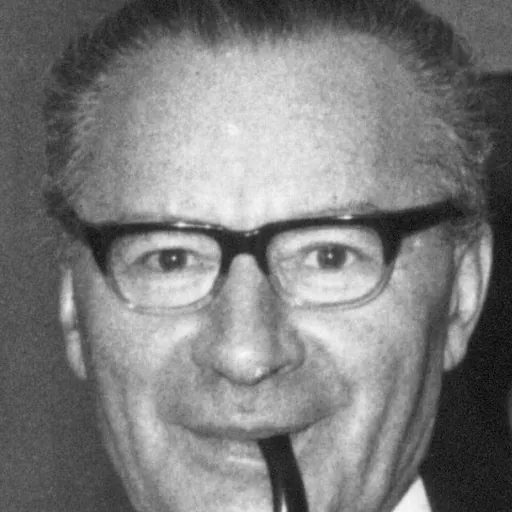
About Mordechai Tsanin
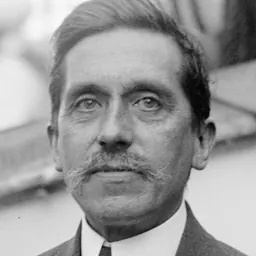
Lived 1906 – 2009 (aged 102). Mordechai Tsanin was an Israeli journalist, lexicographer, newspaper editor, writer and poet.
Mordechai Tsanin (; ; 1 April 1906 – 4 February 2009) was a Yiddish language writer, journalist and lexicographer and a leading figure in post-war Israeli Yiddish culture.
Early life Tsanin was born Mordechai Yeshayahu Cukierman, in the town of Sokołów Podlaski in the Russian Empire (today in Poland). His father's occupation, practiced in nearby Siedlce, was that of writing petitions to the government on behalf of private citizens, while his mother worked in the family home.
As a young man, his politics leaned towards the Bund, a Jewish Socialist party. Of the Zionist enterprise he took a dim view: as he told an interviewer many years later, "Heint and Moment [Jewish newspapers in pre-war Warsaw], were, for me, treif; they were Zionist."
World War 2 At the outbreak of World War II, Tsanin served in the Polish army. With Poland defeated, he returned home to Warsaw. After two months, he fled to Lithuania with his family, from where he saw them off to Mandatory Palestine. He co-founded financial difficulties
Though no longer the owner, and despite sharp political differences with Mapai and its successor, the Labor Party, These include novels, reflections on the condition of the Jewish people, collected essays, and a dictionary. The dictionary is notable as the first Yiddish-Hebrew (and Hebrew-Yiddish) dictionary that reflects modern Hebrew usage. In the words of one The Zionist movement lined up behind Hebrew, and after the establishment of the State of Israel made establishing Hebrew among the many new immigrants a top priority. Yiddish was viewed as a threat to the nation's unity, and the early Israeli state's uncertain commitment to press freedom provided a tool. Thus, in 1949, when Tsanin wished to convert Lezte Neies from a weekly to a daily, he had to apply with the government for permission. Permission was granted to go to a three-day-a week format, but no further. Tsanin evaded this stricture by establishing a second thrice-weekly newspaper, (, ) and arranged to have that and Lezte Neies published on alternate days. The authorities chose to look the other way on that, and finally approved Lezte Neies for daily format in 1957.
It would be wrong to describe the government's attitude to Yiddish, even early on, as uniformly hostile. The Israeli army itself ordered copies of Tsanin's first magazine, , in quantity for the benefit of newly arrived Yiddish-speaking soldiers. However, the army cancelled that subscription after only three months, a decision Tsanin interpreted as ideologically motivated.
Friction between Tsanin and the establishment came to a head in 1964. Lezte Neies was by then, as mentioned above, owned by a subsidiary of Mapai (the governing party at the time and long a leading force in the battle against Yiddish). Though Tsanin, still editor-in-chief, had much to complain about on the language-war front (for example the government's policy of discouraging Yiddish theater ) he consciously toned down his criticism in the interests of keeping his job. Nonetheless, a group of party functionaries felt that Tsanin's fulsome praise of Yiddish and the Eastern European Jewish culture that went with it went too far at suggesting an invidious comparison to the heritage of Jews from North Africa and the Middle East, and for that tried to get Tsanin fired. They found some support from the prime minister, David Ben-Gurion, who said about Tsanin, "I don't read that Lezte Neies paper, but I know its editor was once an anti-Zionist and I have no idea how he wound up in Israel." Ben Gurion's accusation was not implausible in view of Tsanin's own statement (see above) about "treif" Zionist newspapers. Nonetheless, Tsanin kept his job.
In time, the government became more tolerant of Yiddish. Tsanin's one-time protege Yitzhak Luden summed it up: "Tsanin symbolized Yiddish in the Jewish state, and the authorities' attitude to him was always an indication of its attitude to the Yiddish language."
Don’t just read it —
keep it.
Full-length biographies made to live with: read them, listen on the way to work, watch them tonight.
- E-book
- Audio
- Video
Instant download · yours to keep · every purchase keeps this site free
Important facts
People in Mordechai Tsanin's life
Named in this biography and alive at the same time
Related people
Same field, nearest in time




Contemporaries
People whose lives overlapped Mordechai Tsanin's

Frequently asked questions
Who was Mordechai Tsanin?
Jewish writer and journalist (1906-2009)
When was Mordechai Tsanin born?
Mordechai Tsanin was born on 1 April 1906 in Sokołów Podlaski.
When did Mordechai Tsanin die?
Mordechai Tsanin died on 4 February 2009 in Israel.
What was Mordechai Tsanin's occupation?
Mordechai Tsanin was a journalist, lexicographer, newspaper editor, writer and poet.
What nationality was Mordechai Tsanin?
Mordechai Tsanin was Israeli.
Sources & further reading
Cite this page
APA: Biography.guide. (2026). Mordechai Tsanin. https://biography.guide/mordechai-tsanin/
MLA: "Mordechai Tsanin." Biography.guide, https://biography.guide/mordechai-tsanin/.
Chicago: "Mordechai Tsanin." Biography.guide. https://biography.guide/mordechai-tsanin/.
Data last updated: 2026-09-22 · Spot an error? Report a correction.
Portrait: Wikimedia Commons · author & licence
Page generated 2026-09-27 05:01 UTC