
About Mordecai Zvi Mane
Lived 1859 – 1886 (aged 27). Mordecai Zvi Mane was a Russian writer, poet, art historian, literary scholar and painter.
Mordechai Tzvi Maneh (; 5 May 1859 – 15 October 1886), also known by the pen name Ha-Metzayer (; also an acronym of , 'The young man Mordechai Tzvi, native of Radoshkevich'), was a Russian Hebrew lyric poet, translator, and artist.
Life and work Mordechai Tzvi Maneh was born to a poor Jewish family in Radashkovichy, Vilna Governorate. His father, Moshe Maneh, was a melamed and tombstone engraver. As a child, he received a traditional cheder education, and was sent at the age of thirteen to study at a yeshiva in Minsk. Maneh's parents encouraged his early artistic talent and, in 1876, he enrolled in the Vilna Art School. While there, he began to write nature poetry and mastered the Russian and German languages.
In 1880 Maneh received an offer of admission to the prestigious Imperial Academy of Arts in Saint Petersburg. He remained there from 1881 to 1884, his studies subsidized by philanthropist A. Kaufman on the recommendation of Aleksander Zederbaum. During his time at the academy, Maneh published poetry and articles on the visual arts in the Hebrew publications Ha-Melitz and Ha-Tzfira, under the pseudonym Ha-Metzayer.
Maneh left for Warsaw in 1884, where he contributed to Ha-Asif and . He soon, however, contracted a severe form of tuberculosis and was forced to return to his hometown, spending there the last two years of his life. Shortly before his death in 1886, Maneh composed his best-known poem, "Mas’at nafshi" , wherein he expressed his longing for the Land of Israel.
Death and legacy
, an anthology of Maneh's work, was published posthumously in 1897 under the editorship of A. L. Schoenhaus. A ritual of frequent memorial ceremonies at Maneh's grave developed in his hometown, that continued to be observed for a number of decades after his death.
"Mas’at nafshi" was set to music by composer , a version of which served as the musical opening to the 1970s Israeli television program The poem was translated into English as "My Longing" by H. H. Fein in 1934.
Streets in Tel Aviv, Haifa, Ramat Gan, and the Talbiya neighbourhood of Jerusalem bear his name.
Don’t just read it —
keep it.
Full-length biographies made to live with: read them, listen on the way to work, watch them tonight.
- E-book
- Audio
- Video
Instant download · yours to keep · every purchase keeps this site free
Important facts
People in Mordecai Zvi Mane's life
Named in this biography and alive at the same time
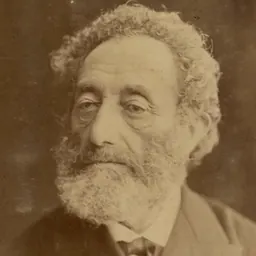
Related people
Same field, nearest in time
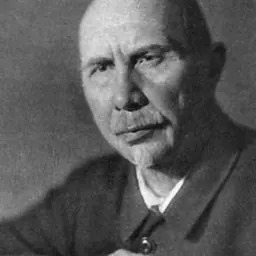
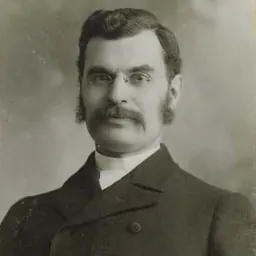



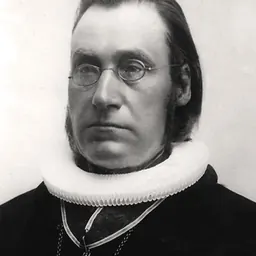
Contemporaries
People whose lives overlapped Mordecai Zvi Mane's



Frequently asked questions
Who was Mordecai Zvi Mane?
Jewish artist, writer and poet (1859-1886)
When was Mordecai Zvi Mane born?
Mordecai Zvi Mane was born on 5 May 1859 in Radaškovičy.
When did Mordecai Zvi Mane die?
Mordecai Zvi Mane died on 15 October 1886 in Radaškovičy.
What was Mordecai Zvi Mane's occupation?
Mordecai Zvi Mane was a writer, poet, art historian, literary scholar and painter.
What nationality was Mordecai Zvi Mane?
Mordecai Zvi Mane was Russian.
Sources & further reading
· Wikipedia: Mordecai Zvi Mane
· DBpedia: Mordechai Tzvi Maneh
Cite this page
APA: Biography.guide. (2026). Mordecai Zvi Mane. https://biography.guide/mordecai-zvi-mane/
MLA: "Mordecai Zvi Mane." Biography.guide, https://biography.guide/mordecai-zvi-mane/.
Chicago: "Mordecai Zvi Mane." Biography.guide. https://biography.guide/mordecai-zvi-mane/.
Data last updated: 2026-09-20 · Spot an error? Report a correction.
Page generated 2026-09-27 05:18 UTC