
About Monty Hall
Lived 1921 – 2017 (aged 96). Monty Hall was a Canadian television presenter, actor, journalist, singer, film actor and game show host.
Monty Hall (born Monte Halparin; August 25, 1921 – September 30, 2017) was a Canadian-American A conundrum involving game theory and psychology was named after him: the Monty Hall problem. Behind the scenes, Hall also carried on an active life of philanthropy.
Early life
Hall was born as Monte Halparin in Winnipeg, Manitoba, on August 25, 1921, who owned a slaughterhouse, and Rose (née Rusen). He was raised in Winnipeg's north end, where he attended Lord Selkirk School (Elmwood, Winnipeg), and, later St. John's High School. Hall graduated with a Bachelor of Science degree from the University of Manitoba, where he majored in chemistry and zoology. Originally though, Hall had hoped to go to medical school but was not admitted due to secret quotas
Career Hall's first radio job was working for CKRC radio in Winnipeg while still a student. He briefly worked for the Canadian Wheat Board after graduating before deciding to pursue a full-time career in broadcasting. He moved to Toronto in 1946 and found a job with radio station CHUM, where management shortened his name to Hall and misspelled his first name as "Monty" on billboards, giving him the stage name "Monty Hall". For the next decade he hosted and produced a number of programs for radio stations in Toronto, as well as Who Am I? on CFRB, which was distributed nationally in Canada through private syndication until 1959. He also had several short-lived programmes on CBC Television after it was launched in 1952, but when they were cancelled and another program he had conceived was taken away from him, Hall decided he had no future in Canadian television.
Hall moved to New York City in 1955, attempting to break into American broadcasting, but commuted to Toronto several times a month to record episode blocks of Who Am I?
Hall later hosted the children's program Fun in the Morning for WNEW-TV (Ch. 5) in the early 1960s. At least two recordings of Hall on Monitor are known to exist.
Hall was a radio analyst for the New York Rangers of the National Hockey League during the 1959–1960 season.
He succeeded Jack Narz as host of a game show called Video Village, which ran from 1960 to 1962 on CBS. From 1961 to 1962, Hall hosted its spinoff, Video Village Junior, which featured children.
Philanthropy Hall spent much of his off time involved in philanthropic work. His family says he was always going to telethons and helped raise close to $1 billion for charity in his lifetime. Hall was repeatedly honored for his charitable efforts. Wards at Mount Sinai Hospital in Toronto and Hahnemann University Hospital in Philadelphia are named in his honor. Hall, who said that charitable work was the driving force in his life, even went so far as to conceive a television series where he would assist people who were having troubles through various connections he had made through his philanthropic efforts.
In 1985, while still hosting The All-New Let's Make a Deal in syndication, Hall began work on his new project, which was to be titled For the People and distributed by Worldvision Enterprises. His plan was to keep Let's Make a Deal in production under a new host while focusing most of his time on For the People, and both shows were presented for station owners at the 1986 NATPE convention. Although the pilot episode was not well received, Hall pressed forward with For the People until he eventually decided to put the project on hold in June 1986 after For the People had not gotten enough stations to sign on to carry it. Hall vowed that he would try again, but ultimately For the People was never brought to series. (Hall also failed to get enough interest for a third season of Let's Make a Deal, which resulted in its cancellation at the end of the 1985-86 season; he pressed on with his revival of Split Second, which ran for nineteen weeks beginning in December 1986 before it too would not be renewed.)
Honours
Hall received a star on the Hollywood Walk of Fame on August 24, 1973, a Golden Palm Star on the Palm Springs, California, Walk of Stars in 2000, and in 2002, he was inducted into Canada's Walk of Fame.
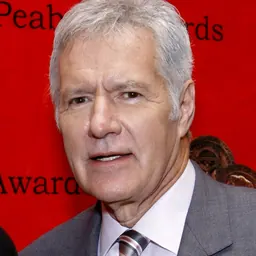
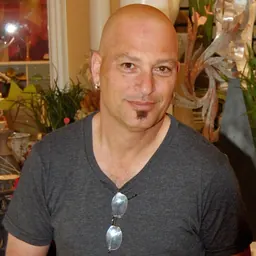
Hall is one of three game show hosts—along with Alex Trebek and Howie Mandel—on both Hollywood's and Canada's Walks of Fame. In May 1988, Her Excellency Jeanne Sauvé, Governor General of Canada, appointed him an Officer of the prestigious Order of Canada for his humanitarian work in Canada and other nations of the world.
Personal life On September 28, 1947, Hall married Marilyn Doreen Plottel (May 17, 1927 – June 5, 2017); the two had been introduced by a mutual cousin, Norman Shnier, the previous year. They later became United States citizens. an Emmy Award–winning television producer. Monty and Marilyn lived in Beverly Hills, California, from 1962 until their deaths; Marilyn died four months before her husband.
Death Hall died from heart failure on September 30, 2017, at his home in Beverly Hills a little over a month after his 96th birthday. He was interred at Hillside Memorial Park Cemetery on October 3.
The October 6, 2017, episode of the current Let's Make a Deal on CBS hosted by Wayne Brady paid tribute to Hall with this opening:
Monty Hall Problem
Hall's name is used in a probability puzzle known as the "Monty Hall problem". The name was conceived by statistician Steve Selvin who used the title in describing a probability problem to Scientific American in 1975 based on one of the games on Let's Make a Deal, and more popularized when it was presented in a weekly national newspaper column by Marilyn vos Savant in 1990.
A host ("Monty") provides a player with three doors, one containing a valuable prize and the other two containing a "gag" valueless prize. The contestant is offered a choice of one of the doors without knowledge of the content behind them. "Monty", who knows which door has the prize, opens a door that the player did not select that has a gag prize, and then offers the player the option to switch from their choice to the other remaining unopened door. The probability problem arises from asking if the player should switch to the unrevealed door.
Mathematically, the problem shows that a player switching to the other door has a chance of winning under standard conditions, but this is a counterintuitive effect of switching one's choice of doors, and the problem gained wide attention due to conflicting views following Marilyn vos Savant's publication, with many asserting that the probability of winning had dropped to if one switched. A number of other solutions become possible if the problem setup is outside of the "standard conditions" defined by Marilyn vos Savant: that the host equally selects one of the two gag prize doors if the player had first picked the winning prize, and the offer to switch is always presented.
Hall explained the solution to that problem in an interview with The New York Times reporter John Tierney in 1991. In the article, Hall pointed out that because he had control over the way the game progressed, playing on the psychology of the contestant, the theoretical solution did not apply to the show's actual gameplay. He said he was not surprised at the experts' insistence that the probability was 1 out of 2. "That's the same assumption contestants would make on the show after I showed them there was nothing behind one door," he said. "They'd think the odds on their door had now gone up to 1 in 2, so they hated to give up the door no matter how much money I offered. By opening that door we were applying pressure. We called it the Henry James treatment. It was 'The Turn of the Screw. Hall clarified that as a game show host, he was not required to follow the rules of the puzzle as Marilyn vos Savant often explains in her weekly column in Parade, and did not always allow a person the opportunity to switch. For example, he might open their door immediately if it was a losing door, might offer them money to not switch from a door leading to a loss to a door leading to a win, or might only allow them the opportunity to switch if they had a winning door. "If the host is required to open a door all the time and offer you a switch, then you should take the switch," he said. "But if he has the choice whether to allow a switch or not, beware. Caveat emptor. It all depends on his mood."
Don’t just read it —
keep it.
Full-length biographies made to live with: read them, listen on the way to work, watch them tonight.
- E-book
- Audio
- Video
Instant download · yours to keep · every purchase keeps this site free
Important facts
People in Monty Hall's life
Named in this biography and alive at the same time





Related people
Same field, nearest in time



Contemporaries
People whose lives overlapped Monty Hall's




Frequently asked questions
Who was Monty Hall?
Canadian radio and television show host (1921-2017)
When was Monty Hall born?
Monty Hall was born on 25 August 1921 in Winnipeg.
When did Monty Hall die?
Monty Hall died on 30 September 2017 in Beverly Hills.
What was Monty Hall's occupation?
Monty Hall was a television presenter, actor, journalist, singer, film actor and game show host.
What nationality was Monty Hall?
Monty Hall was Canadian.
Sources & further reading
Cite this page
APA: Biography.guide. (2026). Monty Hall. https://biography.guide/monty-hall/
MLA: "Monty Hall." Biography.guide, https://biography.guide/monty-hall/.
Chicago: "Monty Hall." Biography.guide. https://biography.guide/monty-hall/.
Data last updated: 2026-09-26 · Spot an error? Report a correction.
Page generated 2026-09-27 05:16 UTC