
About Monty Garland-Wells
Lived 1907 – 1993 (aged 85). Monty Garland-Wells was a British cricketer, association football player and lawyer.
Herbert Montandon "Monty" Garland-Wells (14 November 1907 – 6 June 1993) was an English amateur cricketer. His first-class career, first with Oxford University and then with Surrey, lasted from 1927 until 1939, being terminated by the outbreak of World War II. He was a middle-order batsman and a bowler of medium-pace cutters. He captained Surrey in his final season. He was also a good enough footballer to play for the England amateur team in one match in 1930 as the goalkeeper. He played 11 games in the Football League for Clapton Orient. He also played for Fulham in a London Challenge Cup match in 1930 as a goalkeeper.
He was educated at St Paul's, before going up to Pembroke College, Oxford. He was not selected to play for Oxford in the University Match against Cambridge University in 1927, but did so in 1928 (when he made 64 not out and 70), 1929 and 1930.
1928 was easily his best season with the bat. He reached one thousand runs for the only time, with 1270 at an average of 43.79. He also made two of his four centuries, including his highest score of 128.
After his university days, his batting declined. Even so, he, Errol Holmes and Freddie Brown, three amateurs of aggressive intent who often followed one another in the batting order, were referred to at Surrey as the "Biff-Bang Boys". His most memorable moment with the ball was to bowl Don Bradman for 32 in 1930 when he was en route to his thousand runs in May.
Under his captaincy in 1939, Surrey made an excellent start, but then faded to finish eighth, having been third the previous season. Nevertheless, his Wisden obituary is complimentary about his leadership. He is described as displaying "a touch of unorthodoxy in the tradition of Percy Fender". He was liked by the professional players, showing no sign of any amateur aloofness. According to David Lemmon, he wrote: "For myself, I loved every moment of 1939 and other years when I played for Surrey."
At the end of the season, the war began, and his career as a solicitor prevented him from resuming in 1946. Thereafter his main sports were golf and bowls.
According to Wisden:During the war his name was informally used as a code word in North Africa: Garland-Wells = Monty = Montgomery. This was more impenetrable to the Germans than the most complicated cipher.
Don’t just read it —
keep it.
Full-length biographies made to live with: read them, listen on the way to work, watch them tonight.
- E-book
- Audio
- Video
Instant download · yours to keep · every purchase keeps this site free
Important facts
People in Monty Garland-Wells's life
Named in this biography and alive at the same time
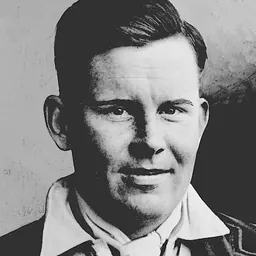
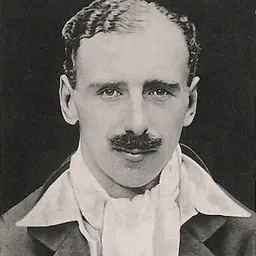


Related people
Same field, nearest in time
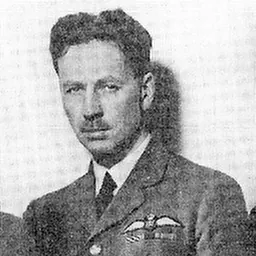
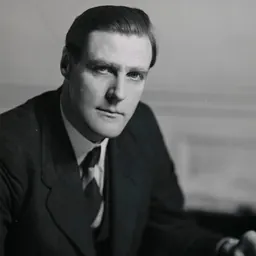


Contemporaries
People whose lives overlapped Monty Garland-Wells's
Frequently asked questions
Who was Monty Garland-Wells?
cricketer (1907-1993)
When was Monty Garland-Wells born?
Monty Garland-Wells was born on 14 November 1907 in Brockley.
When did Monty Garland-Wells die?
Monty Garland-Wells died on 6 June 1993 in Brighton.
What was Monty Garland-Wells's occupation?
Monty Garland-Wells was a cricketer, association football player and lawyer.
What nationality was Monty Garland-Wells?
Monty Garland-Wells was British.
Sources & further reading
· Wikipedia: Monty Garland-Wells
· DBpedia: Monty Garland-Wells
Cite this page
APA: Biography.guide. (2026). Monty Garland-Wells. https://biography.guide/monty-garland-wells/
MLA: "Monty Garland-Wells." Biography.guide, https://biography.guide/monty-garland-wells/.
Chicago: "Monty Garland-Wells." Biography.guide. https://biography.guide/monty-garland-wells/.
Data last updated: 2026-09-20 · Spot an error? Report a correction.
Page generated 2026-09-27 05:16 UTC