
About Mona Douglas
Lived 1898 – 1987 (aged 89). Mona Douglas was a British writer, folklorist, poet, journalist and librarian.
Mona Douglas (18 September 1898 – 8 October 1987) was a Manx cultural activist, folklorist, poet, novelist and journalist. She is recognised as the main driving force behind the modern revival of Manx culture and is acknowledged as the most influential Manx poet of the 20th century, but she is best known for her often controversial work to preserve and revive traditional Manx folk music and dance. She was involved in a great number of initiatives to revive interest and activity in Manx culture, including societies, classes, publications and youth groups. The most notable and successful of these was Yn Chruinnaght.
Childhood Constance Mona Douglas (Connie) was born on 18 September 1898 at 49 Allerton Road, Much Woolton, Lancashire (now Merseyside). She was the daughter of Manx parents, Frank Beardman Douglas (1863–1943) and Frances Mona (née Holmes - born London, Ontario, Canada of Manx parents) (1873–1953). Her parents had left the Isle of Man to find work in England, eventually setting up a bakery and confectioners in Birkenhead.
Because of ill health, Douglas was sent to live with her maternal grandparents, Ellen "Nell" Quayle and Patrick "Pat" Holmes (listed as Thomas in the 1901 Census) when only a matter of months old. Her grandmother would influence her greatly through her knowledge of Manx folklore, song and dance. Her childhood was spent in the vicinity of Lezayre, and later Ballaragh near Laxey, where she received a very free and informal upbringing: "I never went to school and I used to just go round Ballaragh with the farmers and down to Laxey and went out in the boats with the fishermen, and wandering about pretty well as I liked."
Music was a central part of Douglas' upbringing, most notably through the musical evenings which took place at her parents' house when she visited them. Both of her parents were musical: her father played the violin and flute, and her mother played the piano and sang; and they were both members of a choral society. On Sunday evenings, from when Douglas was six years old, a number of other cultured people from the community would gather at their house "for poetry readings, discussion and music". From here she studied at the Liverpool School of Art for two years whilst at the same time taking private lessons in violin, piano, singing and music theory from people associated with the Liverpool Philharmonic. Some of this collection of 26 poems had been written when she was only fourteen. Her poem, 'Two Twilights', illustrates both the style of her verse and also the mystical tone that pervades it:
Over the wild waves comes the call of the great spaces; White breakers leap from a plain of silver-grey— Dreaming lies the world, but the reckless sea still moveth, In the mystic hour of twilight, at the dawning of the day.
In 1916 Douglas took up Manx Gaelic lessons, writing by the end of November that "I am still keeping up my efforts to learn [Manx] & go over to Kennish's nearly every week for a 'lesson'. It is slow work, but someday I hope to acquire a perfect mastery – at any rate that is my aim." She did become fluent in Manx, coming to teach and write poetry in it over the coming decade.
Douglas' second poetry book, Mychurachan, was published in 1917. This collection of 40 poems derived its name from the Manx for driftwood or jetsam – mooirchooraghyn.
In the wake of Morrison's death, Douglas also stepped in to edit the final edition of the journal Mannin, to which she contributed a poem of her own in memory of Morrison. Douglas had earlier contributed folklore notes to previous editions of the journal, including her first published piece on folklore.
Through her position as Secretary of Yn Çheshaght Ghailckagh, Douglas also became the Secretary of the Manx branch of the Celtic Congress.
Kinsmen of the shining west! Your unrest wild hearts have shared: Soon from our land, too, shall rise, Through wild skies, a singing bird.
Douglas' avid interest in the Celtic Movement in Ireland was deepened when she visited Dublin in 1921 at the invitation of Professor Agnes O'Farrelly of University College Dublin, who she had probably met at the Celtic Congress four years earlier. Whilst staying with O'Farrelly in Rathgar, Douglas took a short course in Irish Literature; she also studied a course in librarianism, with the intention of getting a job at the Library of the Manx Museum, which was to open in 1922. However no such job materialised. Whilst in Dublin, Douglas met George Russell, who influenced and encouraged her interest in Manannan, as well as seeing W. B. Yeats whilst visiting the Abbey Theatre. By 1924 all of the plays had all been produced "with great acceptance."
Life in the UK In 1925 Douglas moved to Harlech, Wales, to work as secretary to the poet Alfred Perceval Graves (the father of Robert Graves), while he wrote his autobiography, To Return to All That. Graves then encouraged Douglas to go to London to broaden her horizons.
In London Douglas worked for around three years as a freelance journalist and even for a time for a producer at the Elstree Film Studios.
In 1929 Douglas contributed folklore connected to wells in Lonan to W. Walter Gill's seminal work, A Manx Scrapbook.
Return to the Isle of Man In 1929 the English Folk Dance Society held its Easter Vacation School on the Isle of Man. Assuming that no Manx folk dance had survived into the modern day, the Society asked Douglas instead to talk to them on local folk song. However, Douglas was able to pull together various notes on Manx dance into a form fit to be presented to the Society. Through the assistance of teachers and pupils at Albert Road School in Ramsey, Douglas was able to have three of these reconstructed dances performed: 'The Manx Dirk Dance', 'Hyndaa yn Bwoailley' and 'Eunyssagh Vona'.
The dances proved to be a great success, resulting in an invitation for one of the boys, Billy Caine, to perform the subsequently controversial Manx dirk dance at the All-England Festival at the Royal Albert Hall the following summer. Douglas reported that, "The Ramsey schoolboy and his wonderful dance were the sensation of the Festival, and received special notices in all the big London papers." Children from the school were also invited to perform other Manx dances at the festival in the following years.
Inspired by this success, Douglas then set about collecting, "re-building" and "re-constructing" all she could of Manx folk dance. Again in collaboration with Arnold Foster, Douglas published two volumes of Manx dances, in 1936 and 1953. The twelve "virile and characteristic dances" These Douglas considered to be the sum total of "all the surviving Manx traditional dances."
Controversy surrounds the authenticity of Douglas' folk collecting, particularly of folk song and dance. Although there is no doubt that she did much collecting, there is also little doubt that she invented or herself composed much of this material. Douglas' fabrication of much material is partly explained by her ultimate aim being to repopularise Manx culture rather than its mere preservation. This is one of the key themes and successes of Douglas' life and work, as expressed in her reaction to the reception of these early dance reconstructions: The group held weekly after-school meetings at Albert Road School in Ramsey, "for the study of Celtic literature and Manx traditional dance," and a song composed for them by Douglas:
O Land of our allegiance O Mannin of the sea! May we be ever worthy To claim our share in thee! We hold thy soil as sacred And though we journey far, They flame of song and story Burns where thy children are.
The organisation had significant success in establishing and raising the profile of Manx folk dance, most notably through appearances on Irish television and radio. However, after periodic lulls of interest, the organisation petered out some time after 1976.
Following Douglas' training as a librarian while in Dublin in 1921, she was appointed Rural Librarian under the Department of Education in 1933, where she worked for the next 30 years. These were printed in book form as Beginning Manx Gaelic: A Manx Primer in 1935, and Lessons in Manx in 1936. Both of these were based on Goodwin's 1901 book, First Lessons in Manx. This and other of Douglas' efforts demonstrate her belief that Manx Gaelic was a central part of Manx culture that needed to be revitalised: Posted to the Douglas' family farm at Ballaragh were a party of Italians from a camp on the promenade at Douglas, amongst them Leonida Nikolai Giovannelli. After Giovannelli's eventual release from internment, he and Douglas ran an experimental upland farm at the Clarum, close to Douglas' parents' farm. After six years of operation, the farm had to be sold to meet rising debts in 1949. By this time Douglas' father had died and when her mother also passed on, in 1953, she inherited 'Thie ny Garee', and she would later expand this to also run the Clarum. Douglas' next book, Islanders, her only short story collection, was published in 1944 with Giovannelli as the dedicatee. Some of the stories in this collection were re-writes of her plays published in 1921.
"He realised that the secret magic of heredity had stirred within him [...] evoking a fragment of that racial past of which our transitory lives are built, which dwells ever invisibly within us, hidden in the intertices of time and space save when some rare combination of mood and circumstance restores it to a fleeting renewal of consciousness in living experience."
In 1956 Douglas' sixth and final collection of poetry, Island Magic, was published. The pamphlet was only 19 pages in length.
Later years
After retiring from her job as rural librarian at the age of 65, Douglas joined the staff of the Isle of Man Times as a reporter and feature-writer in 1963. Rallying Song proved to be "more controversial and overtly nationalist" than its predecessor.
Numerous recent publications have been made on Douglas' life and work, notably Mona Douglas: A Tribute edited by Fenella Bazin in 1998 and "Restoring to use our almost-forgotten dances": The collection and revival of Manx folk song and dance edited by Stephen Miller in 2004, the extended proceedings of a one-day conference held in Douglas in April 2000.
In recognition of their lasting national importance, Douglas' papers had been deposited with the archives of the Manx National Heritage Library at her death. These were an unsorted and uncatalogued collection of "everything from bank statements and bills to original manuscripts and unpublished works," until Autumn 2003 when a Culture Vannin grant enabled Dr Breesha Maddrell "to sift through them, collate them and then make a detailed assessment of their value and content."
In 2012, the 25th anniversary of Douglas' death was marked with a series of events on the Isle of Man, including a special concert of songs and dances held in Peel and recorded for subsequent release on DVD and CD, and a talk on her life and work in Ramsey.
In 2017 a CD/DVD inspired by the work of Mona Douglas was released by Culture Vannin. Mona's Isle: The Legacy of Mona Douglas featured many leading contemporary Manx musicians, including Aalin Clague, Annie Kissack, Bob Carswell, Breesha Maddrell, Clare Kilgallon, Dave Kilgallon, Dave Mclean, Greg Joughin and Mandy Griffin. Two of Douglas' previously unpublished plays were also released in 2017, having been discovered within the archive of Manx dialect plays held by The Michael Players. The plays, The Widow's House and The Anniversary, were published to coincide with the 30th anniversary of her death on 8 October 2017.
Although Douglas is recognised as the "most influential" Manx poet of the 20th century, Douglas' resilience can perhaps be attributed to her basic love of the Isle of Man, as she expressed in many ways during her life:
"But behind all the rest, for me, is always the beauty and mystery and glory of our own Sacred Island, Ellan Vannin in the heart which is for ever our Mother and Queen to be adored and served, the ideal to be kept inviolate for those who shall follow us, and so handed on: our inspiration, and our ultimate rest – Ellan Vannin dy bragh!"
Publications
(Co-authored with J. J. Kneen)
Awards Member of the Gorsedd of the Bards (Wales), 1917 Manannan Trophy, 1972 International President of the Celtic Congress, 1980 MBE, awarded for outstanding services to Manx culture, 1982 Appointed to the Principal Order of the Gorsedd, 1987 Reih Bleeaney Vanannan (awarded posthumously), 1988
Don’t just read it —
keep it.
Full-length biographies made to live with: read them, listen on the way to work, watch them tonight.
- E-book
- Audio
- Video
Instant download · yours to keep · every purchase keeps this site free
Important facts
People in Mona Douglas's life
Named in this biography and alive at the same time


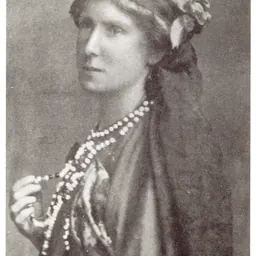
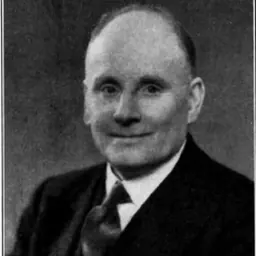


Related people
Same field, nearest in time




Contemporaries
People whose lives overlapped Mona Douglas's




Frequently asked questions
Who was Mona Douglas?
Manx cultural activist and writer
When was Mona Douglas born?
Mona Douglas was born on 18 September 1898 in Woolton.
When did Mona Douglas die?
Mona Douglas died on 8 October 1987 in Isle of Man.
What was Mona Douglas's occupation?
Mona Douglas was a writer, folklorist, poet, journalist and librarian.
What nationality was Mona Douglas?
Mona Douglas was British.
Sources & further reading
Cite this page
APA: Biography.guide. (2026). Mona Douglas. https://biography.guide/mona-douglas/
MLA: "Mona Douglas." Biography.guide, https://biography.guide/mona-douglas/.
Chicago: "Mona Douglas." Biography.guide. https://biography.guide/mona-douglas/.
Data last updated: 2026-09-24 · Spot an error? Report a correction.
Page generated 2026-09-27 05:03 UTC