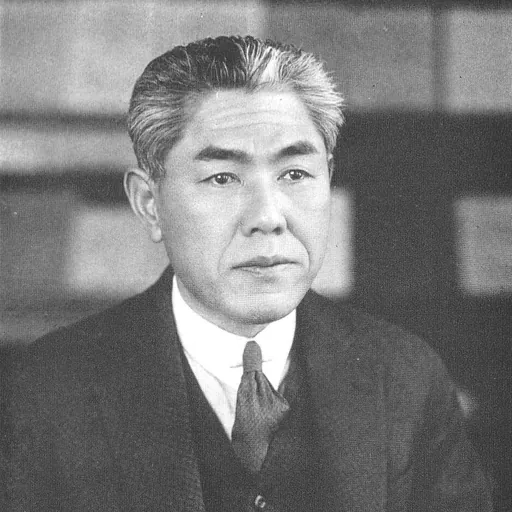
About Mokutaro Kinoshita
Lived 1885 – 1945 (aged 60). Mokutaro Kinoshita was a Japanese poet, novelist, dramaturge, university teacher, playwright and dermatologist.
was the pen-name of a Japanese author, dramaturge, poet, art historian and literary critic, as well as a licensed doctor specializing in dermatology during Taishō and early Shōwa period Japan. His other pen names included , , and others. As professor of dermatology and a noted leprosy researcher, he served at four universities (South Manchuria Medical College, Aichi Medical College, Tohoku Imperial University, Tokyo Imperial University).
Biography Kinoshita was born in what is now part of Itō, Shizuoka as . He moved to Tokyo at the age of 13 to pursue studies in German, during which time he was exposed to German literature and history. In 1906 entered the Medical School of Tokyo Imperial University to pursue a medical career and to translate literary works and to cultivate contacts in the literary world. In 1907, he met Tekkan Yosano and was invited to become a member of the Myōjō literary circle, to which he contributed translations and original works. In 1908 he was one of the founding members of the literary circle, through which he became acquainted with Kafū Nagai, Rokuzan Ogiwara, Kaoru Osanai, Kōtarō Takamura, Jun'ichirō Tanizaki, Bin Ueda and other noted figures in the Japanese literary and artistic world. In 1909, he assisted Takuboku Ishikawa in the production of the literary magazine Subaru.
Bin Ueda introduced Kinoshita to Mori Ōgai, who suggested that he should concentrate on literature, as his reputation was becoming widespread, but that if he should continue to pursue medicine, he should specialize in dermatology. Kinoshita chose both and studied under the respected Keizo Dohi, the first professor of dermatology at Tokyo Imperial University, where he became interested in research on leprosy. He used the pen-name of Kinoshita for writing and his real name of Ota for his medical career. One of his main topics of interest was the history of Japanese Christianity in the 16th century. He wrote a play titled which depicted the Kirishitan in feudal Japan.
In 1916, at age 31, he was named professor of dermatology at South Manchuria Medical University and earned his Ph.D. based on the culture of Malassetia furfur. In 1920 he left Tokyo Imperial University to study mycology at the Sorbonne and Hôpital Saint-Louis and at the University of Lyon in France. He remained in France until 1924 and became fluent in French. He became known for the “Classification of Ota and Langeron”, based on morphology. His observations were very exact and, according to Hideyo Yamaguchi, this classification closely resembled the classification based on genes. In 1924, he was named Professor of Dermatology at Aichi Medical University. In 1926, he went to Tohoku Imperial University.
He attended an international leprosy meeting in Bangkok which revived his interest in the condition. Knowing that Kensuke Mitsuda had studied and described the “Mitsuda reaction” (Lepromin reaction), he lobbied for the publication of an international journal. Finally Hayashi Fumio wrote the first article on the Mitsuda reaction in its first issue. He opposed the prevalent practice in Japan of segregating leprosy patients into sanatoriums. In 1937, he returned to Tokyo Imperial University. His interest in leprosy increased and he performed experimental works intended for the inoculation of leprosy which failed. In 1938 he first presented the case which was later named Nevus of Ota in 1939. The Nevus of Ota is a birthmark, mostly seen in Mongoloid people. In 1941, he was awarded the Legion of Honour from the Vichy French government for his work on leprosy in French Indochina. In 1944, he participated in medical conferences held in Shanghai and Nanjing.
In October 1945, he died of gastric cancer. His grave is in Tama Cemetery. The house where he was born is preserved as the Kinoshita Mokutaro Memorial House.
Don’t just read it —
keep it.
Full-length biographies made to live with: read them, listen on the way to work, watch them tonight.
- E-book
- Audio
- Video
Instant download · yours to keep · every purchase keeps this site free
Important facts
People in Mokutaro Kinoshita's life
Named in this biography and alive at the same time


Related people
Same field, nearest in time

Contemporaries
People whose lives overlapped Mokutaro Kinoshita's





Frequently asked questions
Who was Mokutaro Kinoshita?
Japanese writer and dermatologist (1885-1945)
When was Mokutaro Kinoshita born?
Mokutaro Kinoshita was born on 1 August 1885 in Ito, Kamo district.
When did Mokutaro Kinoshita die?
Mokutaro Kinoshita died on 15 October 1945 in Tokyo.
What was Mokutaro Kinoshita's occupation?
Mokutaro Kinoshita was a poet, novelist, dramaturge, university teacher, playwright and dermatologist.
What nationality was Mokutaro Kinoshita?
Mokutaro Kinoshita was Japanese.
Sources & further reading
· Wikipedia: Mokutaro Kinoshita
Cite this page
APA: Biography.guide. (2026). Mokutaro Kinoshita. https://biography.guide/mokutaro-kinoshita/
MLA: "Mokutaro Kinoshita." Biography.guide, https://biography.guide/mokutaro-kinoshita/.
Chicago: "Mokutaro Kinoshita." Biography.guide. https://biography.guide/mokutaro-kinoshita/.
Data last updated: 2026-09-22 · Spot an error? Report a correction.
Portrait: Wikimedia Commons · author & licence
Page generated 2026-09-27 05:03 UTC