
About Mohsen Subhi
Lived 1963 – 2009 (aged 45). Mohsen Subhi was a composer.
Mohsen Subhi (, or Mohsen Subhi Khalil Abd al-Hamid Ataya) (October 4, 1963 – August 2, 2009) was a Palestinian composer of classical Arabic music and an arranger of modern Palestinian music and folk song.
A master oud player and percussionist, Subhi was born in Ramallah, Palestine, where he established himself as a young musician, composer, performer and teacher. He moved to Boston, Massachusetts, in 1997 and continued living and working in Palestine, the United States (Boston and San Francisco) and Jordan.
Mohsen composed, arranged, (re)interpreted and performed music for television, plays, films and live audiences. After receiving a grant to record his second classical Arabic music (instrumental) CD, Subhi (also known as Abu Kinaan) died as a result of an accident on August 2, 2009, in Ramallah. He was buried in Al-Bireh.
Education and training
Mohsen began teaching himself music at the age of seven, initially as a percussionist and later on adopting the Oud as his main instrument. Master oud player Hatem Al-Afghani was among Mohsen's early music teachers. In the United States, Mohsen attended classes at the Berklee College of Music in Boston and the Longy School of Music (Cambridge, MA) where he continued developing his unique style.
Early career Mohsen composed, arranged, (re)interpreted and performed music for educational purposes, television, plays, dance troupes, films and live audiences.
He also taught percussion and/or Oud to children and adults through institutions, schools and private lessons in Ramallah and Jerusalem (Palestine) as well as Boston (1997–1999) and later on, San Francisco (U.S.) and as a percussionist played derbakeh (tabla), taar, mazhar (frame drum), and daf (tambourine) fusing Arab, Persian, Indian and African rhythms.
Raseef al-Madeena
Subhi played buzuk and percussion with the Ramallah-based group, Al-Rahhala including its 1988 "Raseef al-Madeena".
Later musical works Zaghareed
While serving as the music director of the Palestinian National Music and Dance Troupe El-Funoun (an internationally recognized dabke group) in Palestine, Mohsen composed the music to their popular production Zaghareed (Ululations) in 1997. Mohsen's reinterpretation and rearrangement of traditional Palestinian folkloric wedding songs was choreographed and danced by El-Funoun. Zaghareed could be best described as "an artistic work that combined authenticity with originality, traditional raw material with more modernistic dance components, and finally a very Palestinian theme with attributes that carry a universal appeal.". released Mohsen Subhi's instrumental, Mawasem (Seasons), the first compilation of his renowned composition of oud pieces, accompanied by bass, cello and piano (featuring Antoine Lammam – percussions). In Mawasem, explains Jihad Touma, "Subhi starts in maqam, in a circle widening with revelation, proceeding to a point where, necessarily, commentary falls short." (translated from Arabic from the backcover of Mawasem). Touma continues,
And then there is the passage... He proceeds with working the maqam, confounding it, subtly morphing its identity into hybrid, genuine forms, loading every sound with the pangs of yet unborn maqams... Breaks are not expected in the moments and the spaces they span. Breaks are expected in their reflections. The 'oud trembles, groans, lurches, longs... The 'oud listens to its echo. The echo of the 'oud infuses the horizon of the rhythm as homogenous column. And in the end, the maqam settles on the inevitability of its absence.
Commenting on Mawasem, Rabih Z wrote in the June 2006 issue of Time Out Beirut:
Mohsen Subhi has a very personal way of playing the oud, due to his previous experience as a percussionist and his subtle assimilation of Indian, African and Mediterranean influences. The album has received popular and critical acclaim in Lebanon: It is difficult not to fall helplessly in love with Mohsen Subhi's bewitching album Mawasem. Subhi's masterful oud playing is akin to a mystical art, making this CD breathtaking listening. (Rabih Z, Time Out Beirut, June 2006). The Imaginary Village by Sandy Tolan and Melissa Robbins (2004). Melissa Robbins, co-producer (with Sandy Tolan) of The Imaginary Village, commented on working with Mohsen and the impact of his music on the documentary Ali wa ashabuhu (Ali and his Friends) by Sobhi Al-Zobaidi (2000)
His music was used as additional tracks in other movies. Examples include:
Salt of this Sea by Annemarie Jacir, (2008)
This Palestinian Life by Philip Rizk (2008)
Death
On August 2, 2009, Subhi died in Ramallah as a result of an accident. He was buried in Al-Bireh (see the daily Al-Quds August 3 through 7th, 2009 and September 10, 2009). His latest (and last) classical Arabic music (instrumental) CD will be released in the near future. The October 2009 issue of This Week in Palestine "shar[ed] words rushed by his untimely departure"
"In the act of performance, Mohsen would wrap himself around the belly of his oud – holding on to it as much as holding it – close his eyes, and let handplectrum- fingers-string-nerves-fleshwood fuse into a continuum of vibrations, which entrances as it grips the listener in its resonance." (p.57).
Don’t just read it —
keep it.
Full-length biographies made to live with: read them, listen on the way to work, watch them tonight.
- E-book
- Audio
- Video
Instant download · yours to keep · every purchase keeps this site free
Important facts
People in Mohsen Subhi's life
Named in this biography and alive at the same time
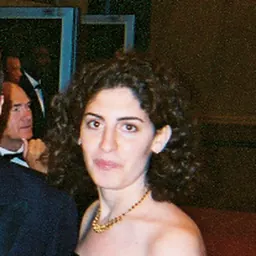
Related people
Same field, nearest in time





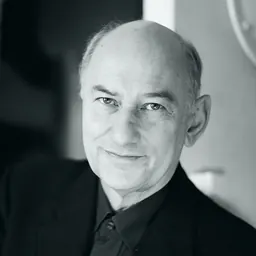
Contemporaries
People whose lives overlapped Mohsen Subhi's

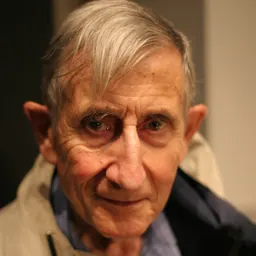
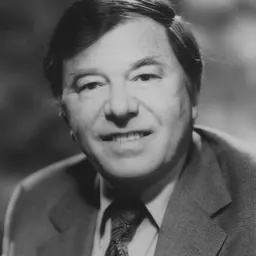

Frequently asked questions
Who was Mohsen Subhi?
Palestinian musician (1963-2009)
When was Mohsen Subhi born?
Mohsen Subhi was born on 4 October 1963.
When did Mohsen Subhi die?
Mohsen Subhi died on 2 August 2009.
What was Mohsen Subhi's occupation?
Mohsen Subhi was a composer.
What nationality was Mohsen Subhi?
Mohsen Subhi's recorded nationality: Palestine.
Sources & further reading
Cite this page
APA: Biography.guide. (2026). Mohsen Subhi. https://biography.guide/mohsen-subhi/
MLA: "Mohsen Subhi." Biography.guide, https://biography.guide/mohsen-subhi/.
Chicago: "Mohsen Subhi." Biography.guide. https://biography.guide/mohsen-subhi/.
Data last updated: 2026-09-22 · Spot an error? Report a correction.
Portrait: Wikimedia Commons · author & licence
Page generated 2026-09-27 05:01 UTC