
Mohinder Singh Chopra
Indian military officer and ambassador
About Mohinder Singh Chopra
Lived 1907 – 1990 (aged 82–83).
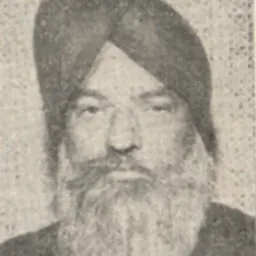
Major General Mohindar Singh Chopra (1907–1990) was an Indian Army General Officer who was known for being in charge of stopping the Partition Riots in both corners of India; Punjab and Bengal. He stopped riots and genocides from taking place through military force.
As the Brigadier he was responsible for a voluntary flow of migration. He had managed to do a referendum in Sylhet, East Pakistan and stopped riots in Amritsar-Lahore along with the rest of Punjab after the Partition of the British Indian Army. His main achievement was the rehabilitation of the partition's refugees and making sure that the Indian Army remained a controlled and orderly force during the times of violent communalism across India. After retirement from the Indian Army he became India's Ambassador to the Philippines. Later, he became Director, National Institute of Sports, Patiala.
Early life Mohindar Singh Chopra was born to an urban Sikh background in Amritsar, Punjab, British India, he studied at the Khalsa College, Amritsar and at an early age was selected for military training as an 'A' listed recruit in the Prince of Wales Royal Indian Military College, Dehra Dun. Chopra was married to Jagjit Kaur Kapur and they had four children, 2 boys and 2 girls.
Early Military career
Training and Sports He qualified for the Army Commission from the Royal Military College, Sandhurst, in 1928. He had joined his first Regiment, the Royal Fusiliers of the British Indian Army, on a year's attachment in 1928. The region fell under the indirect occupation of the British Raj at the time hence he administrated and sent communications from Iraq to India under the Persia and Iraq Command (PAI Force). He was a company commander of a war he raised battalion of the 13 Frontier Force Rifles, operating deep behind Japanese lines during the second phase of the Burma Campaign. He was later rewarded for his services in the British Indian Army by being promoted to Lt. Colonel and becoming the first Indian Commanding Officer of the 1st Assam Regiment in Shillong. He also became Commandant of Army School of Physical Training (1944-1945) and Inspector of Physical Training (1946-1947). He prevented any riots or armed violence during the Sylhet Referendum despite massive religious tension in the area, as the people were almost equally split between Hindu and Muslim- the former generally wanting to be part of India and the latter Pakistan.
During his time in Bengal he had written to Master Tara Singh, Jathedar Mohan Singh Tur and other Akali leaders to keep peace in the area- although they did not listen since there was no army presence. He participated in the last official action of the British Indian Army and the first official action of the Indian Army. He also helped Muslims settle in tents in Delhi near Humayun's Tomb and the Red Fort who were all refugees coming in from Uttar Pradesh and mostly East Punjab.
Partition of Punjab In Punjab around 800,000 Muslims from East Punjab and the rest of India were killed by Sikh jathas while trying to reach the Western side, whereas around 200,000 Hindus and 50,000 Sikhs also died in riots in, mainly, Pothohar. For three months (October–December) Mohindar Singh Chopra commanded the 123 Indian Infantry Brigade to stop the riots going on in Punjab. He took over command of the brigade at the height of violence from a British Officer-Brigadier Solomons, a highly decorated officer. He was the first Indian to take over the post. These, although, were not able to combat the overwhelming Sikh jathas who were organized under the Shiromani Akali Dal, Maharajas of Sikh princely states like Patiala, Faridkot, Kapurthala, Nabha, Kalsia and Jind and local armed Sikhs who formed groups and raided Muslim villages and homes. They both founded the famous Wagah-Attari Border which, at that time, was 3 drums on each side and a line of chalk drawn on the Grand Trunk Road.
India's First Border Skirmishes Although, Pakistan, before the 1947 Indo-Pakistan War, also tried to infiltrate East Punjab like they did in Kashmir although he had cleverly foiled their plan by creating check-posts along the border to capture them, there were around fifty Pakistanis who were caught by the Indian Army and sent back to the other side.
Korean War The 5th Division was built up into a formidable fighting force and mobilized twice for the Korea War of 1950–53, wherein he represented the Indian Army, they provided medical service and tried restoring diplomatic ties between the two countries, though he did side with the United States of America and South Korea, since China and North Korea were far less open and unsuspecting. Among them were the then GOC-in-C, Western Command, Lt Gen SM Shrinagesh, Maj Gen KS Thimayya, Maj Gen SPP Thorat (later GOC-in-C, Eastern Command), Maj Gen Sardanand Singh, Maj Gen Mohindar Singh Chopra and Brig Ajaib Singh. Flt Lt S Biswas was attempting desperately to extinguish the fire when suddenly the plane flipped and plunged down to almost 4,000 feet." Due to his arrival, for the first time, the Cabinet meeting was held in the Malacañang state dining hall.
Death He died in New Delhi at the age of 84.
Legacy
His memoirs were collected and published with explanations by his son, famous aviator Pushpindar Singh Chopra in '1947: A Soldiers' Story' which depicted the military side of the Partition of India.
Some of his relics are currently on public display in the Town Hall Partition Museum, Amritsar.
There is a 'Clock Tower' in Kasauli, Himachal Pradesh with an inscription in commemoration, presented by his family for being the first Indian Station Commander of Kasauli Cantt.
On the Wagah-Attari Border, Amritsar the name of Mohindar Singh Chopra along with his Pakistani counterpart Nazir Ahmed are written on their respective flags.
Don’t just read it —
keep it.
Full-length biographies made to live with: read them, listen on the way to work, watch them tonight.
- E-book
- Audio
- Video
Instant download · yours to keep · every purchase keeps this site free
Important facts
People in Mohinder Singh Chopra's life
Named in this biography and alive at the same time



Contemporaries
People whose lives overlapped Mohinder Singh Chopra's



Frequently asked questions
Who was Mohinder Singh Chopra?
Indian military officer and ambassador (1907–1990)
When was Mohinder Singh Chopra born?
Mohinder Singh Chopra was born in 1907.
When did Mohinder Singh Chopra die?
Mohinder Singh Chopra died in 1990.
Sources & further reading
· Wikipedia: Mohinder Singh Chopra
· DBpedia: Mohindar Singh Chopra
Cite this page
APA: Biography.guide. (2026). Mohinder Singh Chopra. https://biography.guide/mohinder-singh-chopra/
MLA: "Mohinder Singh Chopra." Biography.guide, https://biography.guide/mohinder-singh-chopra/.
Chicago: "Mohinder Singh Chopra." Biography.guide. https://biography.guide/mohinder-singh-chopra/.
Data last updated: 2026-09-20 · Spot an error? Report a correction.
Page generated 2026-09-27 05:12 UTC