
About Mohammed Khadda
Lived 1930 – 1991 (aged 61). Mohammed Khadda was an Algerian and French painter.
Mohammed Khadda (; 14 March 1930 – 4 May 1991) was an Algerian painter, sculptor, and writer. Khadda has been considered to be among the founders of contemporary Algerian painting and one of the many representatives of the "sign painters.", as indicated by his nickname "peintre du signe" given by Jean Sénac. He debuted in 1960. His influences included Cubism and Arabic calligraphy. He tended toward the non-figurative or abstract. He represented a generation of Algerian artists who combined the ideas of calligraphic heritage and formal language of Western formal writing through Western abstraction through the 1950s.
Biography
Early life Mohammed Khadda was born in 1930 in Mostaganem, when Algeria was still under the occupation of France. He was the eldest of five children, two of whom died while infants. His father, Bendehiba Khadda, was born in 1912 in the town of Mina and moved to Mostaganem at a very young age. Although Bendehiba was born blind, he held various occupations such as a bricklayer and a dock worker. Khadda’s mother, Nebi El Ghali was born in 1911 in Zemora, Algeria, a city near Tiaret. When she was a little girl, her parents were murdered by a settler tribe near where she lived. She, as Mohammed’s father, was also blind, but managed to adjust. Benedehiba and Nebi met in Mostaganem and were married in 1929.
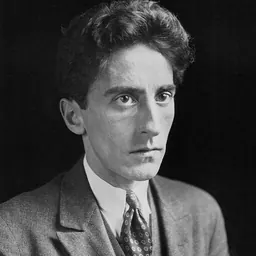
Education and professional career Mohammed Khadda, circa 1982In 1936, Mohammed Khadda attended a school in Tigditt, Mostaganem in an Arab neighborhood. In 1942, he and his family had to leave Mostaganem because of a famine in the area. The family moved to Tiaret and they moved in with his aunt. He could not receive any education at school during this period. It was miserable there because their aunt couldn’t provide for them due to her age. Three months later, he returned to Mostaganem and he went back to school. In 1944, he received a diploma from the school. His father wanted him to get a job as soon as he received his diploma, but one of his teachers gave him a year of respite so he did not have to settle for a job he did not enjoy. In 1944, Khadda found a job at a printing company, in the region of Ain Sefra. During the day, he would sketch patterns, then he would work on his paintings at night. Furthermore, he decided to take on a second job in the evening, binding books for different writers such as Omar Khayyam, Abdou Mohammed, Taha Hussein, Hafid, Jami, André Gide, André Breton, and Jean Cocteau. He was taught drawing, while attending classes that were paid by his superior.
In 1948, along with his friend Abdallah Benanteur, Mohammed Khadda explored the various art collections presented at the Musée des Beaux-Arts in the capital city Algiers, where he was able to find his first bits of inspiration as a future painter. He was mostly influenced by the romantic painters Eugène Delacroix, or Théodore Chassériau. given the Pluriculturalism of the city. Khadda was also part of the "Algerian Intellectual Circle" while living in France, and was said to be politically involved with the Algerian independence movement. This circle also enabled him to encounter other Algerian artists from diverse fields, such as Mustapha Kaid, Kateb Yacine and Mustapha Kateb. His art is still celebrated after his death as well, as shown in "Horizons Maghrébins- Le droit à la mémoire", or in "Les Casbahs ne s'assiègent pas".
Art While working with palettes of earth tones and bright, pure colors, Khadda created tactile compositions that layer Arabic writing and calligraphy over atmospheric abstract canvases. Using calligraphy as the essential form of Art, while enhancing its visual features mostly constitutes part of the artistic chef d'oeuvres produced by Khadda, which is entitled Hurufiyah.thumb Khadda's Workshop, 1986Mohammed Khadda was a self-taught painter of abstract compositions. Later on in his life, he was able to pursue further art education. Throughout part of his education, he worked along with his friend, Abdallah Benanteur. At the Académie des Beaux-Arts in Algiers, he studied Orientalist art, Later on, as he settled in Paris, Khadda was exposed to other diverse forms of arts and cultures, such as Abstract art, African sculptures, East-Asian ink works as well as Islamic art. He dived deeper into his learning of art by studying the artistic archives at the Bibliothèque Nationale Française (BNF). which was initiated in 1967, where artists would design Amazigh art, inspired by their emblematic, traditional tattoos that the Amazigh community wears. His contributions towards the political state of Algeria through his art, are still meaningful to this day, as demonstrated by Suheyla Takesh and Lynn Gumpert in their art exhibition in 2020, "Taking Shape: Abstraction from the Arab World, 1950s–1980s". Scholars, such as Professor Dina Ramadan at Bard College, also use his art as a way of reflecting on the impact of colonization on societies, as she wrote in her art review of the Takesh and Gumpert exhibition. Dr. Natasha Marie Llorens, whose doctoral research is focused on Algerian post-colonial cinema, further explains in her review, Whither the sign : Mohammed Khadda in Assia Djebar's La Nouba des Femmes du Mont Chenoua, how Khadda's art is also featured in Algerian films as a means of expressing "a necessary political corrective to social realism in painting, which he felt functioned too easily as ideological propaganda".
Don’t just read it —
keep it.
Full-length biographies made to live with: read them, listen on the way to work, watch them tonight.
- E-book
- Audio
- Video
Instant download · yours to keep · every purchase keeps this site free
Important facts
People in Mohammed Khadda's life
Named in this biography and alive at the same time


Related people
Same field, nearest in time

Contemporaries
People whose lives overlapped Mohammed Khadda's

Frequently asked questions
Who was Mohammed Khadda?
Algerian artist (1930-1991)
When was Mohammed Khadda born?
Mohammed Khadda was born on 14 March 1930 in Mostaganem.
When did Mohammed Khadda die?
Mohammed Khadda died on 4 May 1991 in Algiers.
What was Mohammed Khadda's occupation?
Mohammed Khadda was a painter.
What nationality was Mohammed Khadda?
Mohammed Khadda was Algerian and French.
Sources & further reading
Cite this page
APA: Biography.guide. (2026). Mohammed Khadda. https://biography.guide/mohammed-khadda/
MLA: "Mohammed Khadda." Biography.guide, https://biography.guide/mohammed-khadda/.
Chicago: "Mohammed Khadda." Biography.guide. https://biography.guide/mohammed-khadda/.
Data last updated: 2026-09-27 · Spot an error? Report a correction.
Page generated 2026-09-27 05:17 UTC