
About Mohammad Zia Uddin
Lived 1939 – 1994 (aged 54). Mohammad Zia Uddin was a Bangladeshi and Pakistani military personnel.
Mohammad Ziauddin Ahmed, BU (; 22 November 1939 – 5 August 2025) was a Bangladeshi military officer who was the commanding officer of the 1st East Bengal Regiment during the Bangladesh Liberation War. He was awarded the Bir Uttom, the country's second highest gallantry award (and the highest military award for living military personnel) for his outstanding bravery in the Liberation War. His certificate number was 22.
Ziauddin was the second brigade commander of the 46 Brigade, Dhaka. He was a close associate of Colonel Abu Taher, who was known for his left-wing socialist views.
Early life Ziauddin was born in the village of Harbang of Chakaria Upazila, Cox's Bazar District (now in Chittagong, Bangladesh) on 22 November 1939. His father was Mohammad Quasem and mother was Majida Khatun.
Career Pakistan Army Ziauddin joined the Pakistan Army in 1960. He was commissioned from the 25th PMA Long Course on 21 April 1962 in the 1st East Bengal Regiment. He fought in the Indo-Pak War of 1965 as the adjutant of the 1st East Bengal Regiment. Later he served as the A.D.C. of the President of Pakistan. In 1968 he served as an instructor in the Pakistan Military Academy.
Bangladesh Liberation War When the Bangladesh Liberation War started, Ziauddin deserted the Pakistan Army with Major Abu Taher, Major Muhammed Abul Manzur, and Captain Bazlul Ghani Patwari from Abbottabad Cantonment, crossing the border to Devigarh in India on 25 July 1971 and reaching Delhi on 27 July. Ziauddin and others reached Calcutta on August 7. He was then given the command of the 1st East Bengal Regiment under Z Force. During the Liberation War, Ziauddin was the commanding officer of the 1st East Bengal Regiment under Sector 1. At the sector commanders conference in October in Calcutta, both Ziauddin and Taher opposed focusing on the Bangladesh Army, encouraging instead more support for irregular militias. They called for reducing reliance on India for weapons and moving the Mukti Bahini headquarters from India to Bangladesh.
Ziauddin commanded the unit Hamidur Rahman served in when they attacked a Pakistan Army camp on the Dhalai River.
Ziauddin was at the forefront of Sylhet's MC College battle on December 13 of the Liberation War. By December 15, Mukti Bahini and joint forces started knocking at Sylhet's front door. In the end, Pakistani forces decided to surrender. Pakistani forces surrendered in Sylhet on December 17 at 3 pm.
Bangladesh Army After independence, Ziauddin was promoted to the rank of lieutenant colonel. He spoke in favor of socialism to officers under his command.
Ziauddin wrote an article in the Holiday criticizing the government and its treaty with India on 20 August 1972. He called the treaty a secret agreement and pointed out they had fought the war without Sheikh Mujib, who was in jail in Pakistan, and would fight another if necessary. Siraj Sikder was killed by Bangladesh police on 2 January 1975 on his way to Rakkhi Bahini camp. President Sheikh Mujibur Rahman was killed in 15 August 1975 Bangladeshi coup d'état.
He was the founding principal of Chittagong Presidency International School. After the COVID-19 pandemic, Lt. Col. Ziauddin was leading a retired life in his home in Chittagong until his death on 5 August 2025.
Don’t just read it —
keep it.
Full-length biographies made to live with: read them, listen on the way to work, watch them tonight.
- E-book
- Audio
- Video
Instant download · yours to keep · every purchase keeps this site free
Important facts
People in Mohammad Zia Uddin's life
Named in this biography and alive at the same time
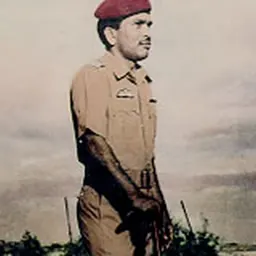

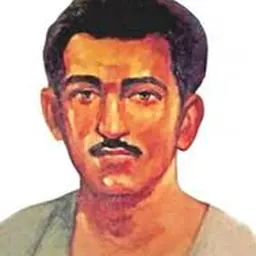
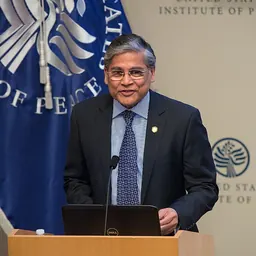


Related people
Same field, nearest in time

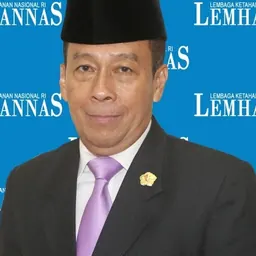

Contemporaries
People whose lives overlapped Mohammad Zia Uddin's




Frequently asked questions
Who was Mohammad Zia Uddin?
Bir Uttam recipient & Bangladeshi freedom fighter
When was Mohammad Zia Uddin born?
Mohammad Zia Uddin was born on 12 November 1939 in Chakaria Upazila.
When did Mohammad Zia Uddin die?
Mohammad Zia Uddin died on 14 June 1994.
What was Mohammad Zia Uddin's occupation?
Mohammad Zia Uddin was a military personnel.
What nationality was Mohammad Zia Uddin?
Mohammad Zia Uddin was Bangladeshi and Pakistani.
Sources & further reading
· Wikipedia: Mohammad Zia Uddin
· DBpedia: Mohammad Ziauddin (officer)
Cite this page
APA: Biography.guide. (2026). Mohammad Zia Uddin. https://biography.guide/mohammad-zia-uddin/
MLA: "Mohammad Zia Uddin." Biography.guide, https://biography.guide/mohammad-zia-uddin/.
Chicago: "Mohammad Zia Uddin." Biography.guide. https://biography.guide/mohammad-zia-uddin/.
Data last updated: 2026-09-20 · Spot an error? Report a correction.
Page generated 2026-09-27 05:09 UTC