
Mohammad Reza Aref
First Vice President of Iran and reformist politician
About Mohammad Reza Aref
Born 1951. Mohammad Reza Aref is an Iranian politician, engineer and university teacher.
Mohammad Reza Aref (; born 19 December 1951) is an Iranian engineer, academic and reformist politician who is the eighth and current first vice president of Iran since 2024, under President Masoud Pezeshkian; he previously served as the first vice-president from 2001 to 2005 under Mohammad Khatami. He is also currently member of the Expediency Discernment Council since 2002.
He was the parliamentary leader of reformists' Hope fraction in the Iranian Parliament, representing Tehran, Rey, Shemiranat and Eslamshahr. Aref has also been heading the Reformists' Supreme Council for Policymaking since its establishment in 2015.
He was also the second first vice president from 2001 to 2005 under Mohammad Khatami and Mahmoud Ahmadinejad. He previously served as Minister Information and Communications Technology and head of Management and Planning Organization in Khatami's first cabinet. He was a member of Supreme Council of the Cultural Revolution until 2021. He is also an electrical engineer and a professor at University of Tehran and Sharif University of Technology. He was a candidate in the 2013 presidential election but withdrew his candidacy in order to give the reformist camp a better chance to win.
During the mass anti-government protests in 2026, he tendered his resignation, but it was not accepted by President Pezeshkian.
Early life and education
Aref was born on 19 December 1951 in Yazd, Iran. He introduced and analyzed deterministic relay networks which is later termed as Aref Networks.
Career During his political career, Aref has held important positions in the Islamic Republic of Iran. Following the Islamic Revolution of 1979, he began his political career. His first major political post was in 1981, when he became vice president of a communication company. He became acting president of the company in 1983, and became deputy minister of science the following year. Aref was a faculty member of Isfahan University of Technology until 1994.
Aref, who was a professor at University of Tehran, was elected as its chancellor in 1994. He served in this post until September 2005, when he was succeeded by Parviz Dawoodi after the election of Mahmoud Ahmadinejad. Then, he served as a professor in the department of electrical engineering at Sharif University of Technology, offering courses on cryptography, coding theory, estimation theory and Information Theory. He is currently one of the members of the Expediency Discernment Council that is an advisory unit for Iran's Supreme Leader. In June 2013, Aref announced that he together with other reformist figures was planning to launch a national party, namely Hope of Iran. On the other hand, Iran's president-elect Hassan Rouhani stated that Aref would be one of his cabinet members. However, Aref rejected Rouhani's invite for a political post (Vice Presidency or Ministry of Science) to focus on his party's establishment. He also announced his interest in becoming one of Rouhani's advisers in politics and human rights.
2013 presidential election
Aref was one of the potential candidates for the presidential elections held in June 2013. Aref censured the foreign policy of the Ahmadinejad's administration, vowing to improve Iran's diplomatic ties with other countries if elected president. He added that the next administration can have friendly ties with the world and improve the conditions in the country through such relations. Aref also said he would pursue and implement plans to further the presence and participation of the youth in various arenas of the country. Vowing to tackle unemployment, Aref said he aimed all-out development in various political, cultural, economic, and social fields. By implementing the subsidy reform plan I will put bread on the tables. I have come to eradicate inflation and create one million job opportunities every year
Aref also said he is a reformist, and reform means safeguarding the ideals of the Islamic Revolution, accountability, and encouraging popular participation. He also called for investigation of alleged fraud in the 2009 election, and trial of effects in Death of Neda Agha Soltan and other deaths in the 2009–2010 Iranian election protests.
Aref announced his decision to drop out of the election in a statement issued late on 11 June 2013, in which he said the decision was made after he received suggestions from former President Mohammad Khatami, who advised him to stand aside. He also called on the Iranian people to vote en masse in the upcoming presidential election to create a political epic and maintain the dignity of the Islamic Republic of Iran.
2016 legislative election
On 4 November 2014, Aref announced he would run for Parliament of Iran in the 2016 election from Tehran, Rey, Shemiranat and Eslamshahr district. He officially ran for the seat on 22 December 2015. He was also named as the Pervasive Coalition of Reformists' head list.
Aref was elected to the Parliament with 1,608,926 votes, which was the highest in the election. All other 29 Reformists candidates also run to the parliament, the first time since 1980 that all candidates are run from same party in Tehran district.
Assassination attempt As reported by Farnaz Fassihi on The New York Times, Aref, serving as Iran's vice-president during the 2026 Iran war, narrowly escaped an Israeli assassination attempt on 16 March 2026. Aref was visiting a building in the Bonyad Shahid compound when Israel bombed it, according to local media.
Personal life Aref married Hamideh Moravvej Farshi in 1976. Hamideh has a PhD in dermatology and also works at the ministry of science. They have three sons.
In 2017, his son Hamid Reza said in an interview "I'm proud that [my] capabilities come from 'good genes'...", which sparked controversy.
Don’t just read it —
keep it.
Full-length biographies made to live with: read them, listen on the way to work, watch them tonight.
- E-book
- Audio
- Video
Instant download · yours to keep · every purchase keeps this site free
Important facts
People in Mohammad Reza Aref's life
Named in this biography and alive at the same time
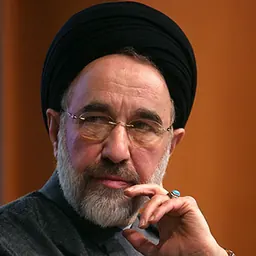


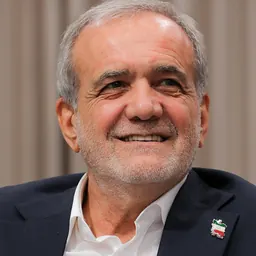


Related people
Same field, nearest in time


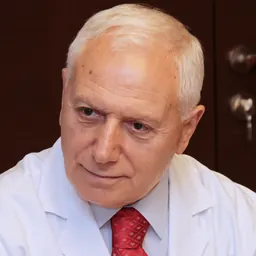

Contemporaries
People whose lives overlapped Mohammad Reza Aref's

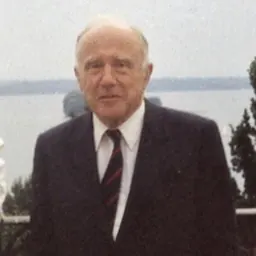

Frequently asked questions
Who is Mohammad Reza Aref?
First Vice President of Iran and reformist politician
When was Mohammad Reza Aref born?
Mohammad Reza Aref was born on 19 December 1951 in Yazd.
What is Mohammad Reza Aref's occupation?
Mohammad Reza Aref is a politician, engineer and university teacher.
What nationality is Mohammad Reza Aref?
Mohammad Reza Aref is Iranian.
Sources & further reading
· Wikipedia: Mohammad Reza Aref
Cite this page
APA: Biography.guide. (2026). Mohammad Reza Aref. https://biography.guide/mohammad-reza-aref/
MLA: "Mohammad Reza Aref." Biography.guide, https://biography.guide/mohammad-reza-aref/.
Chicago: "Mohammad Reza Aref." Biography.guide. https://biography.guide/mohammad-reza-aref/.
Data last updated: 2026-09-20 · Spot an error? Report a correction.
Page generated 2026-09-27 05:32 UTC