
About Mohammad Nabi Mohammadi
Lived 1937 – 2002 (aged 64–65). Mohammad Nabi Mohammadi was a politician.
Mohammad Nabi Mohammadi (; 1920–21 April 2002) was an Afghan politician and mujahideen leader who was the founder and leader of the Harakat-i-Inqilab-i-Islami (Islamic Revolution Movement) political party and paramilitary group. He served as Vice President of Afghanistan under the mujahideen from January 1993 to 1996.
Biography Muhammad Nabi Muhammadi was born in 1920 in Baraki Barak District, of Logar Province in Afghanistan. His grandfather, who migrated to Logar, was originally from the central Ghazni province.
Nabi's most famous experience in the parliament was an altercation with Babrak Karmal that led to Karmal being hospitalised. He is also known for a comprehensive speech in a parliament session that was played on radio stations across Afghanistan.
Upheavals in Afghanistan Daud Khan came to power at the end of the parliament session in a 1973 coup. When the parliament was dissolved by President Daud, Nabi Muhammadi returned to teaching in madrasas, first in Logar and then in Helmand. The Saur Revolution is the name given to the communist People's Democratic Party of Afghanistan (PDPA) takeover of political power from the government of Afghanistan on 28 April 1978. The coup was soon followed by imprisonment and mass killing of the prominent Afghan religious scholars, tribal leaders and reformers.
After his brother Mullah Jan was captured (he was later killed by the Taraki Government), Muhamamd Nabi Muhammadi fled, moving to the city of Quetta in neighboring Pakistan.Soon after, as the U.S launched "Operation Cyclone" against the Soviet Union with the alliance of Pakistan and Kingdom of Saudi Arabia, he gathered a large number of religious scholars in Quetta to make qualified political and military activities against the Soviet occupation inside Afghanistan .
Islamic Revolutionary Movement
The coup resulted in a massive disgorgement of Afghan religious leaders over the border to Pakistan. Most of these leaders congregated in Peshawar and tried to make contact with the leadership of two already established organizations, Hezb-e Islami and Jamiat-e Islami Afghanistan, which they already knew of because of their declaration of jihad and clandestine distribution of publications critical of President Daud. Newly arrived members of the ulema urged the principals to reunify, but Rabbani and Hekmatyar each refused to accept the other's party as the umbrella. The compromise reached was the creation of a new alliance that was to be called Harakat-i-Inqilab-i-Islami Afghanistan (Islamic Revolution Movement of Afghanistan). After various candidates were proposed and rejected for the position of amir, the assembled members of the ulama decided in early September 1978 on Muhammad Nabi Muhammadi as the leader of the new alliance.
After nearly four months, engineer Gulbuddin Hekmatyar and Burhanuddin Rabbani separated from Harakat-i-Inqilab-i-Islami and founded their own parties by the name of Hizb-e-islami and Jamiat-e-islami. Mohammad Nabi carried the leadership of Harakat-i-Inqilab-i-Islami. It was one of the seven parties that were officially recognized by the Pakistani government and was funded by the US and Arab countries through the Pakistani government.
Mohammadi was among Afghan leaders who met President Ronald Reagan at the White House during the war. Reagan called the rebel leaders "freedom fighters" and compared them with the forefathers of America. Through continuous struggle the Afghan Mujahideen succeeded in their mission, and the Russian forces withdrew from Afghanistan in 1989 after the loss of fifteen thousand of its soldiers. In 1992 the pro-Moscow government in Kabul collapsed, and the mujahideen took power.
Vice President Mohammad Nabi Mohammadi became the Vice President of Afghanistan in the mujahideen government. However, when the mujahideen leaders took up arms against each other and the civil war in Afghanistan started, he resigned from his post and forbade the troops loyal to him from taking part in the war. He remained in Pakistan and did his best to stop the war between Gulbuddin Hekmatyar, Burhanuddin Rabbani and Abdul Rasul Sayyaf. In 1996, the Taliban took control of Afghanistan. Most of the Taliban leaders were students of Mohammad Nabi Mohammadi. Mohammadi maintained a good relationship with the Taliban.
Death Mohammad Nabi Mohammadi died in a Pakistani hospital on 21 April 2002. He had been suffering from tuberculosis. His body was taken to Logar, Afghanistan, and was given a guard of honour by the government of Afghanistan.
Don’t just read it —
keep it.
Full-length biographies made to live with: read them, listen on the way to work, watch them tonight.
- E-book
- Audio
- Video
Instant download · yours to keep · every purchase keeps this site free
Important facts
People in Mohammad Nabi Mohammadi's life
Named in this biography and alive at the same time


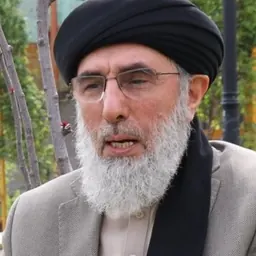

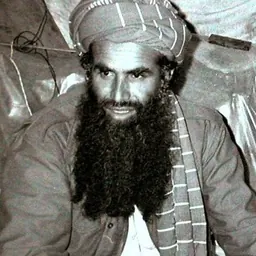
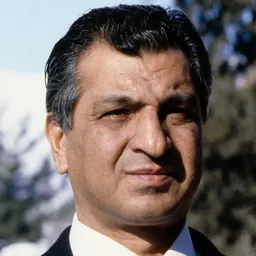
Related people
Same field, nearest in time





Contemporaries
People whose lives overlapped Mohammad Nabi Mohammadi's

Frequently asked questions
Who was Mohammad Nabi Mohammadi?
Afghan politician (1937–2002)
When was Mohammad Nabi Mohammadi born?
Mohammad Nabi Mohammadi was born in 1937 in Logar Province.
When did Mohammad Nabi Mohammadi die?
Mohammad Nabi Mohammadi died on 21 April 2002 in Pakistan.
What was Mohammad Nabi Mohammadi's occupation?
Mohammad Nabi Mohammadi was a politician.
What nationality was Mohammad Nabi Mohammadi?
Mohammad Nabi Mohammadi's recorded nationality: Islamic State of Afghanistan.
Sources & further reading
· Wikipedia: Mohammad Nabi Mohammadi
· DBpedia: Mohammad Nabi Mohammadi
Cite this page
APA: Biography.guide. (2026). Mohammad Nabi Mohammadi. https://biography.guide/mohammad-nabi-mohammadi/
MLA: "Mohammad Nabi Mohammadi." Biography.guide, https://biography.guide/mohammad-nabi-mohammadi/.
Chicago: "Mohammad Nabi Mohammadi." Biography.guide. https://biography.guide/mohammad-nabi-mohammadi/.
Data last updated: 2026-09-20 · Spot an error? Report a correction.
Page generated 2026-09-27 05:23 UTC