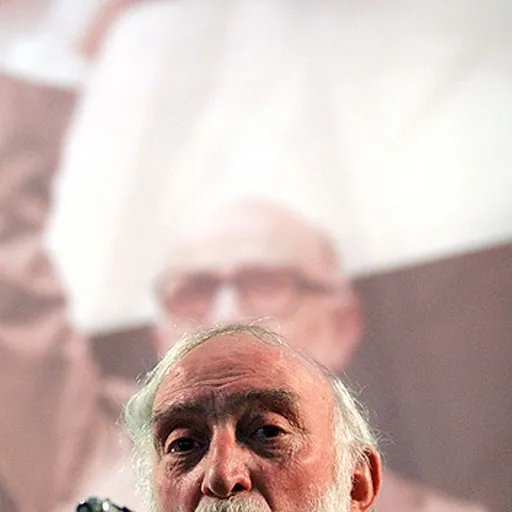
Mohammad Mojtahed Shabestari
Iranian cleric and academic
About Mohammad Mojtahed Shabestari
Born 1936. Mohammad Mojtahed Shabestari is an Iranian theologian, philosopher, university teacher and schreiber.
Mohammad Mojtahed Shabestari (; born 1936 in Shabestar, Iran) is an Iranian philosopher, theologian and hermeneutist. He was professor at the University of Tehran. He is noted for his idea that "religion-in-itself" is perfect, but not all-encompassing, i.e. it does not possess the answer to every question in life. Formerly a political activist and MP, he retired himself from politics in 1984.
He was also Imam of Islamic Centre Hamburg during the late Pahlavi era, between 1970 and 1978.
He has ceased wearing clerical attire, that according to Mehdi Khalaji, is in order to "disassociate himself with the pro-regime establishment".
Education and career As a student in Qom, Shabestari studied with Ruhollah Khomeini and Allameh Tabatabaei. He was influenced by Ruhollah Khomeini's idea that "Islamic ethics was not limited" to "personal relationships", but should be "reflected in the state and its form of government."
He stayed in the seminary for seventeen years, achieving both degrees of Ijtihad (religious adjudication) and Doctor of Philosophy.
In the spirit of the political Shia in 1960s and 1970s Iran, Shabestari also felt closely associated with the thinking of religious intellectuals such as Jalal Al-e Ahmad and Ali Shariati, as well as the politically motivated cleric Morteza Motahhari.
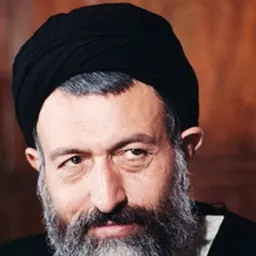
From 1970-1978, Shabestari served as director of the Shiite Islamic Center in the Imam Ali Mosque in Hamburg, Germany. He followed in this position Mohammad Beheshti (who was to become one of the main architects of the Islamic revolution of Iran) and was later succeeded in this position by future president of the Islamic Republic of Iran, Mohammad Khatami. So far 16 volumes have been published of the encyclopedia, covering the first five letters of the alphabet.
His philosophy and contributions Although Shabestari has made a modest contribution to the introduction and application of modern hermeneutics to traditional Shiite theology and jurisprudence, and thus to the proposition of variability of religious knowledge, his most significant contribution seems to be his authoritative commentary on the essentially limited nature of religious knowledge and rules, and thus the necessity of complementing it with extra-religious sources.
Shabestari has argued that distinguishing the eternal (values), from the changeable (instances and applications) in religion needs a kind of knowledge that is not, itself, contained in the rules developed in Islamic jurisprudence (Fiqh). He has lamented the lack of such a body of knowledge in Islamic society: In the same vein, he has underscored the limited nature of religious knowledge in general, and religious jurisprudence, in particular.(10) In Shabestari's view, what is essential and eternal is the general values of Islam not particular forms of their realization in any particular historic time, (including the time of the prophet):
The meaning of perfection of religion (Ekmal e Din) is not that it contains everything under the sun, so that if we were unable to find a specific item in it, we could go off calling it imperfect. It is not perfection for religion to function as a substitute for science, technology, and human deliberation.
Also, Religion does not wish to replace science and technology, and lay claim to the place of reason ... God has only offered answers for some of the needs of human beings. As for other needs, He has left it to reason and human effort to supply the answer.
Shabestari has suggested that there has been a divine providence for a separation of religious values and secular realities: In his book, Naghdi Bar Ghera'at e Rasmi az Din (A Critique of the Official Reading of Religion, December, 2000) Shabestari pursues his critique of religious absolutism as hermeneutically naive and realistically unworkable. Also, he has launched a major defense of modern concepts of individualism, democracy, and human rights, although they have not been articulated as such in Islamic sources.
Books Hermenutik, Kitab va Sunnat [Hermeneutics, the Book and Tradition], (Tehran: Tarh-e Naw, 1996). Iman va Azadi [Faith and Freedom], (Tehran: Tarh-e Naw, 1997). This also contains the essay titled "Christian Theology". Naqdi bar Qira’at-e Rasmi-e Din [A Critique of the Official Reading of Religion], (Tehran: Tarh-e Naw, 2000). Ta'amulati dar Qira’at-e Ensan-i az Din [Reflections on the Human Reading of Religion], (Tehran: Tarh-e Naw, 2004).
Articles 'Fetrat-e Khoda joy-e Ensan dar Qur'an' in Andish-e Islami, 1, 7 (1358/1979). 'Fetrat-e Khoda joy-e Ensan dar Qur'an' in Andish-e Islami, 1, 9 (1358/1979). 'Qara'at-e rasmi az din' in Rah-e Naw, 19. Shahrivar 7, 1377/August 29, 1998. 'Qara'at-e Nabavi az Jahan' [A Prophetic Reading of the World]. 'Die prophetische Lesart der Welt'.
Don’t just read it —
keep it.
Full-length biographies made to live with: read them, listen on the way to work, watch them tonight.
- E-book
- Audio
- Video
Instant download · yours to keep · every purchase keeps this site free
Important facts
People in Mohammad Mojtahed Shabestari's life
Named in this biography and alive at the same time
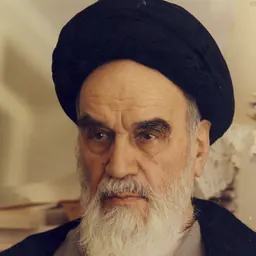
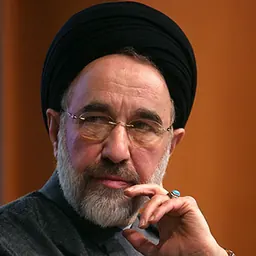


Related people
Same field, nearest in time

Contemporaries
People whose lives overlapped Mohammad Mojtahed Shabestari's






Frequently asked questions
Who is Mohammad Mojtahed Shabestari?
Iranian cleric and academic
When was Mohammad Mojtahed Shabestari born?
Mohammad Mojtahed Shabestari was born in 1936 in Tabriz, Shabestar.
What is Mohammad Mojtahed Shabestari's occupation?
Mohammad Mojtahed Shabestari is a theologian, philosopher, university teacher and schreiber.
What nationality is Mohammad Mojtahed Shabestari?
Mohammad Mojtahed Shabestari is Iranian.
Sources & further reading
· Wikipedia: Mohammad Mojtahed Shabestari
· DBpedia: Mohammad Mojtahed Shabestari
Cite this page
APA: Biography.guide. (2026). Mohammad Mojtahed Shabestari. https://biography.guide/mohammad-mojtahed-shabestari/
MLA: "Mohammad Mojtahed Shabestari." Biography.guide, https://biography.guide/mohammad-mojtahed-shabestari/.
Chicago: "Mohammad Mojtahed Shabestari." Biography.guide. https://biography.guide/mohammad-mojtahed-shabestari/.
Data last updated: 2026-09-24 · Spot an error? Report a correction.
Portrait: Wikimedia Commons · author & licence
Page generated 2026-09-27 05:08 UTC