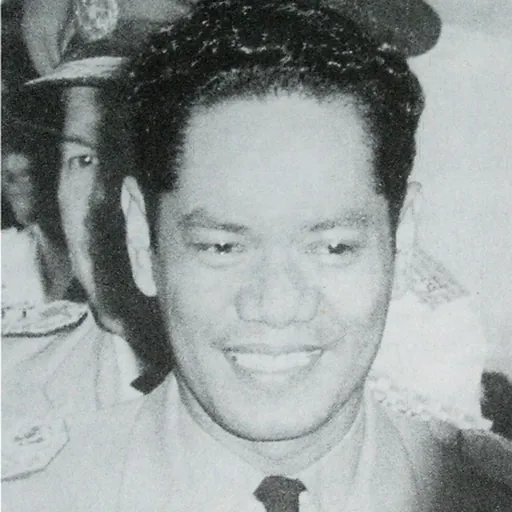
Mohammad Jusuf
Indonesian military General and a witness to the signing of Supersemar
About Mohammad Jusuf
Lived 1928 – 2004 (aged 76). Mohammad Jusuf was an Indonesian civil servant and military personnel.
General Andi Mohammad Jusuf Amir (23 June 1928 – 8 September 2004), more commonly known as M. Jusuf, was an Indonesian military general and a witness to the signing of the Supersemar document transferring power from President Sukarno to General Suharto.
Early life Jusuf was born in Kayuara, Bone, South Sulawesi on 23 June 1928.
Not much is known about Jusuf's early life other than the fact he was a Bugis aristocrat as witnessed by the titular name "Andi" in front of his name. Jusuf would later denounce his aristocratic background by dropping Andi from his name.
Military career
The Indonesian National Revolution When Nationalist leaders, Sukarno and Mohammad Hatta proclaimed Indonesia's Independence on 17 August 1945, Jusuf showed his support by joining the Devotion of the Indonesian People from Sulawesi (KRIS). Towards the end of 1945, with the Dutch Government preparing to retake Indonesia, Jusuf and his fellow KRIS members sailed for Java to join in the fighting.
Jusuf started his military career in the Navy, becoming the adjutant of Navy Lieutenant Colonel Kahar Muzakkar at the 10th Navy Staff Commando headquarters in Yogyakarta.
Sulawesi By 1949, Jusuf had switched over to the Army, becoming a part of the Military Police before becoming a member of the Eastern Indonesia Military Commission.
In 1950, Jusuf became the adjutant of Colonel Alexander Evert Kawilarang, the Commander of KODAM VII/ Wirabuana whose security brief covered the whole of Eastern Indonesia. In this position, Jusuf participated in putting down rebellions by the Republic of South Maluku (RMS). Jusuf then continued his military career, serving as a Regimental Chief of Staff in Manado, an Operations Assistant to the Commander of KODAM VII/Wirabuana, and the Head of the General Reserves.
Universal Struggle Charter (Permesta) During the mid-1950s there was a concern among the people of Sulawesi that the Central Government in Jakarta was not catering to their needs. There were calls made for decentralization in all aspects of Governance, ranging from economic development to security.
Being a soldier, Jusuf was interested in the decentralization of security matters and along with like-minded colleagues concluded that the Sulawesinese should be responsible for the security in their region. Jusuf also showed concern by the fact that TT VII/Wirabuana's security brief covered all of Eastern Indonesia whereas the KODAMs in Western Indonesia had a specific area to cover.
This concern for decentralization culminated in the Permesta statement which was signed by important figures in Sulawesi (including Jusuf) on 2 March 1957. The statement also declared a state of emergency in Eastern Indonesia. At this time, Jusuf became an operations officer for Permesta.
It was not long, however, before Jusuf abandoned the movement. In May 1957, Army Chief of Staff Abdul Haris Nasution authorized the formation of KODAM XIV/Hasanuddin, KODAM/South East Sulawesi, and KODAM XVI/Udayana to cover the security of Sulawesi. With his request now fulfilled, there was no reason for Jusuf to stay with Permesta. Sukarno was then intimidated at gunpoint by Basuki and Panggabean before signing the pre-prepared Supersemar.
Jusuf also managed to get hold of a copy of Supersemar.
On 13 March, Sukarno summoned Jusuf, Basuki, and Amirmachmud. Sukarno was angry that Suharto had banned the Communist Party of Indonesia (PKI) and told the three Generals that Supersemar did not contain such instructions. Sukarno then ordered that a letter be produced to clarify the contents of Supersemar but nothing ever came up apart from the copies that former Cuban Ambassador, AM Hanafi collected.
New Order As the leadership of the nation changed from Sukarno to Suharto, Jusuf continued as Minister of Industry. It was also noteworthy that although holding a civilian post, Jusuf's military career continued as he continued to receive promotions from this position.
ABRI Commander In April 1978, Jusuf was appointed to the position of the Commander of ABRI while concurrently taking on the position of Minister of Defense and Security.
As Commander, Jusuf was commissioned by Suharto to start a process of integrating (Memanunggalkan) ABRI with the people. Jusuf would later on say that he was not sure of what this order meant but took it to mean that he was to make ABRI neutral in politics instead of taking Golkar's side. In this he was successful as in the 1982 Legislative Elections, Golkar did not get the active support from ABRI that it enjoyed in the previous two Legislative Elections that it competed in.
Jusuf was also responsible for the ABRI Enters the Villages (ABRI Masuk Desa) program. In this program, ABRI soldiers were sent to rural areas to help with infrastructure development.
During his term as Commander of ABRI, Jusuf developed a reputation as a General who was interested in the welfare of his men. He regularly toured the regions to visit the soldiers and enquire about their families and conditions. This made him extremely popular in the ranks of ABRI at the expense of his relationship with Suharto, who began to see Jusuf as a threat.
In 1982, a top officials meeting was held and attended by Suharto, Jusuf, and Amirmachmud who then served as Minister of Home Affairs. During the meeting, Amirmachmud commented on Jusuf's popularity and asked him to explain himself to Suharto. Sensing the accusation behind the request, Jusuf lost his temper and promised Suharto that he never had any ambitions for power in doing his duties. Suharto's suspicion seemed to have hurt Jusuf and never attended Cabinet meetings until he was discharged from his position in April 1983.
Post-Military Career and Retired Life From 1983 to 1993, Jusuf served as Chairman of the Audit Board (BPK). It was a job from which he expected to reach great things, considering his predecessor, Umar Wirahadikusumah who went on to become vice president. However, that was the end of his involvement with the Government.
Jusuf had a close relationship with Jusuf Kalla and at one stage considered showing Kalla the copy of Supersemar which he retrieved from 1966. Jusuf changed his mind and showed Kalla a photocopied version instead.
When Jusuf announced his intentions to produce a memoir of his life, there was widespread expectation of what his account of Supersemar would be like (out of the 3 Generals who witnessed the signing of Supersemar, only Amir Machmud had produced his account). At first, Suharto trusted Jusuf to publish the memoir on his own but changed his mind, asking Jusuf to let the State Secretariat publish it. Jusuf rejected this offer.
In his retired life, Jusuf was active in social activities and headed a foundation in charge of running a mosque as well as contributing to the running of a hospital.
Death Jusuf died on 8 September 2004.
Family Jusuf was married to Elly Saelan, with whom he had one son.
Miscellaneous Although Amirmachmud had subtly accused him of being ambitious, Jusuf remained a close friend with his fellow Supersemar eyewitness. Before Amirmachmud died, he requested that Jusuf attend the funeral. However, Jusuf was unable to attend Amirmachmud's funeral. Jusuf also received a secret letter from Amirmachmud.
Honours National honours
Foreign honours
Don’t just read it —
keep it.
Full-length biographies made to live with: read them, listen on the way to work, watch them tonight.
- E-book
- Audio
- Video
Instant download · yours to keep · every purchase keeps this site free
Important facts
People in Mohammad Jusuf's life
Named in this biography and alive at the same time

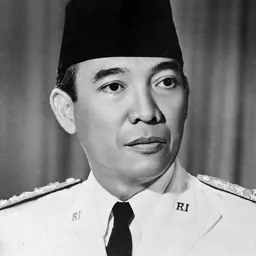

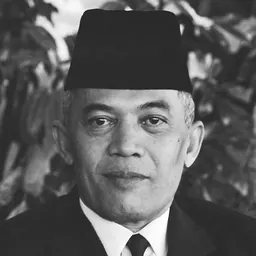
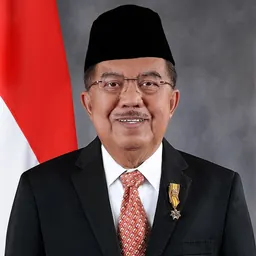
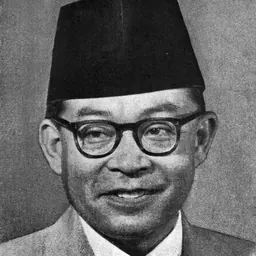
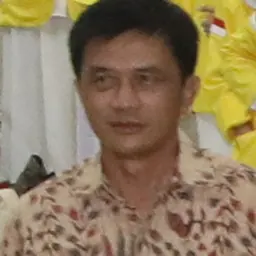
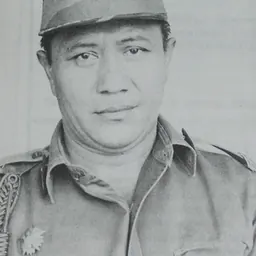
Related people
Same field, nearest in time


Contemporaries
People whose lives overlapped Mohammad Jusuf's




Frequently asked questions
Who was Mohammad Jusuf?
Indonesian military General and a witness to the signing of Supersemar (1928–2004)
When was Mohammad Jusuf born?
Mohammad Jusuf was born on 23 June 1928 in Kajuara.
When did Mohammad Jusuf die?
Mohammad Jusuf died on 8 September 2004 in Makassar.
What was Mohammad Jusuf's occupation?
Mohammad Jusuf was a civil servant and military personnel.
What nationality was Mohammad Jusuf?
Mohammad Jusuf was Indonesian.
Sources & further reading
Cite this page
APA: Biography.guide. (2026). Mohammad Jusuf. https://biography.guide/mohammad-jusuf-civil-servant/
MLA: "Mohammad Jusuf." Biography.guide, https://biography.guide/mohammad-jusuf-civil-servant/.
Chicago: "Mohammad Jusuf." Biography.guide. https://biography.guide/mohammad-jusuf-civil-servant/.
Data last updated: 2026-09-22 · Spot an error? Report a correction.
Portrait: Wikimedia Commons · author & licence
Page generated 2026-09-27 05:03 UTC