
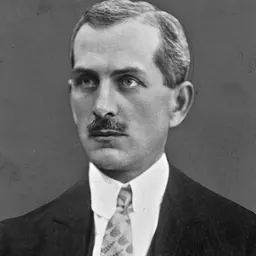
Mohammad Bahmanbeigi
Iranian writer and founder of education for nomadic communities in Iran
About Mohammad Bahmanbeigi
Lived 1921 – 2010 (aged 88–89). Mohammad Bahmanbeigi was an Iranian writer, teacher and biographer, known for Iran and Nomadic.
Mohammad Bahmanbeigi (; 16 February 1920 – 1 May 2010), sometimes rendered Mohammad Bahman Beigi, was an activist of education for nomadic communities in Iran.
Early life Bahmanbeigi was born into the Iranian Qashqai tribe in the southern Fars province. His family headed a small clan, so Bahmanbeigi was educated, attending university in Tehran.
In October 1954 Funseth introduced Bahmanbeigi as: director of the Point Four tribal education program. According to his report: "Background on Bahmanbeigi: about 40 years old. Is a member of the Amaleh tribe. His father is in the mountains with his sub-tribe. Bahmanbeigi is a graduate of the University of Tehran Law School. He directs the Point Four tribal education program".
According to Clarence Hendershot, a frequent visitor to the schools as the American Education Director in Iran from 1961 through 1965, the tent schools program proved the most successful primary education project that Point Four engaged in Iran; it functioned exactly as a low modernization technical assistance project should. Gagon provided crucial help with gathering important demographic data, procuring supplies and training teachers during the first two years of the program before the Ministry of Education offered its support.
The Americans also shaped the teaching methods to some degree, though many of Bahmanbegi's ideas resulted at least as much from his own trips to the United States. The program itself, however, was almost exclusively Iranian in execution. Iranians taught and maintained the schools with Bahmanbegi firmly in charge. American influence declined rapidly after the Iranian Ministry of Education assumed financial responsibility for the program in 1955, and Bahmanbegi left the Point Four payroll.
The Point Four and tribal education "The modern Iranian state during the 1930s convinced the Qashqai leadership of the importance of being able to function in an increasingly sophisticated society. Consequently, the idea of educating their children gained popularity among the Qashqai by the 1950s." "In 1950, the first Point Four international agreement has been signed for American technical cooperation in Iran." In the same year, "Brigham Young University-BYU was invited to participate in Point Four Program in Iran. The United States government also sought the aid of the University of Utah and Utah State Agricultural College [now Utah State University] in planning, staffing and operating the program."
"BYU sent four groups of educators to assist in correcting the weaknesses of Iranian school system. The initial group of six educators from BYU including Mr. Glen Gagon, sent in 1951, assisted in upgrading elementary education, establishing tribal schools, and getting the Point Four Program in operation." "Glen Gagon relocated to Shiraz and was involved in founding Point Four nomadic schools for nomadic communities since 1951. The program was later extended to other nomadic regions of Iran."
Vincent Buist (December 1954, Reuters) has prepared a report about the Point for in Iran and published it in Toledo Blade newspaper. He wrote: The first American move to establish tribal education was made by Glen Gagon of Provo, Utah, in 1953. He did a survey of the needs of the nomads. Mr. Gagon found in 1953 that no schools existed for poorer nomads. He went directly to the tribal chiefs. "The chiefs in the main were receptive", he says. "They helped in electing the best qualified men to serve as teachers and sent them to teachers' training courses, and promised to pay their salaries". Mr. Gagon did his early work by jeep and horseback, often spending 10 days at a time in the saddle among tribes moving through the wild Zagros mountain range. He soon learned that secondary schoolboys from the towns would not make good tribal teachers. "Tribal teachers must be known to the families they are going to teach. They must be accepted, from the khan downward, and they must want to stay with the tribes and take a full part in nomadic life. A town boy, however good, would not be accepted", Mr. Gagon said.
Until the early 1950s, tribal folk entrusted the education of their children to mullahs, or tribal elders, who had passed the age of usefulness at hunting or working with cattle. Iranian authorities hoped that education will prove a useful preliminary to inducing the tribes to settle, cultivate the land, prosper and pay taxes as other citizens do. "In that time, Mr. Bahmanbeigi was placed on the Point Four payroll."
"The tribal normal school first admitted girls in 1962; eleven years later 270 had graduated and were teaching, a significant accomplishment given the hesitancy with which some Qashqai greeted the idea of sending their girls to school just a decade earlier." The tent school program increased educational opportunities for tribal girls, a goal of both the BYU advisors and the Iranian Ministry of Education. "Bahmanbegi was abundantly qualified to lead the experiment in education. His father had served on the staff of the Qashqai’s leading khan, and Bahmanbegi himself took a law degree from the University of Tehran."
"Mr. Bahmanbeigi visited the U.S. where he took a keen interest in social process. He was particularly interested by the public schools. The following year he returned with a mission. Bahmanbeigi has identified as the local person to cooperate with, and to facilitate American assistance." In 2008, Iranian director Mohammad-Ali Talebi announced plans to film a second Bahmanbeigi biopic.
Death
On 1 May 2010, Mohammad Bahmanbeigi died in Shiraz, Iran. He was 90.
Don’t just read it —
keep it.
Full-length biographies made to live with: read them, listen on the way to work, watch them tonight.
- E-book
- Audio
- Video
Instant download · yours to keep · every purchase keeps this site free
Important facts
Related people
Same field, nearest in time




Contemporaries
People whose lives overlapped Mohammad Bahmanbeigi's



Frequently asked questions
Who was Mohammad Bahmanbeigi?
Iranian writer and founder of education for nomadic communities in Iran
When was Mohammad Bahmanbeigi born?
Mohammad Bahmanbeigi was born in 1921 in Fars Province.
When did Mohammad Bahmanbeigi die?
Mohammad Bahmanbeigi died on 1 May 2010 in Iran, Shiraz.
What was Mohammad Bahmanbeigi's occupation?
Mohammad Bahmanbeigi was a writer, teacher and biographer.
What was Mohammad Bahmanbeigi known for?
Mohammad Bahmanbeigi was known for Iran and Nomadic.
What nationality was Mohammad Bahmanbeigi?
Mohammad Bahmanbeigi was Iranian.
Sources & further reading
· Wikipedia: Mohammad Bahmanbeigi
· DBpedia: Mohammad Bahmanbeigi
Cite this page
APA: Biography.guide. (2026). Mohammad Bahmanbeigi. https://biography.guide/mohammad-bahmanbeigi/
MLA: "Mohammad Bahmanbeigi." Biography.guide, https://biography.guide/mohammad-bahmanbeigi/.
Chicago: "Mohammad Bahmanbeigi." Biography.guide. https://biography.guide/mohammad-bahmanbeigi/.
Data last updated: 2026-09-27 · Spot an error? Report a correction.
Page generated 2026-09-27 05:16 UTC