
About Mohamed Khaznadar
Lived 1840 – 1929 (aged 88–89). Mohamed Khaznadar was an archaeologist.
Muhammad Khaznadar (1840–1929) was an early archaeologist in Tunisia. He was the eldest son of Mustapha Khaznadar, a prominent Prime Minister of Tunisia who served from 1855 until 1873.
Khaznadar was the first Tunisian to propose the founding of a museum, located in the Bardo Palace in the town of Manouba just outside Tunis. His collection was to form the kernel of the Bardo National Museum. Khaznadar's work also influenced the development of cultural policies in Tunisia in the years leading up to the establishment of the French protectorate in 1881.
As a native North African at the forefront of archaeology during the time of European colonialism, he has been compared to the Ottoman Osman Hamdi Bey and the Egyptian Rifa'a at-Tahtawi.
Biography Khaznadar was born into a wealthy family tied to the Tunisian ruling elite. His father, Mustapha Khaznadar, originally from the Greek island of Chios, had risen to become a leading figure in the Tunisian court. Muhammad received an education in Paris, where he was exposed to European culture, history, and archaeology. In Paris, he was a student of Ernest Desjardins.
After returning to Tunisia in 1865, Khaznadar became involved in the exploration and collection of antiquities. He was the first Tunisian to conduct modern archaeological excavations at Carthage, starting in 1866. His efforts led to the formation of a significant collection of antiquities, including Roman and Punic inscriptions, mosaics, and sculptures. Khaznadar established connections with European scholars and institutions. He communicated his discoveries to the Académie des Inscriptions et Belles-Lettres in Paris. However, his growing collection also led to tensions with foreign archaeologists and the French colonial authorities. Parts of his collection were exhibited at the Exposition Universelle (1867) in Paris and the 1873 Vienna World's Fair.
One of Muhammad Khaznadar's key achievements was his role in the founding of what would later become the Bardo National Museum. In 1866, he proposed the creation of a museum to house Tunisia's antiquities, to be located at the Manouba Palace, the residence of the Tunisian bey. The collection that Khaznadar amassed, including the Khaznadar inscriptions, a notable Bacchus statue, and other significant artifacts, formed the core of the museum's early holdings. German traveller Heinrich von Maltzan described the excitement that had developed around the museum in the late 1860s, describing that it: "in its specialty, Phoenician and Carthaginian antiquities, surpassed every other museum in the world":
von Maltzen noted that the museum contained more than 120 Punic inscriptions (2/3 Punic and 1/3 neo-Punic) found during Khaznadar's excavations in three different points around the ruins of Carthage. He complained about the limited public access to the museum, such that it had “acquired the mysterious reputation of containing the greatest rarities of pagan and Christian literature”. Khaznadar's refusal to allow scholars to copy the inscriptions was attributed to a concern that "the value of his museum could be damaged by premature publication of his inscriptions". Taher Ghalia, Chief Curator of the Bardo, wrote that the foundation of the modern national museum by decree, on 25 March 1885, followed from the 1876–1877 “patrimonialization” policy of Hayreddin Pasha, who had succeeded Mustapha Khaznadar as Prime Minister. Hayreddin Pasha regulated archaeological work and ordered “the seizure of Mhammed Khaznadar’s private collection which was acquired fraudulently”.
Gallery of his collection
Don’t just read it —
keep it.
Full-length biographies made to live with: read them, listen on the way to work, watch them tonight.
- E-book
- Audio
- Video
Instant download · yours to keep · every purchase keeps this site free
Important facts
People in Mohamed Khaznadar's life
Named in this biography and alive at the same time
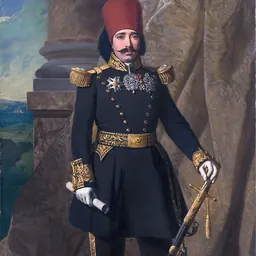


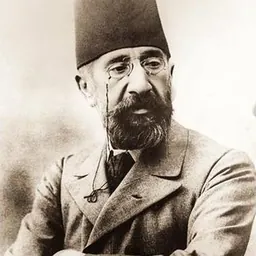
Related people
Same field, nearest in time
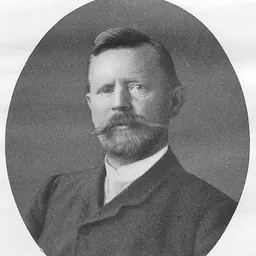


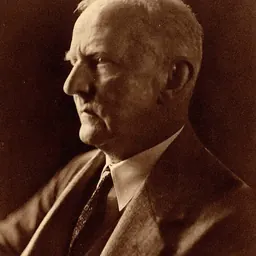

Contemporaries
People whose lives overlapped Mohamed Khaznadar's

Frequently asked questions
Who was Mohamed Khaznadar?
Tunisian archaeologist
When was Mohamed Khaznadar born?
Mohamed Khaznadar was born in 1840.
When did Mohamed Khaznadar die?
Mohamed Khaznadar died in 1929.
What was Mohamed Khaznadar's occupation?
Mohamed Khaznadar was an archaeologist.
What nationality was Mohamed Khaznadar?
Mohamed Khaznadar's recorded nationality: Beylik of Tunis, French protectorate of Tunisia.
Sources & further reading
· Wikipedia: Mohamed Khaznadar
Cite this page
APA: Biography.guide. (2026). Mohamed Khaznadar. https://biography.guide/mohamed-khaznadar/
MLA: "Mohamed Khaznadar." Biography.guide, https://biography.guide/mohamed-khaznadar/.
Chicago: "Mohamed Khaznadar." Biography.guide. https://biography.guide/mohamed-khaznadar/.
Data last updated: 2026-09-20 · Spot an error? Report a correction.
Page generated 2026-09-27 05:26 UTC