
About Mohamed Fawzi Elhaw
Lived 1918 – 1966 (aged 48). Mohamed Fawzi Elhaw was an Egyptian singer, composer, actor and musician.
Mohamed Fawzi (also Mohamed Fawzi) was an Egyptian singer, composer, and film actor.
Fawzi reigned supreme in Egyptian musical and revue films throughout the 1940s and 1950s. His artistic style was characterized by simplicity and joy, and he also possessed a talent for managing finances, business, and artistic production. Mohamed Fawzi composed the melody for the Algerian national anthem, "Qassaman", with lyrics by the Algerian revolutionary poet Mufdi Zakaria.
About his life
Mohamed Fawzi was born in the village of Kafr Abu Gundi, in the Qutur district of Gharbia Governorate. He was the twenty-first of twenty-five children, including the singers Huda Sultan and Hind Allam. Fawzi received his primary education at Tanta School in 1931. He was drawn to music and singing from a young age, learning the fundamentals of music from Mohamed El-Kharbatli, a firefighter and friend of his father, who used to take him along to sing at religious festivals, celebrations, and weddings. Fawzi was influenced by the songs of Mohamed Abdel Wahab and Umm Kulthum, and he would perform their songs for people in the Montazah Gardens and at the city's celebrations of the Mawlid of Sayyid al-Badawi.
After completing his preparatory education, he enrolled in the Fouad I Institute of Music in Cairo. He left his studies after two years to work at the nightclub owned by the sisters Ratiba and Insaf Rushdi. Later, Badia Masabni lured him to work at her establishment, where he met Farid al-Atrash, Mohamed Abdel-Mottaleb, and composer Mahmoud El-Sherif. He formed a close friendship with them, composing and performing sketches and revues, which later proved beneficial to his film career. At the age of twenty, Fawzi auditioned for the radio as both a singer and composer, following in the footsteps of FFarid al-Atrash, who had done so two years prior. Fawzi failed as a singer but succeeded as a composer, emulating the success of Mahmoud El-Sherif.
The beginning of his artistic career After arriving in Cairo in 1938, Fawzi began working with Badia Masabni's troupe, then Fatima Rushdi's troupe, and finally the National Theatre Troupe.
Singing was Mohamed Fawzi's passion, so he decided to revive the works of Sayed Darwish as a springboard to performing his own compositions. His opportunity arose when the Egyptian Acting and Music Troupe contracted him as an actor and singer in Sayed Darwish's play Scheherazade; his failure in the role left him disheartened, especially in front of an unforgiving audience. He withdrew from the scene for a while until actress Fatima Rushdi, who admired him and believed in his talent, offered him a position in her troupe as an actor, composer, and singer. He gratefully accepted her offer. In 1944, Youssef Wahbi asked him to play a small role in the film The Executioner's Sword, in which he would sing two songs composed by Wahbi. A stipulation from Wahbi was that Fawzi be credited simply as "Mohamed Fawzi," to which Fawzi agreed without hesitation.
Director Mohamed Karim saw The Executioner's Sword and was looking for a new face to play the lead role in his film The Happy Ones opposite Suleiman Naguib and the singer Raja Abdo. He found what he was looking for in Mohamed Fawzi, but required that he undergo cosmetic surgery to correct his slightly flat upper lip. Fawzi complied, and later discovered that Mohamed Karim had been right. His success in The Happy Ones helped him establish his own film company, Mohamed Fawzi Films, in 1947.
Egyptian radio, which had rejected him as a singer, continued to broadcast his film songs without ever considering signing him. After the July 1952 revolution, radio began to play his patriotic songs, such as "My Country, I Loved You, My Country," and religious songs like "O Oft-Returning, O Forgiving," and "My God, How Just You Are." He also sang children's songs such as "Mama's Coming Soon" and "The Night Has Gone," which he performed in the film "Miracle of Heaven." Fawzi also participated with Madiha Yousri, Emad Hamdi, Shadia, Farid Shawqi, and Huda Sultan in the "Mercy Train" trips, which the revolution ordered to run in 1953 between the governorates of Lower and Upper Egypt. He and other artists performed to comfort patients in hospitals and social welfare centers.
Fawzi sang many songs he composed for films. He also composed for many singers of his era, such as Mohamed Abdel-Mottaleb, Laila Mourad, Nazik, Huda Sultan, Najah Salam, and many others.
The Algerian National Anthem
In 1956, two Algerian officials traveled to Egypt to meet with Mohamed Fawzi at the Voice of the Arabs radio station and ask him to compose the Algerian national anthem. However, Mohamed Abu al-Futuh, head of the Moroccan section at the station, objected to Fawzi, deeming him a weak composer unsuitable for the task. Fawzi took this as a slight against his abilities and talent and presented the work "Kassaman," the Algerian national anthem that remains in use to this day.
Founding and Nationalization of the Masrafon Company During 1958, Fawzi was able to establish the Masrafon Company for record production. His company sold records for thirty-five piasters, undercutting foreign record companies that were selling records for ninety piasters. His Masrafon company produced songs by the leading singers of that era, such as Umm Kulthum and Mohamed Abdel Wahab, among others.
The success of Fawzi's company and the quality of its production led the government to nationalize it in 1961 and appoint him as its director with a salary of 100 Egyptian pounds. Ahmed Al-Samahi stated: "Nationalization was the reason for Fawzi's downfall. After being the owner and backbone of the company, which was his whole life, his work there began to shrink. Then one day, he went to the company and found someone at the door saying, 'We will give you a monthly salary of one hundred pounds, and you will have an office there and be the head of the company.' But he found his office in the room that had been a tea and coffee shop.
Personal life Mohamed Fawzi married his first wife, Huda, in 1943. They had three children: Nabil (born 1944), Samir (born 1946), and Munir (born 1948), before divorcing in 1952. Later that same year, he married the actress Madiha Yousri, with whom he had a son, Amr (born 1955). Two of his sons with Madiha Yousri predeceased him. They divorced in 1959. In 1960, he married his third wife, Karima (actress), and they had their daughter, Iman, in 1961. She remained with him until his death.
Works and artistic legacy Mohamed Fawzi's repertoire included 400 songs, approximately 300 of which were featured in films. Among his most famous songs are "Habibi wa Ainih" (My Beloved and His Eyes), "Shahhat al-Gharam" (The Beggar of Love), "Tamally fi Qalbi" (Always in My Heart), "Wahashouna al-Habayeb" (We Miss Our Loved Ones), "Elli Yehwak Ahwah" (I Love the One Who Loves You), and "Mal al-Qamar Malo" (What's Wrong with the Moon?).
He also composed a collection of beloved children's songs, including "Mama Zamanha Gaya" (Mama's Coming Soon) and "Dahab al-Layl Tala' al-Fajr" (The Night Has Gone, Dawn Has Come). Fawzi wrote the famous patriotic song "Baladi Ahbabtak Ya Baladi" (My Country, I Loved You, My Country), and songs for special occasions such as "Hatou al-Fawanees Ya Awlad" (Bring the Lanterns, Children) for Ramadan and "Enti Ya Ummi" (You, My Mother) for Mother's Day. He also composed a unique melody called "Mustafa Ya Mustafa" (Mustafa, Oh Mustafa), which became an icon in world music and has been used in numerous international songs.
Year Works 1947 Mind on Vacation 1948 Love and Madness Soul and Body 1949 The Madwoman Fatima, Marika and Rachel The Pennywise Woman 1950 A Dancer's Love Miss Mama 1951 The End of a Story The Rose of Love 1952 Where Did You Get This? 1953 A Good Samaritan 1954 The Tough Guys of Al-Husayniya Always With You Daughters of Eve 1955 The Absent One 1956 Miracle in Heaven 1959 Every Beat of My Heart
Don’t just read it —
keep it.
Full-length biographies made to live with: read them, listen on the way to work, watch them tonight.
- E-book
- Audio
- Video
Instant download · yours to keep · every purchase keeps this site free
Important facts
People in Mohamed Fawzi Elhaw's life
Named in this biography and alive at the same time




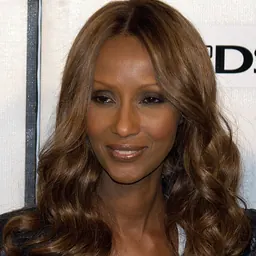

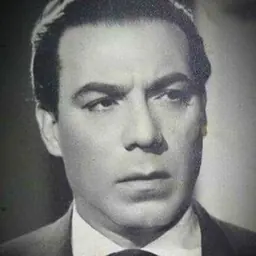
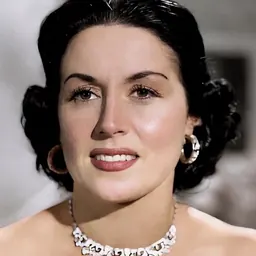
Related people
Same field, nearest in time
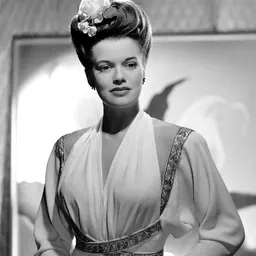



Contemporaries
People whose lives overlapped Mohamed Fawzi Elhaw's


Frequently asked questions
Who was Mohamed Fawzi Elhaw?
Egyptian composer, singer and actor
When was Mohamed Fawzi Elhaw born?
Mohamed Fawzi Elhaw was born on 15 August 1918 in Kafr Abu Jindi.
When did Mohamed Fawzi Elhaw die?
Mohamed Fawzi Elhaw died on 20 October 1966 in Cairo.
What was Mohamed Fawzi Elhaw's occupation?
Mohamed Fawzi Elhaw was a singer, composer, actor and musician.
What nationality was Mohamed Fawzi Elhaw?
Mohamed Fawzi Elhaw was Egyptian.
Sources & further reading
· Wikipedia: Mohamed Fawzi Elhaw
· DBpedia: Mohamed Fawzi (singer)
Cite this page
APA: Biography.guide. (2026). Mohamed Fawzi Elhaw. https://biography.guide/mohamed-fawzi-elhaw/
MLA: "Mohamed Fawzi Elhaw." Biography.guide, https://biography.guide/mohamed-fawzi-elhaw/.
Chicago: "Mohamed Fawzi Elhaw." Biography.guide. https://biography.guide/mohamed-fawzi-elhaw/.
Data last updated: 2026-09-20 · Spot an error? Report a correction.
Page generated 2026-09-27 05:33 UTC