
Moe Fleischer
American boxing trainer, matchmaker, and promoter
About Moe Fleischer
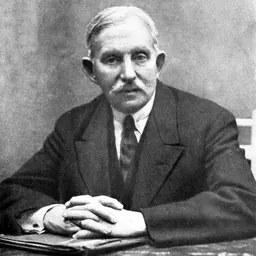
Lived 1901 – 1987 (aged 85–86). Moe Fleischer was an American boxing trainer, boxing promoter and combat sports matchmaker.
Moe Fleischer (1901 – July 10, 1987) was an American boxing trainer, matchmaker, and promoter who was involved in boxing for 70 years.
Early life Moe Fleischer was born in New York, United States, in the early 1900s. He grew up on the East Side of New York.
Career Fleischer's professional boxing record stood at one loss and one draw before he turned to training, managing, matchmaking, and promoting.
He helped develop the careers of many fighters. He trained New Zealand boxer Tom Heeney for a championship bout in 1928 against heavyweight champion Gene Tunney.
During the 1930s, he trained Cuban boxer Kid Chocolate. Fleischer recalled how the fighter, new to New York from Cuba, prayed in his corner before every fight. Fleischer said, "He was fighting this guy who was a real quick starter. I warned Chocolate the guy would come out fast, but before he got all the way up from praying the bell rang, this guy charged across the ring and hit him with a right hand that knocked him down." Seeing his fighter in trouble, he reacted quickly. "I thought this might be the end of his career, so I got up on the apron and reached into the ring. I had a capsule of smelling salts hidden in my hand. The ringside judge asked what I was doing, and I said I saw some cotton on the canvas that I didn't want Chocolate to trip over. I stuck the salts under his nose, and he beat the count. He didn't know where he was for five rounds, but he finally shook it off and managed a draw. It saved his career." Under Fleischer's tutelage, Kid Chocolate became Cuba's first world champion, retaining the title for more than two years. His best club was Brooklyn's Ridgewood Grove Arena, dubbed the 'Cradle of the Champions,' where he developed Sandy Saddler, Rocky Graziano, and Roland La Starza. When boxing began airing free on TV four nights a week, fight clubs saw a drop in attendance. By 1969, most of his old fight clubs were supermarkets. He was urged by Chris Dundee, one of the most active fight promoters in the country, to relocate to Miami, Florida. Moving to Miami Beach in the 1960s, he remained active in boxing with Dundee, a friend since the late 1940s. His work in the Dundee stable centered on developing young boxers. That year, he helped Obed land the world junior lightweight title, the first for any Bahamian boxer.
Legacy Following his death, boxing historian Hank Kaplan said, "The fight game has lost a great one. Moe's success in the sport didn't let him affect how he treated people. No matter what mood he was in, he always had a smile. Once you met him, you couldn't forget that chubby face and big cigar."
Don’t just read it —
keep it.
Full-length biographies made to live with: read them, listen on the way to work, watch them tonight.
- E-book
- Audio
- Video
Instant download · yours to keep · every purchase keeps this site free
Important facts
People in Moe Fleischer's life
Named in this biography and alive at the same time





Related people
Same field, nearest in time





Contemporaries
People whose lives overlapped Moe Fleischer's

Frequently asked questions
Who was Moe Fleischer?
American boxing trainer, matchmaker, and promoter
When was Moe Fleischer born?
Moe Fleischer was born in 1901 in New York.
When did Moe Fleischer die?
Moe Fleischer died on 10 July 1987 in Miami.
What was Moe Fleischer's occupation?
Moe Fleischer was a boxing trainer, boxing promoter and combat sports matchmaker.
What nationality was Moe Fleischer?
Moe Fleischer was American.
Sources & further reading
Cite this page
APA: Biography.guide. (2026). Moe Fleischer. https://biography.guide/moe-fleischer/
MLA: "Moe Fleischer." Biography.guide, https://biography.guide/moe-fleischer/.
Chicago: "Moe Fleischer." Biography.guide. https://biography.guide/moe-fleischer/.
Data last updated: 2026-09-20 · Spot an error? Report a correction.
Page generated 2026-09-27 05:31 UTC