
About Mo Yan
Born 1955. Mo Yan is a Chinese writer, novelist, teacher and screenwriter.
Mo Yan (, ), born Guan Moye (; born 5 March 1955 ), is a Chinese writer. He gained attention for his 1984 novella, A Transparent Radish, and rose to international fame for his 1986 novel Red Sorghum, the first two parts of which were adapted into the Golden Bear-winning film Red Sorghum. In 2012, he was awarded the Nobel Prize in Literature for his work which "with hallucinatory realism merges folk tales, history and the contemporary". The sobriquet takes apart the traditional script form of the middle character of his birth name, Mo (謨), and also reflects the repressive political atmosphere he grew up with, when his parents would frequently caution him against speaking freely.
In his early career, as remuneration for his published works was issued under his pen name, collecting payment at the post office each time required obtaining a certified letter bearing an official chop from his work unit; to spare himself the recurring inconvenience, he eventually adopted Mo Yan as his legal name. Though far from wealthy, his family was classified as upper-middle peasant during the class struggle campaigns, on account of a plot of land purchased with their life savings.
Facing discrimination from teachers on account of his family's status as a political pariah, and amid a largely dysfunctional curriculum disrupted by the Cultural Revolution, Mo Yan, at 11, withdrew in the fifth grade. His family set him to grazing animals on the grasslands, where, during long stretches of solitude, he taught himself Chinese characters from a Xinhua Dictionary, the only book he had. In the autumn of 1973 he began working at a cotton processing factory, where he encountered a wider world, including a group of sent-down youth from Qingdao whose acquaintance with foreign literature and film left a strong impression on him. Throughout the Maoist era, when virtually all pre-revolutionary and foreign writers were banned save Lu Xun, his reading was narrow and ideologically constrained; yet he grew up immersed in a rich tradition of Chinese folklore and regional opera, which would prove fertile ground for his literary imagination.
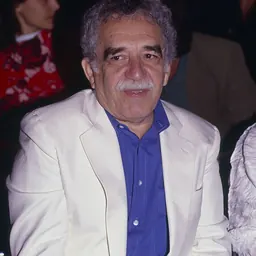
Mo Yan's early literary model was Sun Li, who was admired for his graceful and lyrical prose style. As translations of foreign literature began circulating in China in the 1980s, Mo Yan, like many Chinese writers of his generation, came under the influence of William Faulkner and Gabriel García Márquez; their magical realism offered him both an expressive idiom and a practical means of navigating censorship.
In 1981, Mo Yan published his first works in a literary magazine Lian Chi based in Baoding, where he was stationed. In 1982, he was promoted and then transferred to the PLA's Joint Staff Department in Beijing. In 1984, he was admitted to the People's Liberation Army Academy of Art on the strength of his short story Folk Music, published in Lian Chi, an imitation of Carson McCullers's The Ballad of the Sad Café. He joined the inaugural cohort of a two-year programme, composed mostly of military cadres recommended for admission, at the Department of Literature newly founded by the novelist Xu Huaizhong , who would become his mentor.
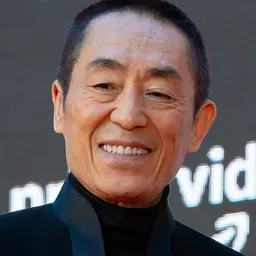
In 1984, Mo Yan published his first novella and claim to literary fame, A Transparent Radish. The story was originally titled A Golden Radish, but was renamed by Xu Huaizhong. Two years later, he published Red Sorghum (1986) at People's Literature to great sensation in the literary circles, and attracted Zhang Yimou to visit him at the PLA Academy of Art to acquire the adaptation rights for what would become Zhang's directorial debut and win the Golden Bear at Berlinale.
In April 1988, Mo Yan published The Garlic Ballads, inspired by an incident in Cangshan, Shandong a year ago, when overproduction, collapsing prices, and predatory market administration fees drove farmers to riot outside the county government building. The novel's sympathetic portrayal of an anti-government riot drew no immediate sanction upon publication, but in the aftermath of the Tiananmen Square crackdown of June 1989 it was banned in mainland China and for a period could only be published in Hong Kong and Taiwan; it was unbanned four years later. The American sinologist Howard Goldblatt, upon reading the novel, was so struck by it that he resolved to begin translating Mo Yan's work, a decision that would prove instrumental in bringing Mo Yan to international audiences.
In 2012, Mo Yan became the first Chinese citizen to receive the Nobel Prize in Literature. A major target of criticism was that months before his win, he was among a group of 100 artists who celebrated the 75th Anniversary of the Yan'an Talks in 2012 by hand copying the text of the talks. According to Mo Yan, censorship should not stand in the way of truth, but defamation or rumors should be censored.
Works Mo Yan began his career as a writer in the reform and opening up period, publishing dozens of short stories and novels in Chinese. His first published short story was "Falling Rain on a Spring Night", published in September 1981.
In 1986, the five parts that formed his first novel, Red Sorghum (1987), were published serially. It is a non-chronological novel about the generations of a Shandong family between 1923 and 1976. The author deals with upheavals in Chinese history such as the Second Sino-Japanese War, the Chinese Communist Revolution, and the Cultural Revolution, but in an unconventional way; for example from the point of view of the invading Japanese soldiers. His village is so carnivorous it is an obsession that leads to corruption. Pow! cemented his writing style as "hallucinatory realism". Another one of his works, Frog, Yan's latest novel published, focuses on the cause and consequences of China's one-child policy. Steven Moore from the Washington Post wrote, "another display of Mo Yan's attractively daring approach to fiction. The Nobel committee chose wisely."
Style Mo Yan's works are epic historical novels characterized by hallucinatory realism and containing elements of black humour. A major theme in Mo Yan's works is the constancy of human greed and corruption, despite the influence of ideology.
Mo Yan's ability to convey traditionalist values inside of his mythical realism writing style in The Old Gun has allowed insight and view into the swift modernization of China. This short story by Mo Yan was an exemplary example of the Xungen movement Chinese literary movement and influenced many to turn back to traditional values. This movement portrayed the fear of loss of cultural identity due to the swift modernization of China in the 1980s. Mo Yan's masterpieces have been translated into English by translator Howard Goldblatt. ) 《师傅越来越幽默》Shifu, You'll Do Anything for a Laugh (9 novellas, 2001; one of them, Change, is published independently in English) 《晚熟的人》A Late Bloomer (12 novellas and short stories, 2020 )
Plays
《我们的荆轲》 Our Jing Ke (2011) 《鳄鱼》Crocodile (2023)
Other works 《会唱歌的墙》 The Wall Can Sing (60 essays, 1981–2011) 《碎语文学》 Broken Philosophy (interviews, only available in Chinese) 《用耳朵阅读》 Ears to Read (speeches, only available in Chinese) 《盛典:诺奖之行》 Grand Ceremony (speeches and interviews) (2013) 《莫言墨语》Mo Yan Mo Yu (essays and calligraphy) (2018) 《三歌集》Collection of Three Ballads (poems and calligraphy) (2023) 《放宽心,吃茶去》Release Your Heart, Sip the Moment (essays from WeChat official account, co-authored with Wang Zhen) (2025)
Awards and honours 1998: Neustadt International Prize for Literature, candidate 2005: Kiriyama Prize, Notable Books, Big Breasts and Wide Hips 2005: International Nonino Prize 2005: Doctor of Letters, Open University of Hong Kong 2006: Fukuoka Asian Culture Prize XVII 2007: Man Asian Literary Prize, nominee, Big Breasts and Wide Hips 2009: Newman Prize for Chinese Literature, winner, Life and Death Are Wearing Me Out 2010: Honorary Fellow, Modern Language Association 2011: Mao Dun Literature Prize, winner, Frog 2012: Nobel Prize in Literature He was won virtually every literary award presented in China.
Honorary doctorates 2013: The City University of New York, United States 2013: Fo Guang University, Taiwan 2014: Sofia University, Bulgaria 2014: The Open University of Hong Kong, China 2014: The University of Macau, China 2017: Hong Kong Baptist University, China
Adaptations Several of Mo Yan's works have been adapted for film:
Red Sorghum (1987) (directed by Zhang Yimou) The Sun Has Ears (1995) (directed by Yim Ho, adaptation of Grandma Wearing Red Silk) Happy Times (2000) (directed by Zhang Yimou, adaptation of Shifu: You'll Do Anything for a Laugh) Nuan (2003) (directed by Huo Jianqi, adaptation of White Dog Swing)
Don’t just read it —
keep it.
Full-length biographies made to live with: read them, listen on the way to work, watch them tonight.
- E-book
- Audio
- Video
Instant download · yours to keep · every purchase keeps this site free
Important facts
People in Mo Yan's life
Named in this biography and alive at the same time



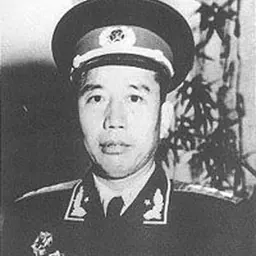
Related people
Same field, nearest in time



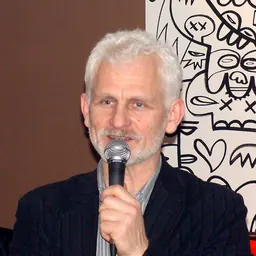
Contemporaries
People whose lives overlapped Mo Yan's
Frequently asked questions
Who is Mo Yan?
Chinese novelist and screenwriter
When was Mo Yan born?
Mo Yan was born on 17 February 1955 in Gaomi.
What is Mo Yan's occupation?
Mo Yan is a writer, novelist, teacher and screenwriter.
What nationality is Mo Yan?
Mo Yan is Chinese.
Sources & further reading
Cite this page
APA: Biography.guide. (2026). Mo Yan. https://biography.guide/mo-yan/
MLA: "Mo Yan." Biography.guide, https://biography.guide/mo-yan/.
Chicago: "Mo Yan." Biography.guide. https://biography.guide/mo-yan/.
Data last updated: 2026-09-25 · Spot an error? Report a correction.
Page generated 2026-09-27 05:11 UTC