
About Mitzura Arghezi
Lived 1924 – 2015 (aged 90). Mitzura Arghezi was a Romanian politician and actor.
Mitzura Domnica Arghezi (also spelled Mițura, born Domnica Theodorescu; 10 December 1924 – 27 October 2015) was a Romanian actress, visual artist and politician, also active as a ballerina, book editor, and museum curator. She was the daughter of poet-journalist Tudor Arghezi, the sister of writer Baruțu T. Arghezi, as well as the half-sister of art photographer Eli Lotar. Her childhood was spent at Mărțișor, her father's estate in Bucharest, and became the inspiration for his children's books, which a grown-up Mitzura illustrated. She was trained in dancing by Floria Capsali, and appeared in music shows for both the National Opera and the National Theater Bucharest. During and shortly after World War II, she exhibited her work in the graphic arts, to critical acclaim. Mitzura's career in both visual arts and letters was interrupted by her family's persecution in the early stages of Romanian communism. Deemed a child "of the bourgeoisie" by Scînteia, she was forced to renounce her studies at the University of Bucharest and focus instead on becoming an actress. She graduated from the Caragiale Institute of Theater just as Arghezi Sr was undergoing rehabilitation.
Debuting on the screen with the 1951 In Our Village, Arghezi returned ten years later with a leading role in Doi vecini—based on a comedic story by her father, and marking the directorial debut of her Institute colleague Geo Saizescu. This was followed in 1964 by another substantial role, as Gena in Titanic Waltz. Though she continued to appear in films and was part of the National Theater company, from 1967 she became mainly focused on preserving her late father's legacy, and by 1975 was in charge of Mărțișor, reopened as a museum. Following Baruțu's self-exile and Lotar's death, she took full managerial control of the estate, sparking controversy with her rigid interpretation of copyright, and being accused of stealing others' research in her own work as editor of the Tudor Arghezi corpus. She was also criticized for her alleged compromises with communist governments, and, into her old age, remained adamant that Romania under socialism was preferable to the United States.
Despite being part-Székely, Arghezi was an advocate of Romanian nationalism, and repeatedly voiced suspicion toward the Hungarian minority. After the Romanian Revolution of 1989, she entered electoral politics with the Romanian National Unity Party, presenting herself in the race of September 1992. She later joined Corneliu Vadim Tudor's Greater Romania Party (PRM); for several months in 1995, she was the inaugural holder of a government secretariat channeling support for the Romanian diaspora. Arghezi was elected to the Chamber for Olt County in the general election of 1996, and reelected in 2000 (when she was also the first woman to preside over a Chamber session). Openly calling for a ban on the Democratic Alliance of Hungarians, she was also an opponent of the then-governing Romanian Democratic Convention. Arghezi defended the PRM's image as a moderate-nationalist force, expressed support for European integration, and spoke about her father's philosemitism, while remaining loyal to Vadim Tudor throughout the PRM's decline and factional splits. She died in 2015, weeks after Vadim Tudor's own death, and was buried at Mărțișor amid a controversy surrounding her inheritance.
Biography Origins and early life Arghezi was born in Bucharest on 10 December 1924. Her father was Tudor Arghezi, by then a nationally famous writer, who celebrated her birth with the poem Cântec de adormit Mitzura ("A Song for Rocking Mitzura to Sleep"), and composed a new lyrical piece for each of her birthdays. Her mother, Paraschiva, from a rural family of Bukovina Romanians, was Arghezi's second wife. Specifically, she and her sister Saveta ("Tătana") were from the Burda clan of yeomen, hailing from either Bunești or Pleșești. They had been orphaned early on, after both their parents died of food poisoning. as observed later by their family friend Constantin Beldie, the couple had been married for 15 years before having either child, who therefore risked being "spoiled" by their loving parents. At exactly the moment of Mitzura's birth, Eliazar had rebelled against his upbringing, leaving Romania to try his luck in France, and establishing his fame there as photographer-filmmaker "Eli Lotar". He himself cited Paraschiva's pregnancy as contributing to his decision. though Mitzura took the famous surname, in a 2002 she referred to it as a "sweet burden", which had always seen her compared to her father. Throughout her life, she supported Romanian nationalism, presenting Arghezi Sr as a "good Romanian", On her father's side, she had ethnically diverse origins. These were long obscured by Arghezi Sr, and only became accessible after archival research in the 1970s. Records brought up at the time indicate that Tudor was born out of wedlock to the Romanian pastry-maker Nae Theodorescu, originally from Oltenia, and took his surname. Tudor's mother, Rozalia, was a domestic servant from Transylvania (at the time in Austria-Hungary), who also had children from other relationships; one of them was the lawyer Alexandru Arghezi Pârvulescu, who in 1975 revealed that "Arghezi" was also Rozalia's original surname, and not a literary pseudonym invented by her son. Rozalia gave her ethnic origin as "German", reporting that she had converted from Catholicism to Romanian Orthodoxy—though various of her contemporaries already knew her as a Hungarian, and more specifically a Székely, who had taught her sons to speak her native language.
Domnica spent her earliest years at Mărțișor, an estate that her father had bought and developed in Văcărești, southern Bucharest, in 1926. This new home was only completely built in 1931, after Arghezi Sr had drained a swamp and extended a paved road. Mitzura and her two brothers were all partly raised by their paternal grandmother Rozalia, who lived with them at Mărțișor; he was noticeably discreet when introducing her, leading some of his close friends to assume that she was a governess, rather than the children's grandmother. As a child, Mitzura coined Iosif's lifelong nickname, "Baruțu"—a contracted and corrupted form of Apăreciule, from his constant requests for apă rece ("cold water"). After his youngest no longer required her services, Tudor forced his mother to move out of the house and into a rented apartment, Creating his own printing press in Văcărești, he conceived early on of a plan to have Mitzura train as his illustrator, and Baruțu as a typographer. His method was also anti-literary; as he explained in 1935, he never read to his children, since "literature is a strictly intimate thing".
Both Theodorescu children had an early start in the arts, with Baruțu publishing his first work of prose in 1939. She ultimately gave up on this career path because, as she put it, "the life of a dancer is very constrained." Writer and Orthodox clergyman Valeriu Anania, who visited Mărțișor during the 1950s, recalls its walls being decorated with her engravings. In April 1943, at the height of World War II, fifteen of her sketches were exhibited with the Grupul Grafic artists' society, and were positively reviewed by Ion Frunzetti. Frunzetti argued that she had found perfection in line art and animal drawing, especially with her "delicious panorama" of domestic life. In later musings on these events, Baruțu argued that Grupuls Dimitrie Dimitriu-Nicolaide was the one who approached his sister to have her featured in the show. As he notes, Dimitriu and his colleagues were "at odds" with the fascist aesthetics promoted by Romania's wartime Conducător, Ion Antonescu. Both Mitzura and her brother are thought to have "vetted" the work. Its publication resulted in her father's brief internment at Târgu Jiu. Mitzura and Paraschiva visited him there in October 1943, and found themselves treated with unusual respect by the local Land Forces garrison, whose staff had quietly endorsed Arghezi's patriotic take-down of Nazism. They left the area and went into refuge in June, but returned once Arghezi Sr decided not to be guided by fear.
The poet was openly celebrated during the interlude which followed Antonescu's toppling in August 1944. At the time, the Romanian Communist Party, backed by the Soviet Union and its occupation forces, was experiencing an increase in influence. In February 1945, the communist ideologue Miron Radu Paraschivescu accused the writer of having backed the fascist Iron Guard, and of having embraced anti-Sovietism, noting that the Killinger incident was uncharacteristic. According to Paraschivescu, Eli Lotar, who had embraced "revolutionary" ideas and had deserted his family, was "T. Arghezi's first son—his first, and not just chronologically." Other communists were considering Arghezi Sr as an external ally. By August, contacts between the party and the Arghezis were mediated by Radu Bogdan of Scînteia; as he recalled in a 1993 piece, the effort was doomed: "Every person in that home, including Lady Paraschiva, Tătana (her sister), Mițura and Baruțu, not to mention the writer himself, were stunned by the occupation army and its behavior [...]. The family's hopes were directed exclusively toward the Anglo-Americans". For a while, the attempts at a rapprochement did not yet subside. In December 1946, a banquet was hosted in the writer's honor by the Ministry of Culture, headed at the time by Mihai Ralea. Performances included a dance number by Mitzura.
Mitzura was by then appearing as a backing dancer in Marin Iorda's version of Scapin the Schemer at Giulești Workers' Theatre—that institution's inaugural production. Overseen by Capsali, she and her fellow ballerinas were praised by Tudor Șoimaru in Adevărul as "agile and graceful". Her return as an illustrator had occurred earlier that year, when she designed the cover for the Romanian edition of Kenneth Grahame's Wind in the Willows. Her drawings and one watercolor were showcased at an independent exhibit at Căminul Artei of Bucharest. They earned her encouragement from art critic George Oprescu, who found her drawings reminiscent of Henri Matisse and Nicolae Tonitza, "that which is not a bad thing." Such work was continued in early 1947, when Editura Socec issued Tudor Arghezi's Țara Piticilor ("Land of the Dwarfs") with his daughter's vignettes. On Christmas Day, Arghezi Sr completed another cherished project by working with his two children on a self-published, artisanal, booklet, Drumul cu povești ("A Pathway of Stories")—it retains value as a collectible item.
During the early years of Romanian communism, introduced as a people's democracy in early 1948, Tudor Arghezi was lambasted in Scînteia editorials penned by Sorin Toma. Toma depicted him as a voice of decadent literature; one episode of his expose discussed Arghezi's belief in vitality as a principle in educating his own children. The article suggested that the very notion displayed Arghezi's preaching of individualism, against the "preservation of collective life", and that it fit well with raising his son and daughter as "children of the bourgeoisie". The writer was then virtually banished by the censorship apparatus. These circumstances were aggravated after December 1948, when Baruțu used the family's printing press to publish an anticommunist manifesto—he was arrested in 1949, and held in custody until 1950, when his father successfully negotiated his release with the nomenklatura. At this stage, the family was reduced to living from unusual sources of income, including cherries from the orchard and lumps of goat cheese, that Tudor Arghezi would sell to passers-by. According to Anania, this commercial activity was also embraced by Mitzura and Baruțu. In 1951, Mitzura had a small, uncredited part in the film In Our Village. Initially, she followed the literary path. Enlisted at the University of Bucharest Faculty of Letters, she was expelled due to political pressures in 1948.
From 1955, Around that time, she was married to a fellow actor, identified by Corbea as Mircea Anghelescu. According to Pandrea, the marriage was Mitzura's second; he does not name her husband, but informs that the wedding, which took place somewhere in Oltenia in October 1956, was a lavish affair with over 1,000 guests and a "strictly Orthodox ceremony"—since, despite the officially endorsed atheism, major cultural figures who supported the regime's agenda were now allowed publicized exceptions. She had moved out of the family home the previous year, and spent time at various addresses. In 1964, she and her family moved to Dorobanți, Communist leader Nicolae Ceaușescu amended this arrangement by having his own son, Valentin, take over the bottom floor for his private use. The following year, a new edition of the Book of Toys came out, at Editura Tineretului, and featured her drawings as illustrations. Mitzura received positive notice for her role as one of The Neighbors in Federico García Lorca's The Shoemaker's Prodigious Wife—a January 1959 production at the National Theater, which saw her sharing the stage with Draga Olteanu and Eliza Plopeanu. She owed her reintroduction there to her father's friend Zaharia Stancu, who had taken over as manager.
Eli Lotar, who had been marginalized in his profession and was becoming a destitute alcoholic, made several attempts to reconcile with Arghezi Sr. The latter again shunned his first-born, allegedly because the latter had asked him to invest in his film projects; Mitzura took pity on her half-brother, and for a while was the only person who still relayed messages between him and their father. In that context, Mitzura invited Saizescu to Mărțișor, where he and Tudor Arghezi discussed a film project. During the early 1960s, she was spending some of her time in Geneva, where Arghezi Sr was undergoing treatment for what he termed "sclerosis" and "loss of vision". She also began contributing to Scrieri, the definitive corpus of Arghezi Sr's works. Its seventh volume, appearing in 1965, featured the Book of Toys, again illustrated with her drawings. Around 1964, Mitzura and Baruțu (who was by then a physical education teacher in Bucharest) The two siblings looked after Arghezi Sr from 1966, when he became a distraught widower. Arghezi's contribution in the literary field went in parallel with her film and theater career. Also in 1966, she appeared as a provincial wife in the interwar-themed satire Calea Victoriei, and, as critic D. I. Suchianu argued, proved "excellent" for the part; she also reunited with Saizescu, with a role in his new project, La porțile pamîntului. Still employed by the National Theater, that same year she was noted for her performance as a nomadic Romani in Andrei Corteanu's Copiii pămîntului. In 1967, she appeared in Moni Ghelerter's production of Siringa—written by her father during his Antonescu-era internment, it had its inspiration in the author's real-life illnesses and his disdain for the medical profession.
Shortly after her father's death in 1967, Mitzura was made custodian of his papers, including his unpublished literary works. In 1970, she created controversy by refusing to authorize a critical edition, which had been proposed to her by researcher G. Pienescu. Lotar was left out of the disputes and publication projects—after unfruitful attempts to obtain his share of the royalties, The following year, they issued with Editura Eminescu their own anthology of his poetic manuscripts, as Călătorie în vis ("Dream-journey"). It was poorly reviewed by M. Camil in Milcovul newspaper, primarily because "none of the book's poems is an Arghezian masterpiece."
In 1974, Baruțu opted to settle in Switzerland, and took with him all of his father's explicitly anticommunist manuscripts, that he intended to publish abroad. By 1975, Mărțișor had become a museum, and Mitzura had been appointed its curator—calling this "my most important achievement". Serving continuously to her death in 2015, she organized it as a venue used by the Museum of Romanian Literature (MLR). The following year, she debuted in amateur rallying: in June, she and Adrian Mureșan, driving a Dacia 1300, took bronze in an actors' competition held at Dinamo Stadium. In 1973, she appeared in Sergiu Nicolaescu's Ultimul cartuș, followed in 1978 by Eu, tu, și... Ovidiu, and in 1980 by Drumul oaselor.
Arghezi also found steady employment as a voice actress: the Radio Broadcasting Company had her appear in numerous radio plays, including at least two by her father, and also made her a co-host of the show De toate pentru toți. Also in 1984, she starred in the comedy The Secret of Bacchus, followed in 1987 by The Secret of Nemesis.
Political debut Following the Romanian Revolution of 1989, Arghezi's activities at Mărțișor could explore topics that had been forbidden under the communist regime—in mid-1990, she and the Romania–Israel Friendship Society co-hosted a soiree dedicated to her father's philosemitism. She also provided the Centre Pompidou with images of her half-brother, which were used at the Eli Lotar retrospective of 1993–1994. although unsuccessful, in mid-1994 she was serving as vice president of the party's Bucharest section. In this capacity, she publicly accused a party colleague, Cornel Brahaș, of irregularities, such as investing the party funds in a Ponzi scheme. She had ultimately defected to the PRM by 1995—according to journalist Ion Cristoiu, she "seamlessly moved on" from one group to the other. A decade later, Arghezi described her involvement with the PRM as being motivated by her belief that "too many concessions are being made to the Hungarians", and by her perception of Vadim Tudor as a "patriot [and] one of the few honest politicians." According to a press report in Gazeta de Sud, during that interval Arghezi was suspected of leaking classified information preserved by her INST neighbors to the PRM's magazines, România Mare and Politica. In September, Cristoiu panned her activity as a sample of graft, describing Arghezi as a "failed actress" and one of her father's "worst creations". In July, she had been shortlisted by Vadim Tudor for an adjunct position in the Ministry of Culture, but rejected by Minister Viorel Mărginean—allegedly, because the latter found her too old and unattractive. The following month, she went public with criticism of the government, noting that it was too lenient toward the Democratic Alliance of Hungarians (UDMR). In that context, she demanded that the UDMR be outlawed for instigating a "civil war" in Transylvanian constituencies.
Arghezi was Vadim Tudor's campaign manager ahead of a general election in November 1996. She herself ran in for the Chamber, winning a seat in Olt County. The PRM list enjoyed unexpected success in that province, taking 7% of the vote. This win made her one of the 21 (out of 341) deputies who were of the female gender, including PRM deputies Daniela Buruiană and Leonida Lari. The PRM as a whole was in opposition to the governing Romanian Democratic Convention (CDR). By mid-1998, Arghezi had involved herself in the national polemics. On one of her frequent tours of her constituency, she responded to Constantin Ticu Dumitrescu, an activist and former political prisoner who had publicized documents depicting Vadim Tudor as a longtime informant of the communist Securitate. According to Arghezi, the dossier was fabricated from falsified evidence by forces operating from "outside the country's borders". In her counterclaim, she alleged that Dumitrescu had been involved in communist reeducation, and was therefore not a victim.
During the miners' protests of January 1999, Arghezi visited Slatina, and spoke out against the Vasile Cabinet for not allowing protesters to exit the Jiu Valley and complete their march on Bucharest. She came to serve on the Chamber's Committee on Human Rights, where, as she put it, she clashed with the UDMR, whose representatives she regarded as single-minded: "they are unified and they keep on advancing [their agenda]." The former actress was reelected in the elections of December 2000. She and Vadim Tudor were on show together to celebrate the PRM's unexpectedly good result, as the second-ranking party nationally. Arghezi went on to preside upon the new Chamber's inaugural meeting, as the most senior member of the house; this also made her the first woman to ever preside over a meeting of Chamber.
Old age and death Arghezi's other work was with the committee on the Francophonie, which allowed her to "travel quite a lot", including in French-speaking Africa, and to observe that "black people are rather smart".
At the PRM national congress, held at the Palace of the Parliament in November 2001, Arghezi read out a congratulatory message from the Chinese Communist Party; this event, which saw party delegates issuing renewed calls for the UDMR's outlawing, was not attended by guests from Romania's other parliamentary groups. During July 2001, she had been scheduled to appear as Vadim Tudor's witness in a civil suit for libel, brought up by the CDR's Gavril Dejeu. She was fined in September for failing to appear in court. On the first days of 2003, Arghezi and Vadim Tudor signed up to a class action against Prime Minister Adrian Năstase, accused of having breached the Romanian constitution by allowing Cluj-Napoca to carry a second official name, in Hungarian. In mid-2002, Arghezi, alongside her former colleague Sergiu Nicolaescu (who had similarly become a national legislator), proposed controversial legislation that would have resulted in deputies receiving a significantly increased state pension, as compared to the average Romanian. The bill was vetoed by, among others, Vadim Tudor, who argued that Arghezi had "signed on to it without knowing what it was all about". Those months introduced speculation that Arghezi was growing senile, especially after, during a PRM rally at Sibiu, she dozed off in her chair, slipping and breaking her arm as a result.
Arghezi still continued to serve for another full mandate in Chamber, down to full-term elections in November 2004. She ran on the PRM Chamber list in Buzău County, but was no longer successful. She carried on as a PRM representative on the Radio Broadcasting Company board (2005–2010). In November 2005, she was confirmed as a member of the PRM's Permanent Bureau. Political scientist Tom Gallagher made a note of her dedication to the cause, as part of a larger phenomenon: "Proportionately more women sit on the parliamentary benches of the PRM than for any other party [...]. No woman has been among the numerous senior defectors from the PRM, so Vadim may have grounds for feeling that his position is secure if they are given a prominent role in party affairs."
Before the end of her Chamber mandate, Arghezi filled out a mandatory wealth declaration. It reportedly showed her as one of the least affluent MPs, who owned to her name some three hectares of agricultural land, a Dacia Nova, and an apartment. In 2002, she complained that all the expenses at Mărțișor were covered by her, and that the Museum of Literature was not fulfilling its tasks. She noted having never had children of her own, but also that she was looking after a relative, born with a major speech impediment. Four years later, she was criticized for charging exorbitant sums to anyone wishing to reprint any of her father's writings. This stance reportedly threatened private publishing houses, who could no longer afford to include them in literary textbooks, and considered skipping them entirely. Similarly, actor Ion Caramitru, who was performing poetry recitals to music by Johnny Răducanu, was forced to omit Arghezi's verse, but improvised with allusive references to it during a show held in Budapest. Arghezi teamed up with Vasile Voiculescu's legatee, Andrei Voiculescu, accusing the publishing houses of collecting large profits that "they do not wish to share with anyone else", and revealed that they never collected copyrights from texbooks that were made freely available to schoolchildren.
During the final stages of her life, Mitzura Arghezi joined Traian Radu in putting out the Tudor Arghezi corpus, which was being continued by Editura Minerva. These included the 42nd volume, appearing in 1999, with unedited and uncensored articles from the 1940s. It was praised for its documentary value by literary historian Zigu Ornea, who also criticized the editors for not including relevant information, and for tolerating "many typos." Mitzura herself died on the morning of 27 October; she was aged 90. An Orthodox funeral service was held for her at Mărțișor, where she was buried, in a tomb shared with her parents. This had been her request, included in the donation she had negotiated with the Romanian state. The ceremony was interrupted by another dispute around her remaining wealth, manifested as a heated exchange between Traian Radu and Doina Arghezi. In 2019, Radu sent the MLR a donation of various manuscripts left to him by the Arghezis.
Selected filmography Doi vecini (1959) – Marița Furtuna (1960) Celebrul 702 (1962) Titanic Waltz (1964) – Gena Michael the Brave (1971) Șantaj (1981) Secretul lui Nemesis (1987) – The Neighbour Iubire și onoare (2010) – Varvara
Don’t just read it —
keep it.
Full-length biographies made to live with: read them, listen on the way to work, watch them tonight.
- E-book
- Audio
- Video
Instant download · yours to keep · every purchase keeps this site free
Important facts
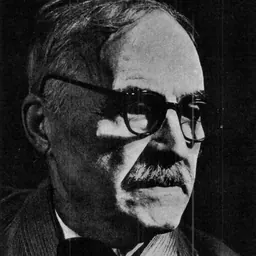
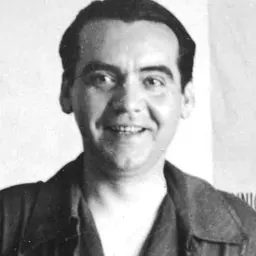
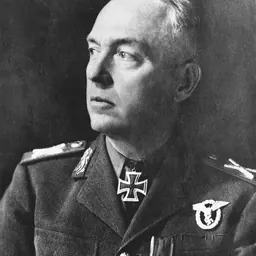
People in Mitzura Arghezi's life
Named in this biography and alive at the same time





Related people
Same field, nearest in time





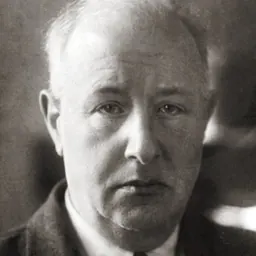
Contemporaries
People whose lives overlapped Mitzura Arghezi's



Frequently asked questions
Who was Mitzura Arghezi?
Romanian actress, journalist and politician
When was Mitzura Arghezi born?
Mitzura Arghezi was born on 10 December 1924 in Bucharest.
When did Mitzura Arghezi die?
Mitzura Arghezi died on 27 October 2015 in Bucharest.
What was Mitzura Arghezi's occupation?
Mitzura Arghezi was a politician and actor.
What nationality was Mitzura Arghezi?
Mitzura Arghezi was Romanian.
Sources & further reading
Cite this page
APA: Biography.guide. (2026). Mitzura Arghezi. https://biography.guide/mitzura-arghezi/
MLA: "Mitzura Arghezi." Biography.guide, https://biography.guide/mitzura-arghezi/.
Chicago: "Mitzura Arghezi." Biography.guide. https://biography.guide/mitzura-arghezi/.
Data last updated: 2026-09-27 · Spot an error? Report a correction.
Page generated 2026-09-27 05:16 UTC