
Mitsuye Endo
About Mitsuye Endo
Lived 1920 – 2006 (aged 85). Mitsuye Endo was an American, known for Ex parte Endo.
Mitsuye Endo Tsutsumi (, May 10, 1920 – April 14, 2006) was an American woman of Japanese descent who was unjustly incarcerated during World War II in concentration camps sponsored by the War Relocation Authority. Endo filed a writ of habeas corpus that ultimately led to a United States Supreme Court ruling that the U.S. government could not continue to detain a citizen who was "concededly loyal" to the United States.
On January 2, 2025, she was awarded the Presidential Citizens Medal for her role in the case challenging the mass incarceration of Japanese Americans in concentration camps.
Early life Mitsuye Endo was born on May 10, 1920, in Sacramento, the second of four children of Jinshiro and Shima (Ota) Endo, Japanese immigrants. Her father worked as a fishmonger in a grocery store, her mother a housewife. She grew up in an English-speaking Methodist home. Her older brother Kunio, was drafted into the U.S. Army. By 1940, they resided in one of the largest Japantowns in the country, a neighborhood in Sacramento, California that was home to 3,300 residents and hundreds of ethnic businesses. After graduating from Sacramento High School in 1938, Endo completed secretarial school and secured a civil service position as a typist with the California State's Department of Motor Vehicles in Sacramento, as it was one of the very few professions Japanese Americans could enter at the time due to rampant discrimination.
Following the December 7, 1941 attack on Pearl Harbor, President Roosevelt issued Executive Order 9066, compelling the forced evacuation and incarceration of Japanese-Americans from the West Coast in concentration camps. As a result, Endo was fired from her position as a stenographer at the California Department of Motor Vehicles.
Endo met her future husband, Kenneth Tsutsumi, after she was moved to the Topaz War Relocation Center in Utah.
The California State Personnel Board lawsuit In response to the Pearl Harbor attack, the California Legislature adopted Senate Concurrent Resolution 15 on January 19, 1942, which effectively barred qualified U.S.-born employees of Japanese descent from obtaining civil service employment with the State. Endo and her family were later transferred to the Tule Lake War Relocation Center north of Sacramento in Newell, California at the Oregon border on June 19, 1942.
After the closure of the Japanese Incarceration Camps by the U.S. government, Purcell won an order from the Attorney General's office to reinstate the wrongfully terminated employees and provide backpay for time lost between the termination and evacuation. By the end of the employment lawsuit, nearly all of the original plaintiffs, including Mitsuye Endo, had permanently resettled outside of California. A Methodist, Endo had never left the United States, was a Sacramento public school graduate and did not have ties to Japan. Her brother was an active duty Army serviceman. In addition, Endo was the only candidate who was willing to remain incarcerated in the camps through the entire course of the court case. Looking back at her decision to reject the opportunity to leave the incarceration camps, Endo wrote:The fact that I wanted to prove that we of Japanese ancestry were not guilty of any crime that we were loyal American citizens kept me from abandoning the suit. Her case continued under appeal, contrary to what the Roosevelt administration intended, and was certified to the U.S. Supreme Court for review on April 22, 1944. While she was incarcerated in Topaz, Endo met her future husband, Kenneth Tsutsumi.
The Supreme Court also unambiguously stated that “the government had no legal right to confine people who had been screened and found to be loyal, but though it referred to the detention of Japanese-Americans as “racial discrimination,” it stopped short of defining the constitutional limits of wartime detention based on factors like race.”
Later life After they were released Endo and Tsutsumi moved to Chicago, Illinois and got married on Nov. 22, 1946. Endo's parents and two sisters, Tamiko and Rayko, relocated to Chicago alongside Endo. Absorbed in a community they found there of other Japanese Americans, they settled in and raised three children. They rarely revisited their time in the camps, striving to fit in. Her daughter did not learn of her involvement with the lawsuit until she was in her 20s.
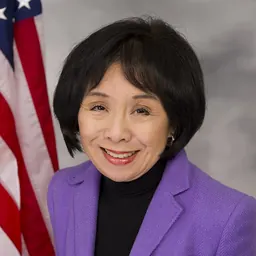
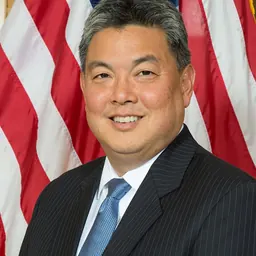
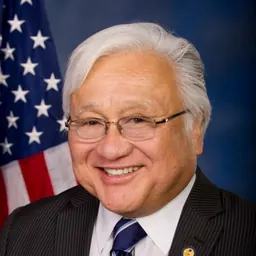
Later in life, when she was interviewed for “And Justice for All,” she marveled at how her incarceration and the subsequent court case “seemed like a dream” to her so many years later. “They felt I represented a symbolic, ‘loyal’ American,” she said in the documentary. "When I think about it now — that my case went to the Supreme Court — I'm awed by it," she said. "I never believed it, that I would be the one." US Representatives Doris Matsui, Mike Honda, Mark Takai, and Mark Takano also advocated for Endo to receive the honor. In 2015 the California Senate issued a joint resolution to the same effect.
In January 2025, President Joe Biden posthumously honored her with the Presidential Citizens Medal which was accepted on her behalf by her son, Wayne Tsutsumi. The following statement was provided In a shameful chapter in our Nation’s history, Mitsuye Endo was incarcerated alongside more than 120,000 Japanese Americans. Undaunted, she challenged the injustice and reached the Supreme Court. Her resolve allowed thousands of Japanese Americans to return home and rebuild their lives, reminding us that we are a Nation that stands for freedom for all.
Don’t just read it —
keep it.
Full-length biographies made to live with: read them, listen on the way to work, watch them tonight.
- E-book
- Audio
- Video
Instant download · yours to keep · every purchase keeps this site free
Important facts
People in Mitsuye Endo's life
Named in this biography and alive at the same time


Contemporaries
People whose lives overlapped Mitsuye Endo's






Frequently asked questions
Who was Mitsuye Endo?
(1920-2006)
When was Mitsuye Endo born?
Mitsuye Endo was born on 10 May 1920 in Sacramento.
When did Mitsuye Endo die?
Mitsuye Endo died on 14 April 2006 in Chicago.
What was Mitsuye Endo known for?
Mitsuye Endo was known for Ex parte Endo.
What nationality was Mitsuye Endo?
Mitsuye Endo was American.
Sources & further reading
Cite this page
APA: Biography.guide. (2026). Mitsuye Endo. https://biography.guide/mitsuye-endo-1920/
MLA: "Mitsuye Endo." Biography.guide, https://biography.guide/mitsuye-endo-1920/.
Chicago: "Mitsuye Endo." Biography.guide. https://biography.guide/mitsuye-endo-1920/.
Data last updated: 2026-09-20 · Spot an error? Report a correction.
Page generated 2026-09-27 05:23 UTC