
About Mirra Lokhvitskaya
Lived 1869 – 1905 (aged 35). Mirra Lokhvitskaya was a Russian poet, writer and playwright.
Mirra Lokhvitskaya (; born Maria Alexandrovna Lokhvitskaya; ; – ) was a Russian poet who rose to fame in the late 1890s. In her lifetime, she published five books of poetry, the first and the last of which received the prestigious Pushkin Prize. Due to the erotic sensuality of her works, Lokhvitskaya was regarded as the "Russian Sappho" by her contemporaries, which did not correspond with her conservative life style of dedicated wife and mother of five sons. Forgotten in Soviet times, in the late 20th century Lokhvitskaya's legacy was re-assessed and she came to be regarded as one of the most original and influential voices of the Silver Age of Russian Poetry, and the first in the line of modern Russian women poets who paved the way for Anna Akhmatova and Marina Tsvetaeva.
Biography
Maria Lokhvitskaya was born on November 19, 1869, in Saint Petersburg, Russia. Her father Alexander Vladimirovich Lokhvitsky (1830–1884) was a well-known lawyer of the time, famous for his public speeches, the author of several academic works on jurisprudence. The primary source of young Maria's creative aspirations, though, was her mother Varvara Alexandrovna ( Hoer), a well-educated Frenchwoman, fond of literature and poetry. Lokhvitskaya's younger sister Nadezhda would later become a well-known humorist writer better known as Teffi, their brother Nikolay Lokhvitsky (1868–1933), a Russian White Army general and a one-time associate of Aleksandr Kolchak, fought against the Red Army forces in Siberia. Another sister Yelena Lokhvitskaya (1874–1919) wrote poetry, translated Maupassant (together with Teffi) and was a Drama Society member, but never regarded herself professional. Of Mirra's two other sisters, only the names are known: Varvara Alexandrovna (Popova, in marriage) and Lydia Alexandrovna (Kozhina). but modern literary historians challenge this. At age fifteen, Lokhvitskaya started writing poetry and published two of her poems as a small brochure (approved by the college's authorities) not long before graduation. In 1884, Alexander Lokhvitsky died and his widow took the children back to Saint Petersburg. Maria followed suit four years later, now as a young teacher. Several popular literary journals became interested in the young debutante and soon the moniker "Mirra" emerged. A family legend proposes that it had to do with her dying grandfather Kondrat's mysterious parting words: "...and the smell of myrrh is blown away by the wind."
Literary career
Lokhvitskaya rose to fame in 1891 after her first long poem, "By the Seaside" (У моря), appeared in the August issue of the Russkoye Obozrenye (Russian Review) magazine. She became a popular figure in the Petersburg literary circles and became friends with Vsevolod Solovyov, Ieronim Yasinsky, Vasily Nemirovich-Danchenko, Pyotr Gnedich, and Vladimir Solovyov. In late 1891, Lokhvitskaya married Eugeny Gibert, a French construction engineer, and the couple moved first to Yaroslavl, then to Moscow. Volume II (1896–1898) followed in 1898 and two years later was re-issued, coupled with the first volume, in The Complete... edition.
In the course of the next few years, Lokhvitskaya published dozens of new poems, including the extensive Him and Her. Two Words (Он и Она. Два слова) and two epic dramas, Eastward (На пути к Востоку) and Vandelin. Springtime Fairytale. By the time her Volume III (1898–1900) came out, Lokhvitskaya was Russia's most popular and best-loved woman poet. Far from enjoying her stardom, though, she spent the last five years of her life in physical pain and mental turmoil. but this claim remained unsubstantiated and there was no mention of it in any of the obituaries. On August 29, Lokhvitskaya was interred in Alexander Nevsky Lavra's Dukhovskaya Church, a small group of relatives and friends attending the ceremony. Among those absent was Konstantin Balmont whom she had been passionately in love with. It was the stress of this strange relationship that, as some believed, had triggered her psychological crisis, and led to moral and physical demise. "Her death was enigmatic. Spiritual disturbance was the cause," Lokhvitskaya's friend Isabella Grinevskaya wrote in her memoirs.
This affair instigated public discussion and was often referred to as 'scandalous'. Whether Lokhvitskaya and Balmont had ever been physically close, remained unclear. Some suggested they might have had a short affair in the early days; in the later years even in the geographical terms both were wide apart, with Balmont spending much of his time abroad. In his autobiography At the Dawn (На заре) he described their relationship as 'poetic friendship'. Modern literary historians consider their relationship to have been truly platonic affair, albeit violently passionate, frustrating and psychologically detrimental for both.
Lokhvitskaya was reticent, attended literary parties on just rare occasions and her appearances there were not necessarily triumphant. "As she entered the stage, there was such a look of helplessness about her as to take away all the attractiveness," wrote the religious author Evgeny Pogozhev (Poselyanin), remembering one such evening. Lokhvitskaya's shyness was one of the reasons why so little mention has been made of her in the extensive body of Russian Silver Age memoirs.
Good looks certainly played a part, first in Lokhvitskaya's meteoric rise to fame, then in the way people "refused to see beyond her beauty, remaining oblivious to the sharp intelligence that was becoming more and more obvious in her work." According to Alexandrova, Lokhvitskaya's was a "typical drama of a good-looking woman in whom most people failed o recognize anything beyond her physical attractiveness." I'd rather die young Tumble down like a star of gold Drop like a flower that's fresh I'd rather die young
For the fires to burn till the end And memories forever remain Of the one who disturbed people's hearts in order to bring them to life I'd rather die young
There were numerous misconceptions about Lokhvitskaya, according to Vengerov who refused to see in her a 'decadent' poet. "Totally devoid of sickly feebleness and vain extravagance" (generally associated with the Russian decadent movement), she was, "eager to enjoy life, declaring her right to put forth her feelings with all the mighty fullness of her soul," he maintained. In fact, "the poetess's agility was very much akin to the challenges of Marxism," opined the critic (a Marxist himself), while her "views on the meaning and reason of life belonged to the Oriental tradition," even if "channeled through a narrow love theme." The modern scholar Tatyana Alexandrova (author of Mirra Lokhvitskaya: Doomed to Melt in Flight, 2008) too saw the poet more as mystic seer than 'sultry songstress.' Quoting Lokhvitskaya's short poem (written in 1902, long before even the First Russian revolution):
...she opined that "...this poem was in itself a good enough reason for Lokhvitskaya's legacy to remain unpublished in the Soviet times."
The Silver Age critic Alexander Izmaylov (writing in 1905) rated Lokhvitskaya as the greatest Russian woman poet ever ("or, rather, the only one, due to lack of competition"). "Full of fiery passions, yet occasionally sickly nervous, she entered this world as a strange amalgam of Heaven and Earth, flesh and spirituality, sinfulness and saintly aspirations, lowlife delights and longings for a higher plane, the future Kingdom of Beauty,"
Mikhail Gershenzon deplored the way Lokhvitskaya has been totally misunderstood by the general readership; only "those enchanted by the subtle aromas of poetry, its musicality, easily recognized her exceptional gift." Speaking of the posthumous compilation Before the Sunset (Перед Закатом), he wrote: "She could rarely fulfill all of her ideas in one piece, but her poetic designs worked best when she herself wasn't aware of their inner meaning. In the art of bringing individual verses, lines even, to perfection, she had no equal. It looks as if not a single Russian poet has ever come as close as she did to Pushkin's lucid clarity, her verses being easily as catchy." Summarizing Lokhvitskaya's development over the years, Gershenzon wrote: "While in her earlier poems there prevailed a 'hurry up, lover, my oil is burning' kind of motif, her latter works documented the process of her soul getting deeper and quieter. As if the moment she spotted this mysterious pattern of things beyond the passions adorning human life's fanciful facade, walls opened wide to let her see through into the unfathomable space."
The popularity of Mirra Lokhvitskaya's poetry waned quickly after his death. The American slavist V. F. Markov called Lokhvitskaya's legacy "a treasury of prescience", suggesting that it was her and not Akhmatova who "taught [Russian] women how to speak." "Her poetic world might have been narrow, but shallow – never," biographer Alexandrova asserted. It is just that, according to Vyacheslav Ivanov, this depthness wasn't obvious: "the depth of hers was that of a sunlit well, unseen to the untutored eye."
Don’t just read it —
keep it.
Full-length biographies made to live with: read them, listen on the way to work, watch them tonight.
- E-book
- Audio
- Video
Instant download · yours to keep · every purchase keeps this site free
Important facts
People in Mirra Lokhvitskaya's life
Named in this biography and alive at the same time

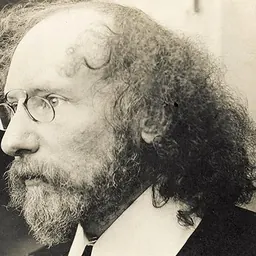



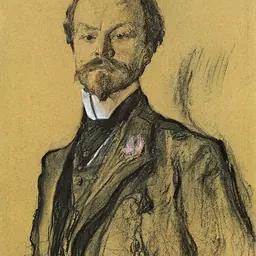

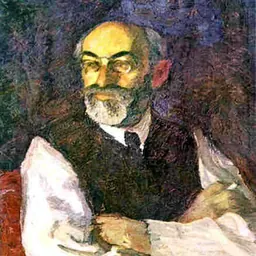
Related people
Same field, nearest in time
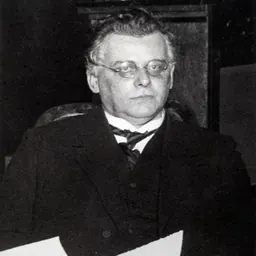
Contemporaries
People whose lives overlapped Mirra Lokhvitskaya's


Frequently asked questions
Who was Mirra Lokhvitskaya?
Russian poet (1869–1905)
When was Mirra Lokhvitskaya born?
Mirra Lokhvitskaya was born on 19 November 1869 in Saint Petersburg.
When did Mirra Lokhvitskaya die?
Mirra Lokhvitskaya died on 27 August 1905 in Saint Petersburg.
What was Mirra Lokhvitskaya's occupation?
Mirra Lokhvitskaya was a poet, writer and playwright.
What nationality was Mirra Lokhvitskaya?
Mirra Lokhvitskaya was Russian.
Sources & further reading
· Wikipedia: Mirra Lokhvitskaya
Cite this page
APA: Biography.guide. (2026). Mirra Lokhvitskaya. https://biography.guide/mirra-lokhvitskaya/
MLA: "Mirra Lokhvitskaya." Biography.guide, https://biography.guide/mirra-lokhvitskaya/.
Chicago: "Mirra Lokhvitskaya." Biography.guide. https://biography.guide/mirra-lokhvitskaya/.
Data last updated: 2026-09-26 · Spot an error? Report a correction.
Page generated 2026-09-27 05:15 UTC