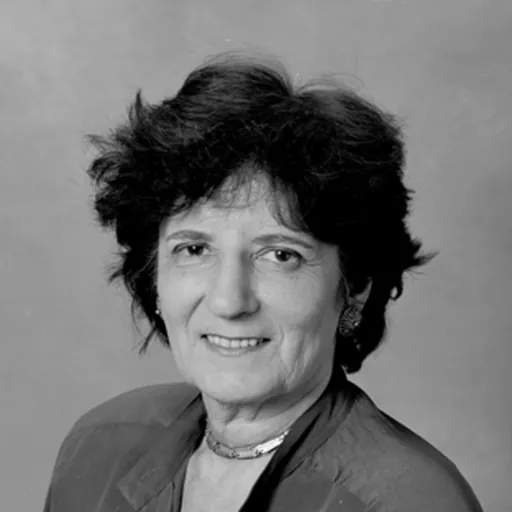
About Miriam Kastner
Born 1935. Miriam Kastner is an American oceanographer and geologist.
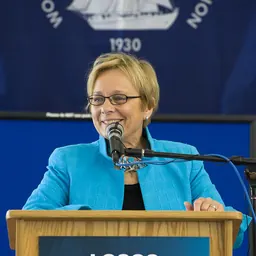
Miriam Kastner (born January 22, 1935) is a Bratislavan born, (former Czechoslovakia) Israeli raised, American oceanographer and geochemist. Kastner is currently a distinguished professor at Scripps Institution of Oceanography at the University of California, San Diego. She is still recognized by her fundamental contributions to science and is well spoken of amongst colleagues.
Education Miriam Kastner enjoyed the sciences since she was a child and originally wanted to be a mathematician, however she later decided down the road that, math was not the career for her as there were far fewer careers to pursue in mathematics. Early on Miriam noticed that not many women were scientists, which inspired her to research different sciences.
Kastner attended the Hebrew University of Jerusalem in 1964, where she received a minor in chemistry and a master's degree in geology. After graduation, she wrote her first formal paper about the hydrothermal systems of the Guaymas Basin, in the Gulf of California. Kastner attendedHarvard University, Boston, in 1970, where she was exposed to oceanography and later received her doctorate in geoscience. For three years, Kastner was the only woman in her department while studying at Harvard. Thus, women were not taken very seriously by other faculty members resulting in a discouraging environment. Faculty members also expected less from their female students and counterparts, although there were some who supported Kastner and fellow female academics, such as the Ph.D. committee.
Kastner from the SIO (Scripps Institution of Oceanography) situated in La Jolla, California, demonstrated that we didn't know of the existence of subsea hydrothermal vents until the 1980s. To illustrate the vast scale of these processes, she explained that the entire volume of the ocean circulates through hydrothermal systems about once every five million years, and through global subduction zones approximately once every 200 million years, linking seafloor processes directly to the long-term evolution of the Earth system.
Throughout her long and successful career, Miriam Kastner produced dozens of publications highlighting her key research. Her first publication, dating back to 1965, examined the mineral glauconite and documented its properties. Over the next 15 or so years her research focused more on the analysis of deep sea sedimentation. For the next 20 years of her career she continued her research on deep sea sedimentation but her focus shifted more to hydrogeology and fluid dynamics and the effect of this sedimentation and mineral deposits. In recent years, she has examined isotopes and their concentrations in oceans. Most recently, Miriam has compiled a brief synopsis of her ocean drilling work over the past 50 years.
Academic roles Along with being a professor, Kastner has served many roles at Scripps Institution of Oceanography, including chair and vice chair of the faculty, associate director and director in the geosciences research division, chair of Academic Senate Committee on Research, as well as curricular group coordinator of geological sciences. From 2003 to 2005, she served on the National Research Council's Ocean Studies Board.
Early career achievements Much of what Kastner has achieved came from the earlier part of her career when she put her talents to work and directed her focus on the origin of authigenic feldspars, she also focused on zeolites in the oceanic sediments during that time. Delving deeper into the significance of Kastner's work, her first publication named “Notes on the mineralogy and origin of glauconite” documents her findings on the properties and classification of glauconite. Although there were others with documented observations of glauconite the results varied greatly and Kastner was the first to point out that these studies are largely flawed due to the failure to take into account the large deposits of non-structural iron oxides which would ultimately skew the results. With the oceanic sediments she determined that the diagenetic transformations of opal-A to opal-CT and quartz is important to the formation of siliceous marine deposits. Kastner also found that dolomite formation is ultimately controlled by its associated pore-fluid geochemistry. The discovery solved an outstanding problem in carbonate mineral science. Kastner's measurements of the Sr distribution coefficient was critical in building strontium concentrations in calcite, which was ultimately used for paleoclimate studies that are dependent on carbonate Sr proxies, the discovery also was used for indicating carbonate recrystallization. Kastner also worked vigorously on phosphate deposits, her work included a revision of the stability of P-O bonds in apatite and phosphate ions, after the revision there was a recalculation of the ocean residence time of phosphorus. Her research focuses on the geochemistry of fluid work interactions, mostly with ocean chemistry. This encompasses the significance to marine minerals, to gain knowledge and understanding of how the Earth works. Gas hydrate research has interested Kastner and many fellow geo-scientists due to both its possible contribution to global warming, and as a potential energy source provided as a result of the amount of methane found in these oceanic hydrates. By studying these marine events, Kastner has stated that this can allow for people to be better prepared to predict global warming and have the possibility of avoiding sudden climatic response to anthropogenic perturbations.
Key research Kastner's area of research is “mostly geochemistry on fluid–rock interactions", specifically with seawater. Her research expertise is on the fluctuation of fluids at plate boundaries, specifically where two plates meet to cause earthquakes and at ridge-crests where hypothermal deposits are found. She has authored over 80 scientific articles. One of Kastner's most important publications is one of her most recent “50 years of scientific drilling”. This article is particularly significant as it highlights some of her major findings over the last 50 years. This paper does well to review drilling projects as well as highlight major scientific achievements of the work. The major drilling projects mentioned in the article are as follows, the Mohole Project, Joides and the Deep Sea Drilling Project, the Ocean Drilling Program, and the Integrated Ocean Drilling Program and International Ocean Discovery Program. Each of these projects have made significant contributions to the field of geology. The Mohole Project was famous for recovering large deposits of subseafloor basalt, the Joides and the Deep Sea Drilling Project was known for being one of the first to identify and record the sedimentary rock layering of our ocean floors, and the Integrated Ocean Drilling Program and International Ocean Discovery Program made findings that helped shape the education system of undergraduates as well as in grades K-12. Some of the major achievements of scientific ocean drilling are listed below:
Helped set the standard for the geological time scale by refining the geomagnetic time scale and how it relates to astronomical chronologies Helped link long term climate changes to Earth's orbital variability Proved that Antarctica was largely iceless approximately 40 million years ago Discovered the most complete marine records of the Cretaceous/Paleogene mass extinction and potential evidence linking the extinction event to a large asteroid Provided early evidence of the theory of plate tectonics Provided the first evidence of the age dependent growth of the oceanic lithosphere Accurately narrowed down the age of the Earth based on sedimentary record
This is not a complete list.
Getty kouros test In the early 1990s, Kastner produced an experimental result which cast doubt on a thesis about dolomite leaching in dating the Getty kouros statue at the centre of a forgery claim. By artificially inducing de-dolomitization in the laboratory, a she produced a result since confirmed by Stanley Margolis a geology professor at the University of California at Davis who had previously determined that this process could occur only over the course of many centuries making forgery unlikely.
Publications Kastner has published many articles, here is a partial list:
1965- Y. K. Bentor, Miriam Kastner. Notes on the Mineralogy and Origin of Glauconite. SEPM Journal of Sedimentary Research (1965), Vol. 35 1972- Siever R, Kastner M. Shale petrology by electron microprobe; pyrite-chloride relations. Journal of Sedimentary Research (1972), 42(2):350-355 Guggenheim Fellow (1982) Charles R. Bennett Service through Chemistry Award, American Chemical Society (1984) Ocean Science Education Award, Office of Naval Research (1991) Fellow of John Simon Guggenheim Memorial Foundation (1992) Fellow, American Association for the Advancement of Science (1993) Fellow, American Geophysical Union (1997) Fellow, Geochemical Society and European Association of Geochemistry (1998) Hans Petterson Medal, Royal Swedish Academy of Sciences (1999) Maurice Ewing Medal, American Geophysical Union (2008) Fellow, International Association of GeoChemistry (2010) Francis Shepard Medal for Excellence in Marine Geology, Society for Sedimentary Geology (2011) V. M. Goldshmidt Award, Geochemical Society (2015) Leopold-von-Buch-Plakette, German Geological Society (2018)
Don’t just read it —
keep it.
Full-length biographies made to live with: read them, listen on the way to work, watch them tonight.
- E-book
- Audio
- Video
Instant download · yours to keep · every purchase keeps this site free
Important facts
People in Miriam Kastner's life
Named in this biography and alive at the same time



Related people
Same field, nearest in time



Contemporaries
People whose lives overlapped Miriam Kastner's




Frequently asked questions
Who is Miriam Kastner?
American oceanographer and geochemist
When was Miriam Kastner born?
Miriam Kastner was born on 22 January 1935 in Bratislava.
What is Miriam Kastner's occupation?
Miriam Kastner is an oceanographer and geologist.
What nationality is Miriam Kastner?
Miriam Kastner is American.
Sources & further reading
Cite this page
APA: Biography.guide. (2026). Miriam Kastner. https://biography.guide/miriam-kastner/
MLA: "Miriam Kastner." Biography.guide, https://biography.guide/miriam-kastner/.
Chicago: "Miriam Kastner." Biography.guide. https://biography.guide/miriam-kastner/.
Data last updated: 2026-09-23 · Spot an error? Report a correction.
Portrait: Wikimedia Commons · author & licence
Page generated 2026-09-27 05:06 UTC