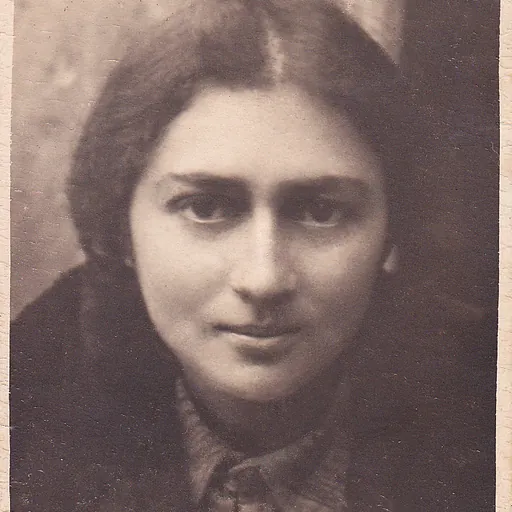
Mire Gola
Jewish resistance figther in the Kraków ghetto
About Mire Gola
Lived 1911 – 1943 (aged 31–32). Mire Gola was a Polish.
Gola Mire/Mira (1911–1943) was a member of the Jewish resistance underground in Poland during World War II.
Mire was active in the Zionist youth organization, Ha-Shomer ha-Za’ir, and joined the Communist Party in 1936. She organized labor strikes in Poland for which she was arrested.
Jewish resistance While living in the Kraków Ghetto, Mire and her cousin, Vuschka Spiner, worked in a German factory that produced goods and supplies for the Nazi army. They sabotaged canned food produced there but stopped when Mire thought it became too dangerous. Mire left the ghetto in January 1942 and resumed contact with the Polish Worker's Party (PPR). She urged her comrades to assist the Jews of Poland as she predicted the Nazi's plans for the annihilation of the Jews, but was disappointed by their inaction. Seeking more support, Mire connected with active members of the Akiva and Dror Zionist organizations including Spiner's husband, Dolek Liebeskind, Shimshon Draenger (1917–1943), and Adolf (Avraham) Leibovich (1917–1943). With limited help from the PPR, Mire and her contacts arranged forrest guides and hiding places for friends outside the ghetto. These friends mostly consisted of those who were active in Iskra, a Jewish underground group, led by Heshek (Zvi) Bauminger (1919–1943). Iskra ultimately merged with the PPR. Mire and members of Akiva continued to express disappointment with the lack of support from the PPR.
Mire, Iskra, and the Jewish resistance group, He-Haluz ha-Lohem, implemented a December 22, 1942 attack on German soldiers at the Cyganeria Cafe. Eleven Germans were killed and thirteen were injured during the attack. Roughly twenty resistance fighters died in the operation.
Second imprisonment and death In March 1943, Mire was arrested and sent to Montelupich Prison. She was tortured and kept in solitary confinement, but did not provide her captors with information. She became close with imprisoned women from He-Haluz ha-Lohem including resistance fighter, Tova Draenger. The women, along with Genia Meltzer-Scheinberg, planned an escape attempt after learning they were to be sent to the 'Hill of Death' in Plaszow. The women were moved from their basement cells to waiting trucks. A signal was given and the women ran en masse. Most of the women, including Mire, were killed during the escape attempt. Draenger was able to get away.
Poetry Mire often wrote poems in Yiddish and Hebrew, the themes of which were her husband and dead baby as well as Communism and resistance.
Don’t just read it —
keep it.
Full-length biographies made to live with: read them, listen on the way to work, watch them tonight.
- E-book
- Audio
- Video
Instant download · yours to keep · every purchase keeps this site free
Important facts
Contemporaries
People whose lives overlapped Mire Gola's






Frequently asked questions
Who was Mire Gola?
jewish resistance figther in the Kraków ghetto
When was Mire Gola born?
Mire Gola was born in 1911 in Rzeszów.
When did Mire Gola die?
Mire Gola died in 1943 in Kraków.
What nationality was Mire Gola?
Mire Gola was Polish.
Sources & further reading
Cite this page
APA: Biography.guide. (2026). Mire Gola. https://biography.guide/mire-gola/
MLA: "Mire Gola." Biography.guide, https://biography.guide/mire-gola/.
Chicago: "Mire Gola." Biography.guide. https://biography.guide/mire-gola/.
Data last updated: 2026-09-23 · Spot an error? Report a correction.
Portrait: Wikimedia Commons · author & licence
Page generated 2026-09-27 05:07 UTC