
About Mircea Florian
Lived 1888 – 1960 (aged 72). Mircea Florian was a Romanian linguist, philosopher and translator.
Mircea Florian (; April 1, 1888 – October 31, 1960) was a Romanian philosopher and translator. Active mainly during the interwar period, he was noted as one of the leading proponents of rationalism, opposing it to the Trăirist philosophy of Nae Ionescu. His work, comprising some 20 books, shows Florian as a disciple of centrists and rationalists such as Constantin Rădulescu-Motru and Titu Maiorescu.
Active in independent social democratic politics, the philosopher became a political prisoner under the communist regime. It was during his time in jail that Florian conceived his philosophical system, published after his death in the treatise Recesivitatea ca structură a lumii ("Recessivity as World Structure"). In 1990, he was made a posthumous member of the Romanian Academy.
Biography Born in Bucharest, Florian graduated from the Faculty of Letters and Philosophy at the local university, where he became a disciple of Rădulescu-Motru and P. P. Negulescu. He afterward took his PhD at the University of Greifswald, in the German Empire, with a thesis on Henri Bergson's notion of time.
During World War I, Florian served in the Romanian Land Forces and was taken prisoner by the Germans. He was transported to an internment camp at Krefeld, alongside figures such as Alexandru D. Strurdza and Ilie Moscovici. Eventually, Florian was freed by his captors and allowed to lecture at King Carol Foundation in Bucharest, under a German occupation government. As Florian later indicated, this was made possible by the intercession of a Germanophile scholar, Alexandru Tzigara-Samurcaș, who vouched for him, and by the protection of Constantin Giurescu.
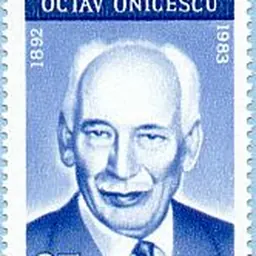
In the wake of the war, Florian was in contact with Ideea Europeană, Rădulescu-Motru's magazine, and went on its conference tour, alongside in various cities by, among others, Nae Ionescu, Cora Irineu, Octav Onicescu, Virgil Bărbat, and Emanoil Bucuța. However, in later years, he remained largely cut off from his public: said to have been shy in delivering his lectures, he led a private life, and dedicated himself, almost entirely, to research. After World War I, the Junimist legacy came in direct contradiction with Nae Ionescu's critique of rationalism, which was growing in popularity and lending its support to the far right's causes. According to literary historian Z. Ornea, Florian's relative lack of exposure is unfair, since his works may rank better than those of either Noica or Blaga.
Florian's stance, and especially his commitment to independent social democracy, made him a suspect upon the establishment of Romania's communist regime. As noted by researcher Victor Frunză, Florian and Alexandru Claudian made a "high sacrifice" when they refused to give in to "blackmail" and would not join the "Workers' Party" (as the Communist Party styled itself upon its absorption of Social Democratic sympathizers). In 1948, he was stripped of his university chair. Placed under constant surveillance by the Securitate, Romania's new secret police, he was soon after arrested. During his eight-month-long imprisonment without trial, he had the revelation on "recessivity as world structure". The new system evidenced that Florian had come to criticize some of the basic assumptions in Western philosophy, and conceiving of the world through the teachings of genetics. His system divided existence alongside its two, equal but alternating, attributes: the dominant trait tempered by the recessive (albeit not degraded) one; violence to love, rational to irrational, nationalism to supranationalism.
The imprisonment is said to have been a grueling experience: allegedly, his wife Angela no longer recognized him upon his return to the family home. A while after, Florian was partly reintegrated into academia, and assigned a researcher's position at the Institute of Philosophy. There, he dedicated himself to translating Aristotle's Organon, while in committing his Recesivitatea to paper in his spare time.
Recesivitatea was only published 23 years after Florian's death, with Editura Eminescu. Reportedly, the text had suffered cuts and interventions by communist censors. Florian's role was reconsidered mainly after the Romanian Revolution of 1989, when he was made a posthumous member of the academy. His full work was recovered for the public and reviewed by philosopher Mircea Flonta, in a 1998 volume of essays.
Don’t just read it —
keep it.
Full-length biographies made to live with: read them, listen on the way to work, watch them tonight.
- E-book
- Audio
- Video
Instant download · yours to keep · every purchase keeps this site free
Important facts
People in Mircea Florian's life
Named in this biography and alive at the same time



Related people
Same field, nearest in time

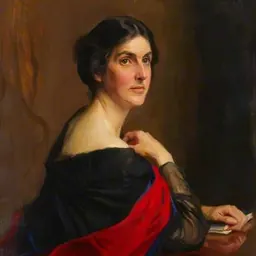
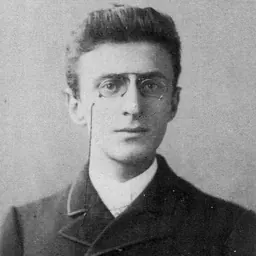
Contemporaries
People whose lives overlapped Mircea Florian's

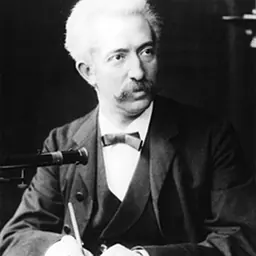
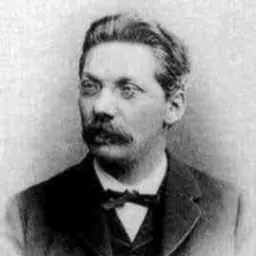



Frequently asked questions
Who was Mircea Florian?
Romanian translator and philosopher
When was Mircea Florian born?
Mircea Florian was born on 1 April 1888 in Bucharest.
When did Mircea Florian die?
Mircea Florian died on 31 October 1960 in Bucharest.
What was Mircea Florian's occupation?
Mircea Florian was a linguist, philosopher and translator.
What nationality was Mircea Florian?
Mircea Florian was Romanian.
Sources & further reading
· DBpedia: Mircea Florian (philosopher)
Cite this page
APA: Biography.guide. (2026). Mircea Florian. https://biography.guide/mircea-florian/
MLA: "Mircea Florian." Biography.guide, https://biography.guide/mircea-florian/.
Chicago: "Mircea Florian." Biography.guide. https://biography.guide/mircea-florian/.
Data last updated: 2026-09-20 · Spot an error? Report a correction.
Page generated 2026-09-27 05:16 UTC