
Minye Thihathu II of Toungoo
King of Toungoo
About Minye Thihathu II of Toungoo
Lived 1550 – 1609 (aged 58–59).
Minye Thihathu II of Toungoo (, ; 6 August 1550 – 11 August 1609) was king of the breakaway kingdom of Toungoo (Taungoo) from 1597 to 1609. His kingdom was one of several small states that emerged following the collapse of Toungoo Empire. He is best known in Burmese history for his role in the sack of Pegu (Bago) in 1599 that ended the Toungoo Empire.
He was viceroy of Toungoo from 1584 to 1597 during the reign of his first cousin King Nanda. After breaking away, he entered into an alliance with King Raza II of Arakan, and they captured Pegu in December 1599. The allies thoroughly looted the city before burning it down two months later. They also drove back a Siamese invasion, and agreed to jointly administer Lower Burma outside of Siamese-controlled Martaban (Mottama). But they lost control of Lower Burma in 1603 when the Portuguese governor of Syriam (Thanlyin) in the service of Arakan switched sides to Portuguese Goa. The allies' attempt to regain Syriam in 1603–04 failed.
He spent his last years rebuilding the city of Toungoo and other war ravaged regions around his kingdom. But he also saw his kingdom increasingly boxed in by the Portuguese from the south and Ava (Inwa) from the north. He died a year before Ava took over Toungoo.
Background Minye Thihathu was the eldest child of Viceroy Minkhaung II of Toungoo and his chief consort Laygyun Mibaya, and was born in Toungoo (Taungoo) c. 6 August 1550. His father was a half brother of King Bayinnaung of the Toungoo dynasty. His mother was a daughter of King Bayin Htwe of Prome (Pyay), and great-granddaughter of King Narapati of Ava. He was born during his father brief insurrection against Bayinnaung, following the assassination of King Tabinshwehti. He had four full siblings (a brother and three sisters) and a half-sister. In October 1564, the king gave his 14-year-old nephew the command of the 12,000-man Fifth Army for the upcoming Lan Na and Lan Xang campaigns. While it was not unusual that a young Burmese prince was asked to go to the front, it was uncommon that the 14-year-old was given such a high position. Five other army commanders of the 64,000-strong invasion force were the king, the crown prince, his father, and his two other uncles, all of whom were at least a generation older, and had plenty of military experience.
His army participated in the capture of Vientiane in January 1565, and spent months trekking the Laotian hills in their fruitless pursuit of King Setthathirat of Lan Xang. He had already turned 15 when he arrived back at Pegu (Bago) in October 1565. In October 1568, he was again called to lead the 5000-strong Fifth Army, made up of troops from Lan Na and Kengtung, to put down rebellions in southern Siam and Lan Xang. Southern Siam's rebellion was put down in August 1569 but Lan Xang remained at large. Like in 1565, his army participated in the 1569 invasion of Lan Xang.
At age 20, he was married to his half-cousin Min Khin Saw, daughter of Bayinnaung by Queen Sanda Dewi on 1 May 1571.
Heir-apparent of Toungoo (1574–84) In 1574, he returned to his native Toungoo, and became the heir-apparent there. He participated in two more military campaigns in the remaining years of Bayinnaung. He led an army in the 1575–76 campaign against a rebellion in the northern Shan states of Mohnyin and Mogaung. and an "absurdly overextended empire". The transfer of power had gone smoothly; all key major vassal rulers, who ruled what until recently used to be sovereign kingdoms, initially pledged allegiance to the new king, while adopting a wait-and-see attitude. For his part, Nanda did not trust his vassals especially his own kinsmen Minkhaung II of Toungoo and Thado Minsaw of Ava. When Thado Minsaw revolted in 1583–84, Minkhaung sided with Nanda, who suppressed the rebellion in April 1584.
Viceroy of Toungoo (1584–97)
Nominal vassal Minkhaung's support of Nanda was crucial in his son succeeding him as viceroy. Less than two months after the Ava campaign, in June 1584, Minkhaung died.
In defense of Lower Burma (1594–95) The period of relative autonomy ended in 1593. By then, all five invasions of Siam (1584–93) had ended in failure, and Nanda had finally given up on winning back Siam. He now turned his attention to reasserting his authority closer to home. Minye Thihathu had to pay attention because Toungoo was surrounded on three sides by the states ruled by Nanda and his sons (Ava in the north, Prome in the west and Pegu in the south). When Nanda asked him to lead an army to put down a Siam-backed rebellion in Moulmein (Mawlamyaing) in October 1594, he agreed. But his 8,000-man army was badly defeated outside Moulmein by the Siamese army. At Pegu, Minye Thihathu was severely reprimanded by Nanda, before being allowed to return to Toungoo.
But he was soon asked for help again by Nanda. In December 1594, a 12,000-strong Siamese army led by King Naresuan laid siege to Pegu. Nanda had not expected an invasion of Pegu itself, and in desperation asked Prome, Toungoo and Lan Na for help. Minye Thihathu was in no hurry. Since he could not break the siege on his own in any case, he reinforced his city's defenses while he waited for the troops from Lan Na to arrive. It was only in March that he left with his army alongside Lan Na troops for Pegu. He left his eldest son Natshinnaung in charge of the fortified city. Meanwhile, Prome forces led by Thado Dhamma Yaza III of Prome, instead of breaking the siege at Pegu, revolted against his father Nanda, and marched to Toungoo in a brazen attempt to consolidate central Burma. The Prome army laid siege to Toungoo for two weeks, and retreated only after Minye Thihathu rushed back with his army. Prome had taken over western central Burma up to Pakhan in the north. They all refused. Minye Thihathu and Nawrahta Minsaw both formally renounced all tributary ties to Nanda. Others like Nyaungyan of Upper Burma and Vorapita of Lan Xang may not have formally declared independence but they essentially broke away as well.
King of Toungoo (1597–1609)
Conquest of Pegu (1598–99) Surviving Khmer bronze statue of the 30 statues taken from Ayutthaya in 1564, taken to Mrauk-U in 1600 by the Arakanese, and to Amarapura in 1785 by Thado Minsaw.
Nanda was in a free fall. Over the next year, his power further deteriorated in the two remaining regions he still ruled: the Pegu province and the Irrawaddy delta. Most able bodied men had fled elsewhere. Minye Thihathu eyed Pegu for the city's enormous riches as well as access to maritime trade of Lower Burma. He entered into an alliance with King Raza II of Arakan. The allies agreed to a joint attack on whatever remained of the empire, and share the spoils. He chose Arakan, the farthest kingdom, figuring that after getting their share of the loot, the Arakanese would return home and not be a rival for Lower Burma. Minye Thihathu moved deep into Pegu's territory, posting a 5000-man army at Kawliya, 60 km northeast of Pegu. 30,000-strong Arakanese land and naval forces left Mrauk-U for Lower Burma. The Arakanese navy seized the main port city of Syriam (Thanlyin) in March 1599. In April, the allies laid siege to Pegu. About nine months into the siege, Nanda's heir-apparent Minye Kyawswa defected on a promise of good treatment but was promptly executed. After the defection, the king surrendered on . The fallen king and his family were sent to Toungoo.
The victors divided the enormous wealth of Pegu, accumulated over the past 60 years as the capital of Toungoo Empire. The gold, silver and precious stones were equally divided. The Arakanese share included several brazen cannon, 30 Khmer bronze statues, and a white elephant. Toungoo got the Tooth relic and Alms Bowl of Ceylon and other sacred religious artifacts. Toungoo's share of the loot alone totaled more than a dozen caravans, each consisting of 700 elephants and horses. Meanwhile, they received the news that King Naresuan and his army were marching toward Lower Burma. While he planned to hold Lower Burma, Minye Thihathu's first priority was to get the loot to the secure confines of Toungoo. On , he and his army returned with their loot to Toungoo, leaving the Arakanese in charge of the city. The Arakanese army methodically stripped the palace and the city of whatever remaining treasures, and set fire to the city. The Kanbawzathadi Palace and the city of Pegu, rebuilt by Bayinnaung in 1565–68 was burned down. The Arakanese then left for Syriam, and shipped the loot off to Mrauk-U.
Nareusan and his army arrived at Pegu on , only to find a smoldering deserted city. Without realizing that the Arakanese forces were still in Syriam to the south, he marched north.
Siamese invasion of Lower Burma (1600)
Minye Thihathu and his army arrived back at Toungoo on . Naresuan and the Siamese army arrived a few weeks later, and laid siege to the city. The Siamese troops tried to drain the city's moats by building a channel to the Paunglaung river. But the ambitious plan was cut short when their supplies stopped coming. The Arakanese forces, which Naresuan had not counted on remaining in Lower Burma, had been cutting off Siamese supply lines, and had returned to Pegu. Faced with the possibility of being encircled, Naresuan called off the siege on , and made a break for the border. In June 1600, King Raza appointed a Portuguese captain named Filipe de Brito e Nicote in his service as governor, and left a garrison consisted mainly of foreign mercenaries. Binnya Dala then made peace with De Brito in a marriage of alliance between his daughter and De Brito's son Simon. All the while, Minye Thihathu kept a series of garrisons near Syriam and Martaban to prevent the warfare from spilling over but nothing else. By then, even the authority of the Arakanese king over the Portuguese led garrison was nominal. De Brito had been in contact with Aires de Saldanha, Viceroy of Goa, to make Syriam a Portuguese colony. Minye Thihathu was crowned king with the title of Maha Dhamma Yaza while his chief queen took the title of Atula Agga Maha Dewi . His eldest son Natshinnaung was made heir-apparent. He also give his eldest younger brother the title Thado Dhamma Yaza , the style of rulers of Prome, indicating that he had designs on Prome, the kingdom to his west. the Portuguese at Syriam declared their allegiance to the Portuguese Empire, and renounced ties to both Arakan and Toungoo.
In response, Toungoo and Arakan launched a joint attack on Syriam in the dry season of 1603–04. Minye Thihathu himself led the Toungoo army.
Final years (1604–09) In his last years, Minye Thihathu saw his kingdom increasingly squeezed by a resurgent Ava and a powerful Portuguese Syriam. The Portuguese takeover of Syriam (along with the Arakanese withdrawal) essentially ended Toungoo's hold over Lower Burma. In the following years, the Portuguese projected their power throughout the delta, and gained the allegiance of delta lords. Toungoo's borders were pushed back to Pegu, and the kingdom was now completely landlocked. The loss of maritime trade and revenue from the seaports adversely affected Toungoo's economy. In later years, even the Pegu border was routinely breached by the Portuguese. Chronicles state that Minye Thihathu's troops were powerless to stop the Portuguese looting the relic chambers of the Buddhist pagodas around Pegu.
Meanwhile in the north, King Anaukpetlun, following the work begun by his father King Nyaungyan, had reunified Upper Burma and cis-Salween Shan States by 1606, and captured Prome in 1608.
Toungoo was next. But Minye Thihathu did not live to see the showdown. He died on in Toungoo. He was succeeded by Natshinnaung.
List of military campaigns
CampaignDurationTroops commandedNotes Lan Na and Lan Xang 1564–65 12,000 men, 600 horses, 50 elephants Led the Fifth Army, based out of northern Siam, and mainly consisted of Siamese troops. The Siamese regiments were led by their own lords including Maha Thammarachathirat of Phitsanulok (as well as governors of Sukhothai and Sawankhalok). Siam 1568–69 5000 men, 500 horses, 50 elephants Led the Fifth Army, consisted of regiments from Lan Na and Keng Tung. Arakan 1581 11,000 Led one of two armies that reinforced Toungoo troops in Arakan (Rakhine). Invaded via the Taungup Pass. Siam 1586–87 2 regiments Led two regiments from Toungoo. Siam 1590–91 1 regiment Sent one regiment led by his brother Prince of Kawliya Siam 1592–93 1 regiment Sent one regiments led by his eldest son Natshinnaung Moulmein (Mawlamyaing) 1594–95 8,000 Led the 8000-strong army, charged with putting down a rebellion in Moulmein (Mawlamyaing). Toungoo supplied a single regiment, however. Driven back by Siamese troops. Pegu 1598–99 5000 Led the Toungoo army in a joint operation with Mrauk-U (Arakan) Siamese siege of Toungoo 1600 unspecified Led the defense of the city. Syriam 1603–04 5000 men, 300 horses, 30 elephants Led the Toungoo army in a joint operation with Mrauk-U (Arakan)
Don’t just read it —
keep it.
Full-length biographies made to live with: read them, listen on the way to work, watch them tonight.
- E-book
- Audio
- Video
Instant download · yours to keep · every purchase keeps this site free
Important facts
Family & relationships
People in Minye Thihathu II of Toungoo's life
Named in this biography and alive at the same time
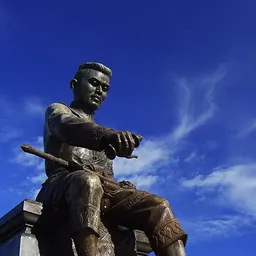


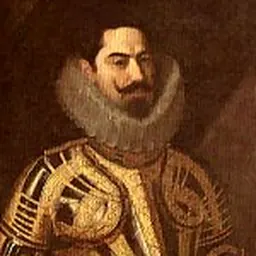


Contemporaries
People whose lives overlapped Minye Thihathu II of Toungoo's
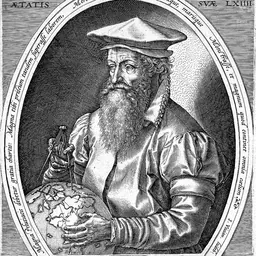

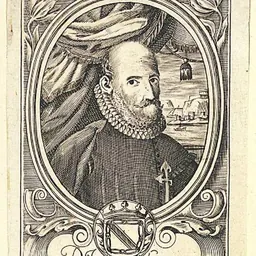



Frequently asked questions
Who was Minye Thihathu II of Toungoo?
King of Toungoo
When was Minye Thihathu II of Toungoo born?
Minye Thihathu II of Toungoo was born in 1550 in Taungoo.
When did Minye Thihathu II of Toungoo die?
Minye Thihathu II of Toungoo died in 1609 in Taungoo.
Sources & further reading
· Wikipedia: Minye Thihathu II of Toungoo
· DBpedia: Minye Thihathu II of Toungoo
Cite this page
APA: Biography.guide. (2026). Minye Thihathu II of Toungoo. https://biography.guide/minye-thihathu-ii-of-toungoo/
MLA: "Minye Thihathu II of Toungoo." Biography.guide, https://biography.guide/minye-thihathu-ii-of-toungoo/.
Chicago: "Minye Thihathu II of Toungoo." Biography.guide. https://biography.guide/minye-thihathu-ii-of-toungoo/.
Data last updated: 2026-09-20 · Spot an error? Report a correction.
Page generated 2026-09-27 05:17 UTC