
About Ming-Fa Lin
Lived 1962 – 2023 (aged 61). Ming-Fa Lin was a theoretical physicist.
Ming-Fa Lin (; – August 14, 2023) was a Taiwanese theoretical physicist. He was a distinguished professor in the Department of Physics of National Cheng Kung University in Tainan, Taiwan. His main scientific interests focus on the essential properties of carbon-related materials and low-dimensional systems. He presided over more than 10 Ministry of Science and Technology research projects. He published more than 300 peer-reviewed articles and over 10 academic books. His research principles include innovation, uniqueness, diversity, completeness, and generalization.
Education and career He received a B.S. degree in physics from National Cheng Kung University in 1984. Later he received the M.S., and Ph.D. degrees in physics from National Tsing Hua University (Hsinchu, Taiwan) in 1986 and 1993, respectively.
As a postdoctoral fellow in physics from the National Tsing-Hua University, he stayed until 1995. After three years in the National Chiao Tung University (Hsinchu, Taiwan), 1995–1997, he became a professor in the National Cheng Kung University. M. F. Lin was a member of the American Physical Society, American Chemical Society, Physical Society of Taiwan,
Professional experience 1986.08 - 1987.07: Lecturer of Physics Teaching and Research Center, Feng Chia University 1995.08 - 1997.07: Postdoctoral fellow of Electrophysics, National Chiao Tung University 1997.08 - 1998.07: Assistant Professor of Physics, National Cheng Kung University 1998.08 - 2001.07: Associate Professor of Physics, National Cheng Kung University 2001.08 - 2006.07: Professor of Physics, National Cheng Kung University 2006.08 - 2023.08: Distinguished Professor of Physics, National Cheng Kung University
Research fields Professor Lin has performed research in the fields of solid-state physics, condensed matter physics, materials science, nano science, carbon nanotube, graphene, graphene nanoribbon, carbon-related materials, low-dimensional materials, semiconductor, and energy materials.
Honors and awards 1997.08 - 1998.07: Research Award, National Science Council, Taiwan 1998.08 - 1999.07: Research Award, National Science Council, Taiwan 1999.08 - 2000.07: Research Award, National Science Council, Taiwan 2000.08 - 2001.07: Research Award, National Science Council, Taiwan 2023.10: Career-long top 2% of the world's top scientists in 2022, Elsevier Data Repository
Research highlights
Optical properties of graphene nanoribbons
Absorption spectra of monolayer graphene nanoribbons with (a) The zigzag graphene nanoribbons possess an optical selection rule of . (b) The armchair graphene nanoribbons possess an optical selection rule of . In 2000, Lin cooperated with Shyu to calculate the optical properties of graphene nanoribbons numerically. The different selection rules for optical transitions in zigzag and armchair graphene nanoribbons were first reported. In 2007, these results were supplemented by a comparative study of zigzag graphene nanoribbons with single-wall armchair carbon nanotubes by Hsu and Reichl. In 2011, Lin conducted Chung et al. to analyze and report the edge-dependent optical selection rules analytically. In the meantime, Sasaki et al. also reported their theoretical prediction as a confirmation.
The selection rule in zigzag graphene nanoribbons differs from that in armchair graphene nanoribbons. Optical transitions between the edge and bulk states enrich the low-energy region absorption spectrum ( 3 eV) with high-intensity absorption peaks. Analytical derivation of the numerically obtained selection rules was presented in 2011. The selection rule for the incident light polarized longitudinally to the zigzag nanoribbon axis is that , where and are index number for the conduction and valence energy subbands, respectively. For armchair graphene nanoribbons, the selection rule is .
Research projects
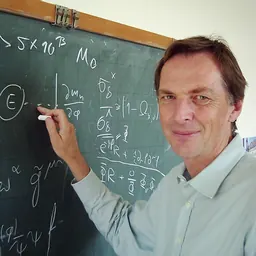
Distinguished Professor Ming-Fa Lin in ICMB-2020Professor Lin explained his research topic, "A theoretical framework for quasiparticles," at the international conference ICMB-2020.
From 1997 to 2000, Prof. Lin's research projects focused on the theoretical investigation of carbon-based nanostructures, particularly carbon nanotubes nanotubes are also examined, with particular emphasis on changes in electronic structures and optical absorption spectra. 1998.08 - 1999.07: Physical Properties of Carbon Toroids (I) 1999.08 - 2000.07: Physical Properties of Carbon Toroids and Carbon Nanotubes (III) 2000.08 - 2001.07: Physical Properties of Graphite-Related Systems and Two-Dimensional Modulated Electronic Systems (I) 2001.08 - 2002.07: Physical Properties of Graphite-Related Systems and Two-Dimensional Modulated Electronic Systems (II) 2002.08 - 2003.07: Physical Properties of Graphite-Related Systems and Two-Dimensional Modulated Electronic Systems (III) 2003.08 - 2004.07: Many-Body Physical Properties of Carbon Nanotubes (I) 2004.08 - 2005.07: Many-Body Physical Properties of Carbon Nanotubes (II) 2005.08 - 2006.07: Many-Body Physical Properties of Carbon Nanotubes (III) 2006.08 - 2007.07: Physical Properties of Low-Dimensional Carbon-Related Systems (I) 2008.08 - 2009.07: Physical Properties of Low-Dimensional Carbon-Related Systems (II) 2007.08 - 2008.07: Physical Properties of Low-Dimensional Carbon-Related Systems (III) 2009.08 - 2010.07: Electronic Properties of Layered Systems in the Presence of External Fields (I) 2010.08 - 2011.07: Electronic Properties of Layered Systems in the Presence of External Fields (II) 2011.08 - 2012.07: Electronic Properties of Layered Systems in the Presence of External Fields (III) 2012.08 - 2013.07: Electronic Properties of Layered Systems in the Presence of External Fields (IV) 2013.08 - 2014.07: Physical Properties of Graphene Systems (I) 2014.08 - 2015.07: Physical Properties of Graphene Systems (II) 2015.08 - 2016.07: Physical Properties of Graphene Systems (III) 2016.08 - 2017.07: Essential Properties of IV-Group 2D Systems (I) 2017.08 - 2018.07: Essential Properties of IV-Group 2D Systems (II) 2018.08 - 2019.07: Essential Properties of IV-Group 2D Systems (III) 2019.08 - 2020.07: Theoretical Frameworks for Essential Properties of Layered Systems (I) 2020.08 - 2021.07: Theoretical Frameworks for Essential Properties of Layered Systems (II) 2021.08 - 2022.07: Theoretical Frameworks for Essential Properties of Layered Systems (III) 2022.08 - 2023.07: The Basic Science under the Quasi-Particle Framework (I) 2023.08 - 2024.07: The Basic Science under the Quasi-Particle Framework (II)
Co-PI
The following is a list of projects for which Prof. Lin serves as the Co-Principal Investigator (Co-PI).
2014.08 - 2015.07: MBE Growth, Electronic, Spintronic and Optical Studies on Topological Insulator Films and Advanced Applications (I) 2015.08 - 2016.07: MBE Growth, Electronic, Spintronic and Optical Studies on Topological Insulator Films and Advanced Applications (II) 2016.08 - 2017.07: MBE Growth, Electronic, Spintronic and Optical Studies on Topological Insulator Films and Advanced Applications (III)
Publications
Regular articles
More than 300 peer-reviewed articles are published and listed in abstract and citation databases.
Books
Lin's book publications primarily address theoretical condensed-matter physics and materials science, with a particular focus on low-dimensional Theory of Magnetoelectric Properties of 2D Systems Structure- and Adatom-Enriched Essential Properties of Graphene Nanoribbons Handbook of Green Energy Materials Coulomb Excitations and Decays in Graphene-Related Systems Diverse Quantization Phenomena in Layered Materials Geometric and Electronic Properties of Graphene-Related Systems: Chemical Bonding Schemes Silicene-Based Layered Materials Electronic and Optical Properties of Graphite-Related Systems Lithium-Ion Batteries and Solar Cells: Physical, Chemical, and Materials Properties Rich Quasiparticle Properties of Low Dimensional Systems First-Principles Calculations for Cathode, Electrolyte and Anode Battery Materials Lithium-Related Batteries: Advances and Challenges Diverse Quasiparticle Properties of Emerging Materials: First-Principles Simulations Energy Storage and Conversion Materials: Properties, Methods, and Applications Fundamental Physicochemical Properties of Germanene-related Materials: A Theoretical Perspective Rich Quasiparticle Properties in Layered Graphene-Related Systems Chemical Modifications of Graphene-Like Materials
Review articles Magneto-electronic properties of multilayer graphenes Electronic and optical properties of graphene nanoribbons in external fields
Don’t just read it —
keep it.
Full-length biographies made to live with: read them, listen on the way to work, watch them tonight.
- E-book
- Audio
- Video
Instant download · yours to keep · every purchase keeps this site free
Important facts
Related people
Same field, nearest in time




Contemporaries
People whose lives overlapped Ming-Fa Lin's




Frequently asked questions
Who was Ming-Fa Lin?
Taiwanese theoretical physicist
When was Ming-Fa Lin born?
Ming-Fa Lin was born on 2 July 1962.
When did Ming-Fa Lin die?
Ming-Fa Lin died on 14 August 2023.
What was Ming-Fa Lin's occupation?
Ming-Fa Lin was a theoretical physicist.
Sources & further reading
Cite this page
APA: Biography.guide. (2026). Ming-Fa Lin. https://biography.guide/ming-fa-lin/
MLA: "Ming-Fa Lin." Biography.guide, https://biography.guide/ming-fa-lin/.
Chicago: "Ming-Fa Lin." Biography.guide. https://biography.guide/ming-fa-lin/.
Data last updated: 2026-09-23 · Spot an error? Report a correction.
Portrait: Wikimedia Commons · author & licence
Page generated 2026-09-27 05:05 UTC