
Milosav Zdravković
Serbian nobleman and revolutionary
About Milosav Zdravković
Lived 1780 – 1854 (aged 73–74). Milosav Zdravković was a civil servant, military commander and politician.
Milosav Zdravković-Resavac (; 1787 – 1854) was the Duke of Resava, a participant in the First Serbian Uprising and Second Serbian Uprising, a state official and a participant in many political events in the Principality of Serbia. He acquired the title of duke after taking part in the Battle of Čegar in 1809. He was eventually succeeded by his brother Dobrosav Zdravković who also became the district chief. Both Milosav and Dobrosav were sons of Milija Zdravković.
Biography Milosav Zdravković was the obor-knez of the Resava Principality of the Ćuprija Nahiya from 1809. Milosav was married to the daughter of the Duke of the Resava Principality of the Ćuprija Nahija (until 1809) Stevan Sinđelić. Duke Milosav Zdravković succeeded Duke Stevan Sinđelić, who died in the Battle of Čegar.
Unlike most other dukes, after the collapse of the First Serbian Uprising in 1813, he did not flee across the Sava and the Danube, but together with his father Milija surrendered to the Grand Vizier Hurshid Pasha. Hurshid Pasha did not want to execute them but in 1814, Ćaja-paša in his zeal had Milosav's father liquidated, and then impaled his head and placed it next to other heads of Serbian insurgents in front of the Belgrade's Stambol Gate. Due to his father's death, Milosav, with the support of Belgrade's Metropolitan Dionysius, fled from Belgrade to Resava, where he prepared for a new uprising in 1815. During the Second Serbian Uprising, together with the insurgents, he fought against the Turks in the battle of Ranovac, as well as during the Turkish attack on Miliva.
After the Second Serbian Uprising, Milosav was elected prince of the Ćuprija nahiya, and since no courts had yet been established in the Principality of Serbia between 1815 and 1825, Resavac was the executor of the lower judicial power in the nahiya. Despite the fact that he took part in almost every rebellion against Prince Miloš, Milosav was the prince of Nahiya, the people's judge and finally a member of the Governing State Council during Miloš's rule.
When Mihailo Obrenović came to power, Resavac sided with the leaders of the Constitutional Defender's Party and began to move the people of his region against the prince. After Prince Mihailo was overthrown in 1842, Alexander Karađorđević became the new ruler of the Principality of Serbia. During his reign, Milosav was a member of the Governing State Council until his retirement, and due to his talent for oratory, he gave speeches at court several times.
Life before joining the insurgents The family of Milosav Zdravković-Resavac is from the village of Lomnica in Gornja Resava. Milosav Zdravković's father is Prince Milija Zdravković, a member of the Governing Council for the Ćuprija nahiya, a native of Lomnica, the Resava principality of the Ćuprija nahiya. Before Milosavlje's birth, Milija Zdravković left his birthplace and went with his family to the village of Brestovo, which today belongs to the Municipality of Despotovac and is almost equally distant from its municipal center, Despotovac, as well as from Svilajnac and Jagodina. Milosav Zdravković was born here in Brestovo around 1780. He started reading and writing very early. He acquired his first knowledge in the village of Ivankovac, near Ćuprija, and then with the Resava protege Miloje in Lomnica. Shortly after the outbreak of the First Serbian Uprising in 1804, Milija Zdravković became Karađorđe's advisor for the Ćuprija nahiya. When the Great School was opened in Belgrade in 1808, he enrolled his son Milosav. Thus, Milosav Zdravković, together with Karađorđev's son Aleks, Vuk Karadžić and fifteen other young men, became a student of the first generation of the French-modelled institution of higher learning in Belgrade called the Velika škola.
The first Serbian uprising The Turkish offensive forced Milosav to return to Resava in 1809. Already that year, he fought on Čegra together with his Resavci. After that defeat and the death of Stevan Sindjelić, Karadjordje appointed him the new Duke of Resava. The collapse of the First Serbian Uprising in 1813 forced a large number of dukes to flee across the Sava and the Danube so that the Turks would not kill them. Milosav Zdravković did not want to flee, but he and his father Milija decided to surrender to the Grand Vizier Kurshid Pasha. which was quelled, and the Turks continued with the executions.
Politician Respecting the merits of Milosav from the First and Second Serbian Uprising, the people of the Ćuprija Nahiya elected him their prince on August 24, 1815. A document on this has been preserved, which states:
The wish of the people of the Ćuprija nahiya was confirmed by Prince Miloš Obrenović with his Charter on December 2, 1815, while giving Milosav permission to keep ten cops in order to maintain order in the nahiya.
As courts had not yet been established in the Principality of Serbia between 1815 and 1825, the Nahiya princes were the executors of lower judicial power. That is how Milosav Zdravković judged in many disputes between the citizens of Ćuprija nahiya. Whenever he was in doubt as to how to judge, he would ask for the advice of Prince Milos. Milosav conducted out-of-court adjudication of civil cases until the beginning of the work of the district court of the Ćuprija nahiya on January 1, 1825, with its seat in Svilajnac.
Although Prince Miloš Obrenović and Marashli Ali Pasha agreed to form a joint Serbian-Turkish administration, some spahis continued to act arbitrarily. They gathered a dozen spahis, but they did so quite unjustly, plundering as much as possible from the people. Milosav informed Prince Miloš about this on several occasions by letters. In one of them, among other things, he says:
Thus, Prince Milosav later tried to regulate many Serbian-Turkish issues, relying on Milosev's diplomacy.
Wealth Milosav had great wealth in his possession, which consisted of numerous meadows, forests, fields, watermills, shops, as well as a lot of money and gold coins. Despite the large property he owned, the people in Resava appreciated him. The people of Svilajnac then said that he gained everything he had with his work and in an honest way. Despite the fact that he spent the last years of his life in Belgrade, he often came to Svilajnac, where he had a house, known as Resavčev konak, with a large yard, in which there were several smaller houses. In the boarding house, where he also had servants, Resavac received guests, though most came to ask for help. He often gave money to the poor or helped them in other ways, which is why many in Svilajnac called him the "father of the poor". The building of his residence was later converted into a municipality. Municipal bodies were located in it until 1936. The residence was then demolished, and the old material was repurposed to build a new municipal building.
Don’t just read it —
keep it.
Full-length biographies made to live with: read them, listen on the way to work, watch them tonight.
- E-book
- Audio
- Video
Instant download · yours to keep · every purchase keeps this site free
Important facts
People in Milosav Zdravković's life
Named in this biography and alive at the same time


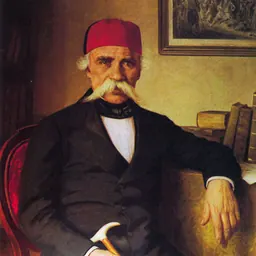


Related people
Same field, nearest in time



Contemporaries
People whose lives overlapped Milosav Zdravković's




Frequently asked questions
Who was Milosav Zdravković?
Serbian nobleman and revolutionary
When was Milosav Zdravković born?
Milosav Zdravković was born in 1780 in Lomnica.
When did Milosav Zdravković die?
Milosav Zdravković died on 26 July 1854 in Belgrade.
What was Milosav Zdravković's occupation?
Milosav Zdravković was a civil servant, military commander and politician.
Sources & further reading
· Wikipedia: Milosav Zdravković
Cite this page
APA: Biography.guide. (2026). Milosav Zdravković. https://biography.guide/milosav-zdravkovic/
MLA: "Milosav Zdravković." Biography.guide, https://biography.guide/milosav-zdravkovic/.
Chicago: "Milosav Zdravković." Biography.guide. https://biography.guide/milosav-zdravkovic/.
Data last updated: 2026-09-20 · Spot an error? Report a correction.
Page generated 2026-09-27 04:58 UTC