
About Millicent Rogers
Lived 1902 – 1953 (aged 50–51). Millicent Rogers was an American art collector, socialite, jewelry designer, activist and collector.
Mary Millicent Abigail Rogers (February 1, 1902 – January 1, 1953) known as Millicent Rogers, was an American socialite, fashion icon, jewelry designer and art collector. She was an early supporter of Southwestern-style art and jewelry, and is credited with promoting it to national and international audiences. She was among the first celebrities to champion the cause of Native American civil rights.
Biography Woman at the Tub, by Toulouse-Lautrec. One of at least a dozen Toulouse-Lautrec works that Rogers donated to the Brooklyn Museum.
Rogers was born February 1, 1902, the eldest of two children born to Mary Benjamin and Henry Huttleston Rogers Jr. Her brother was Henry Huddleston Rogers III. Her mother Mary was a socialite, philanthropist and serious artist who would outlive her children; her father, Colonel Henry Huttleston Rogers Jr., known as 'Harry', was the son of Standard Oil co-founder Henry Huttleston Rogers, and had had a distinguished military career. When his father died, not only did Harry inherit his father's wealth, but he became the sole owner of the Virginian Railway and a director of several other transportation companies. The family was enormously wealthy and divided their time between homes in Manhattan, Georgetown, Tuxedo Park and, in Southampton, an Italianate mansion named Black Point. Mary was an intellectual, refined in the arts, and that is how she raised her daughter. Millicent was well-educated at home, by tutors. At age 8, she contracted Rheumatic fever and was bedridden for some time, which was when she became a voracious reader. She proved to be intellectually precocious—she and her brother shared a facility for languages and communicated with each other in Latin. At age 12, she was sent, as a boarder, to the Madeira School in McLean, Virginia. Seven years later, she made her debut.
In October 1919, before she made her official debut, the Prince of Wales visited New York. The two met at social occasions and became dance partners. While some hoped that they would marry, the greater effect was that Millicent became the focus of the society media. Cecil Beaton described her as "extravagantly beautiful", saying that, although she had excellent taste, she was given to dressing "either as Anna Karenina in sable, as a fragrant Chinese courtesan in mandarin robes, or as Gretel in Tyrolean peasant clothes made by Shiaparelli." She was constantly written about in The New York Times, the New York Journal-American and The Washington Post, and in magazines such as Vogue and Town & Country. One of her earliest appearances was in Harper's Bazaar, which ran a sensational photo of her taken at a fantasy ball at Black Point, costumed as a young queen in a shiny gown with train and headdress. The couple had one son, Peter Salm (1924-1994), but separated before the boy was born. The Count was paid $250,000. and their divorce was finalized in April 1927.
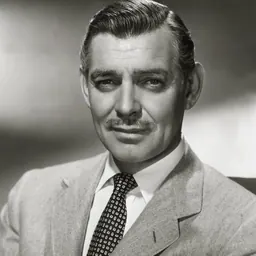
On November 8, 1927, Rogers married the Argentinian aristocrat and sportsman Arturo Peralta-Ramos. They were married in the parish house of the Basilica of the Sacred Hearts of Jesus and Mary in Southampton, with only Rogers' father, son, and two friends in attendance. Peralta-Ramos filed for divorce on December 6, 1935, citing "extreme cruelty". They lived in a house built by Rogers in the early 1930s, in St. Anton am Arlberg, which Rogers lost to the Nazis when Germany annexed Austria in 1938. She also bought and restored the historic estate Claremont Manor, in Claremont, Virginia, turning it into a working farm and offering it as a rehabilitation center for Navy pilots. A more significant relationship was with actor Clark Gable; at war's end, Rogers moved to Los Angeles, where she rented the former Rudolph Valentino mansion, Falcon Lair while working on a house she planned to build for them in the San Fernando Valley—the relationship ended and the project was abandoned. She was a life-long artist who had illustrated children's books and made needlepoint rugs. in some cases, she made her own pieces, using pumice stone and nail files.
Rogers became very involved with the Taos community. In 1951, she helped Pueblo members travel to Washington to lay the groundwork for the establishment of the Pueblo Health Center and personally covered its operating expenses.
Death and legacy Rogers' childhood bout with rheumatic fever affected her health for her entire life. She was plagued by pneumonia, and by multiple attacks caused by an enlarged heart which partially crippled her left arm. Following surgery for an aneurysm, she died in St. Joseph Hospital in Albuquerque, New Mexico on January 1, 1953.
Rogers had inherited a great deal of fine art, but she acquired much more, and all of her lavishly decorated homes featured paintings which illustrated her refined taste. Her collection included works by Paul Gauguin, She was also a collector of African art and had an extensive collection of Chinese art, including a teapot which had belonged to Empress Cixi. Rogers donated much of this collection to the Brooklyn Museum and, in 2018, the contents of Turtle Walk was put up for auction. However, as Rogers noted to a friend, her inheritance was not what had been reported and, at her death, she was $3 million in debt. It was later remodeled and expanded and, thanks to donations, the museum's collection has expanded from 888 objects to 7,000 items.
Fashion Rogers was consistently on the world's best-dressed lists and had a significant jewelry collection, favoring bold, sculptural pieces by designers such as Suzanne Belperron, Fulco di Verdura, Paul Flato, and René Boivin. Adrian and, in particular, Elsa Schiaparelli. Her sons donated her fashion collection to the Brooklyn Museum; it was later transferred to the Metropolitan Museum of Art, which holds approximately 500 pieces, including 200 by Schiaparelli. She continues to inspire designers; John Galliano credited Rogers as his muse for his Spring 2010 Dior collection. Diane von Furstenberg did the same for her 2011 American Legends collection.
Gallery
Don’t just read it —
keep it.
Full-length biographies made to live with: read them, listen on the way to work, watch them tonight.
- E-book
- Audio
- Video
Instant download · yours to keep · every purchase keeps this site free
Important facts
People in Millicent Rogers's life
Named in this biography and alive at the same time






Related people
Same field, nearest in time



Contemporaries
People whose lives overlapped Millicent Rogers's



Frequently asked questions
Who was Millicent Rogers?
American art collector (1902-1953)
When was Millicent Rogers born?
Millicent Rogers was born on 1 February 1902.
When did Millicent Rogers die?
Millicent Rogers died in 1953.
What was Millicent Rogers's occupation?
Millicent Rogers was an art collector, socialite, jewelry designer, activist and collector.
What nationality was Millicent Rogers?
Millicent Rogers was American.
Sources & further reading
Cite this page
APA: Biography.guide. (2026). Millicent Rogers. https://biography.guide/millicent-rogers/
MLA: "Millicent Rogers." Biography.guide, https://biography.guide/millicent-rogers/.
Chicago: "Millicent Rogers." Biography.guide. https://biography.guide/millicent-rogers/.
Data last updated: 2026-09-20 · Spot an error? Report a correction.
Page generated 2026-09-27 05:22 UTC