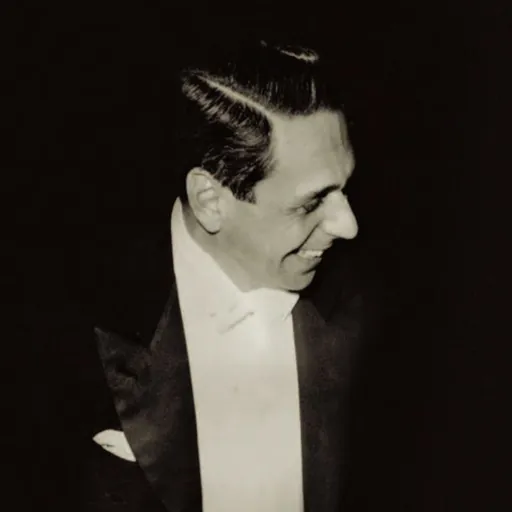
About Fulco di Verdura
Lived 1898 – 1978 (aged 80). Fulco di Verdura was an Italian socialite, jewelry designer and entrepreneur.
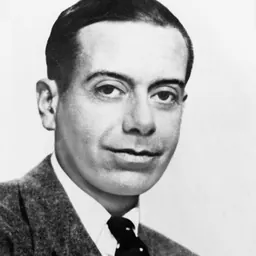
Fulco Santostefano della Cerda, 5th Duke of Verdura (20 March 1898 – 15 August 1978), known as Fulco di Verdura, was an influential Italian jeweller. His career began with an introduction to designer Gabrielle "Coco" Chanel by composer Cole Porter. He opened his own jewelry salon, which he called Verdura, in 1939.
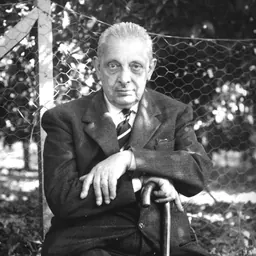
He was the last to bear the now-defunct Sicilian title of Duke of Verdura, and his cousin was a prominent Sicilian prince, Giuseppe Tomasi di Lampedusa, author of the famous novel The Leopard. A biography of Fulco di Verdura was published by Thames & Hudson, authored by Patricia Corbett.
Beginnings Born in 1898 in Palermo, Italy, to Giulio Santostefano della Cerda and Carolina Valguarnera dei principi di Niscemi, Fulco di Verdura grew up in aristocratic surroundings largely unchanged since the 1700s. During his early years, he developed a vivid imagination, wild sense of humor, and a love for animals that would later influence his jewelry designs.
Fulco gained the title of duke when, in August 1923, his father died. Free to go where he pleased but limited financially, he would have to find a profession that fit his stature and provided income to match his lifestyle.
The Chanel years A meeting in 1919 put Fulco on the path to discover what would be his life's work. That year, he met Linda and Cole Porter – two of his biggest supporters and early backers – in Palermo. Impressed with his work, Chanel began what would be an eight-year collaboration by making him head designer of Chanel jewelry.
Not long after Fulco started working for Chanel, he created her now iconic Maltese Cross Cuffs, setting a gold cross adorned with bright cabochons in white enamel. A year later, Chanel boutiques sold a piece of costume jewelry modeled after the cuffs Fulco created.
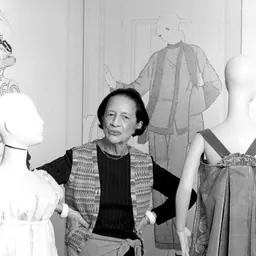
The Flato years Fulco left Chanel in 1934 to venture to the United States with Baron Nicolas de Gunzburg and Princess Natalia Pavlovna Paley. He traveled first to Hollywood and then to New York where Diana Vreeland, a Chanel client, introduced Fulco to the jeweler Paul Flato. His love of art began when he learned about the Renaissance in an illustrated book on Raphael. In the designs he made for Verdura, he continuously incorporated themes of nature, creating brooches that looked like leaves made of colored zircons, a pomegranate made of ruby seeds, a gold corncob made with black pearl kernels, and an artichoke made of emerald petals. Also that year, he designed “Night and Day” cufflinks for Cole Porter that were inspired by the lyrics of the hit song and have since become signature Verdura pieces.
During the 1960s, Cartier sought Fulco's creative input for a potential collaboration. However, Fulco declined the offer, choosing to remain independent.
A perfectionist, Fulco would spend his days drafting precise design sketches, specifying materials, size, and color.
Fulco di Verdura's illustrious clientele included royalty, socialites, and Hollywood stars. His notable commissions included the "Indian Headdress Tiara" for Betsy Cushing Whitney, crafted in yellow gold and diamonds, as well as the emerald ‘scarf’ necklace made for Dorothy Paley Hirshon. For Wallis, Duchess of Windsor, Verdura designed a thistle-shaped brooch, gem-studded shell ear clips, and jeweled compacts. Simon had worked as an actor and designer. Fulco later met Tom Parr, an interior decorator who was a friend and business partner of David Hicks and later head of Colefax and Fowler. They stayed together until Fulco's death.
Retirement and death In 1973, Fulco sold his stake in his business to Alfano and retired to London where he continued to sketch and paint until his death in 1978. He never married and had no children and so with him, the Santostefano della Cerda family died out. He had arranged for his ashes to be brought to Palermo after his death and kept in the family tomb at the Cimitero di Sant'Orsola in Palermo.
Don’t just read it —
keep it.
Full-length biographies made to live with: read them, listen on the way to work, watch them tonight.
- E-book
- Audio
- Video
Instant download · yours to keep · every purchase keeps this site free
Important facts
more
Duke of VerduraPeople in Fulco di Verdura's life
Named in this biography and alive at the same time


Related people
Same field, nearest in time



Contemporaries
People whose lives overlapped Fulco di Verdura's


Frequently asked questions
Who was Fulco di Verdura?
Italian noble and artist (1898-1978)
When was Fulco di Verdura born?
Fulco di Verdura was born on 20 March 1898 in Palermo.
When did Fulco di Verdura die?
Fulco di Verdura died on 15 August 1978 in London.
What was Fulco di Verdura's occupation?
Fulco di Verdura was a socialite, jewelry designer and entrepreneur.
What nationality was Fulco di Verdura?
Fulco di Verdura was Italian.
Sources & further reading
Cite this page
APA: Biography.guide. (2026). Fulco di Verdura. https://biography.guide/fulco-di-verdura/
MLA: "Fulco di Verdura." Biography.guide, https://biography.guide/fulco-di-verdura/.
Chicago: "Fulco di Verdura." Biography.guide. https://biography.guide/fulco-di-verdura/.
Data last updated: 2026-09-22 · Spot an error? Report a correction.
Portrait: Wikimedia Commons · author & licence
Page generated 2026-09-27 05:01 UTC