
Miller Reese Hutchison
American electrical engineer and inventor
About Miller Reese Hutchison
Lived 1876 – 1944 (aged 67). Miller Reese Hutchison was an American inventor, businessperson and entrepreneur.
Miller Reese Hutchison (August 6, 1876 – February 16, 1944) was an American electrical engineer and inventor. He developed some of the first portable electric devices, such as a vehicle horn and a hearing aid. His father was William Hutchison and mother born Tracie Elizabeth Magruder. He attended Marion Military Institute from 1889 through 1891, Spring Hill College 1891 through 1892, the University Military Institute in Mobile from 1892 through 1895, and graduated from Auburn University (then called Alabama Polytechnical Institute) in 1897. At the outbreak of the Spanish–American War in 1898, he volunteered and was appointed engineer for the United States Lighthouse Board, laying cables and mines to protect harbors in the Gulf of Mexico. Hutchison's interest in the invention stemmed from a childhood friend, Lyman Gould, who was deaf from scarlet fever. Besides his training in engineering, Hutchison had attended classes at the Medical College of Alabama to study the anatomy of the ear. He formed the Akouphone Company in Alabama to market the device, but the original bulky tabletop form was not practical. Around this time he moved to New York City to continue improving the device and inventing others. The American press called the device a "miracle", and Hutchison helped by staging publicity events, such as having Metropolitan Opera lead singer Suzanne Adams photographed singing to formerly deaf people. He exhibited at the Louisiana Purchase Exposition, the world's fair in St. Louis, Missouri, in 1904. Medical experts discovered the device had several drawbacks. Frequency and dynamic range were limited, and those who had total hearing loss were not helped. Batteries were still bulky and need to be changed often. However it was still regarded as "the best electrical aid for the semi-deaf yet devised." He also developed related devices known as the Akou-Massage (renamed the Massacon), and Akoulalion, which converted audio into vibrations, to help those with more profound hearing loss. They were widely adopted by schools for the deaf in the US and Europe. ) and apply the technology to other products. One was the dictograph, which was an early hands-free inter-office intercom system. Turner's General Acoustic Company was renamed Dictograph Products Company because of the market success of the dictograph. One of the first electric eavesdropping devices was called the Detective Dictograph, announced in 1910. The carbon technology for hearing aids was used until the miniature vacuum tube replaced it in the 1940s. Advertisements in 1947 still carried the Acousticon brand name, and invoked Queen Alexandra's coronation image of 45 years earlier; model names were "Coronation" and "Imperial". Warning devices at the time were either bells or horns essentially derived from musical instruments. He realized that a more obnoxious sound would serve as a better warning. He designed a steel diaphragm with a pin at its center, driving the pin with a cam through either a hand crank or electric batteries via a small motor. The "horn" part of the device made the sound directional, so a pedestrian would be more likely to look in the direction of the oncoming vehicle. He licensed the patents to Lovell-McConnell Manufacturing Company in early 1908, and it was marketed as the Klaxon horn. The name came from the Greek word , meaning "shriek", which described its sound. Federal judge Thomas Chatfield of the United States District Court for the Eastern District of New York ruled in favor of Hutchison. Lawyers said "a noise is not patentable". The United Motors Company bought out Lovell-McConnell in 1916, renamed it Klaxon Company, and soon made the horns standard on General Motors cars.
By 1908 Hutchison had developed an electrical tachometer that would give an accurate reading of the speed of steam ship engines. Previously, ship speed was judged by spinning shafts that were mechanically connected to the propellers. The innovation of using a simple generator and voltmeter allowed much more precise control, and using wires the speed could be displayed remotely in the pilot house or captain's stateroom as well as engine room. The device even allowed speeds to be measured when the ship's engines were reversed. It was licensed to Industrial Instrument Company for production.
Hutchison became associated with Thomas Edison from 1909, and was chief engineer of Edison's laboratory in West Orange, New Jersey, from August 1912 until July 1918. alt=machine with large handle; caption "A New Star in the Business World"
In 1918 he left Edison's lab. to devote full-time to his own company: Miller Reese Hutchison Incorporated, which had been formed in 1916 to further develop and sell batteries developed at Edison's laboratory. After World War I he founded Hutchison Office Specialties Company for the new market of electric business machines. One popular product was the "Spool-O-Wire" fastener machine. As its name implied, it used a continuous spool of wire to attach business documents to each other. It was advertised as handling from two to forty sheets of paper, cloth, or cardboard, with a single wire spool replacing 15,000 individual staples.
In 1921 he demonstrated a gun that could be used for embedding a projectile into steel at a precise velocity. The dramatic demonstration was presented in his offices high in the Woolworth Building of Lower Manhattan. He proposed using it to replace rivets for repairing ships underwater, while the press speculated on military uses as a weapon.
Don’t just read it —
keep it.
Full-length biographies made to live with: read them, listen on the way to work, watch them tonight.
- E-book
- Audio
- Video
Instant download · yours to keep · every purchase keeps this site free
Important facts
People in Miller Reese Hutchison's life
Named in this biography and alive at the same time
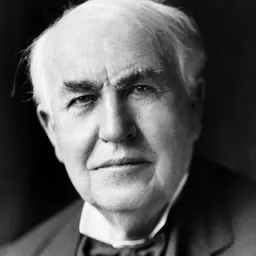


Related people
Same field, nearest in time
Contemporaries
People whose lives overlapped Miller Reese Hutchison's

Frequently asked questions
Who was Miller Reese Hutchison?
American electrical engineer and inventor
When was Miller Reese Hutchison born?
Miller Reese Hutchison was born on 6 August 1876 in Montrose.
When did Miller Reese Hutchison die?
Miller Reese Hutchison died on 16 February 1944 in New York City.
What was Miller Reese Hutchison's occupation?
Miller Reese Hutchison was an inventor, businessperson and entrepreneur.
What nationality was Miller Reese Hutchison?
Miller Reese Hutchison was American.
Sources & further reading
· Wikipedia: Miller Reese Hutchison
· DBpedia: Miller Reese Hutchison
Cite this page
APA: Biography.guide. (2026). Miller Reese Hutchison. https://biography.guide/miller-reese-hutchison/
MLA: "Miller Reese Hutchison." Biography.guide, https://biography.guide/miller-reese-hutchison/.
Chicago: "Miller Reese Hutchison." Biography.guide. https://biography.guide/miller-reese-hutchison/.
Data last updated: 2026-09-22 · Spot an error? Report a correction.
Page generated 2026-09-27 05:23 UTC