
Miller Pontius
American football player and coach
About Miller Pontius
Lived 1891 – 1960 (aged 69). Miller Pontius was an American baseball player, american football player and investment banker.
Miller Hall Pontius (April 17, 1891 – November 5, 1960) was an American football player and investment banker.
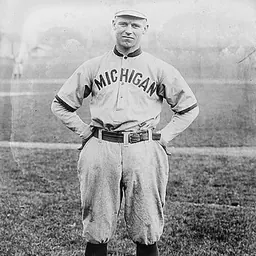
A native of Circleville, Ohio, Pontius played college football as a tackle and end for coach Fielding H. Yost's Michigan Wolverines from 1911 to 1913. He was selected as a consensus first-team tackle on the 1913 College Football All-America Team. He also played baseball at Michigan under head coach Branch Rickey.
Pontius later served as an assistant football coach the University of Tennessee from 1914 to 1915 and at Michigan in 1916. He served in the United States Army during World War I. In later years, he was an investment banker with F. Eberstadt and Co. from 1938 until his death in 1960.
Early years Pontius was born in Circleville, Ohio, 1891. He was the son of Judge George Pontius and Ora Pontius. After Detroit University School. Pontius attended Kenyon College for one year. Years later, Pontius was remembered as a "slashing tackle."
1912 season Pontius was stricken by typhoid fever during the summer of 1912. After a period of convalescing at his home in Ohio, Pontius was sent "west to the mountains for his health." When he arrived in Ann Arbor in September, he was "not in condition to stand the grueling work of a football season." At the end of the 1912 season, Pontius received first team All-Western honors from Chicago football writer George W. Axelson, E. C. Patterson for Collier's Weekly Fielding H. Yost in the Detroit Free Press, and Walter Eckersall for the Chicago Tribune. Pontius was nominated to be captain of the 1913 team, but lost the vote to George C. Paterson.
1913 season Before the 1913 season, Pontius was expected to be a star. He helped lead the 1913 Wolverines to a 6–1, outscoring opponents, 175 to 21. The only loss was to Michigan Agricultural College (later known as Michigan State), 12–7. They beat Vanderbilt, 33–2, Syracuse, 43–7, Cornell, 17–0, and Penn, 13–0.
Pontius played his last game as a Wolverine on November 15, 1913, against Penn. Collier's Weekly wrote the following of his performance in that game: "He was aggressive against Pennsylvania, playing both end and tackle. He showed a thorough knowledge of the game and always crashed into the point of rival attacks." receiving first-team honors from, among others, Grantland Rice, Frank G. Menke, and Fielding H.Yost.
Baseball Pontius was also a standout baseball player at Michigan, where he played for coach Branch Rickey and alongside George Sisler—both of whom were later inducted into the Baseball Hall of Fame. In 1913, he was the first baseman for Rickey's best team at Michigan, a squad that went 21–4–1. It was the first Michigan baseball team to win 20 games.
At the end of the 1913 baseball season, Pontius was elected to serve as captain of the 1914 Michigan baseball team. However, in February 1914, Pontius announced that he would not play baseball that spring "as a result of scholastic difficulties." George Sisler was chosen to succeed Pontius as the team's captain.
Coaching career and military service In June 1914, Pontius graduated from the law department at Michigan. He was admitted to practice law in both Michigan and Ohio. He introduced the "Yost-Michigan system" at Tennessee, and the 1915 Tennessee Volunteers football team responded with a perfect 9-0 record and the program's first Southern championship.
Pontius returned to Tennessee in 1915, but he decided in January 1916 not to return to Tennessee "because of private business interests."
In March 1916, Pontius was hired as an assistant coach responsible for the lineman on the 1916 Michigan football team. He took charge of spring practice in May 1916. In October 1916, the Syracuse Herald noted that "the line coaching of Miller Pontius has helped remarkably in bolstering up their department, and the back field can bank on much better protection." The Michigan Daily also praised Pontius' work in strengthening the line:Perhaps no single individual deserves any more credit for the showing of the 1916 Michigan Varsity than Line Coach Miller H. Pontius. . . . The former Varsity star took hold with a vengeance . . . and built up a forward wall that was a wonderful improvement upon that of the previous season. . . . Pontius was a star of the first magnitude himself during his college career and he seems to have the gift for imparting to others the knowledge that he learned while actively engaged in mussing up the scenery . . ."
Pontius signed a contract in January 1917 to return to Michigan's coaching staff. However, following the United States entry into World War I, he enlisted in the United States Army in August 1917. He served as a second lieutenant in a field artillery unit.
Business career
In 1919, after being discharged from the Army, Pontius sailed to Rio de Janeiro, Brazil. He spent three years in South America working for the foreign department of the National City Bank. an investment banking, brokerage and real estate development firm founded by fellow University of Michigan alumnus, George L. Ohrstrom.
In 1938, Pontius was elected vice president of the Touchdown Club in New York City. Also, in 1938, Pontius was the "toastmaster" at a Michigan Alumni Club dinner in New York in honor of Michigan's new football coach Fritz Crisler. Pontius spoke of "the return of Michigan to its former high estate in the game."
Pontius next joined the Wall Street investment banking firm, F. Eberstadt and Co. He began as its Chicago partner in 1938. He moved to the New York City office in 1943 as syndicate manager and senior vice president. Pontius and his wife resided in later years in Bronxville, New York.
In 1957, Pontius received a distinguished alumni service medal from the University of Michigan.
In April 1972, the Miller Hall Pontius Room was dedicated at the Pickaway County Historical Society's Clarke-May Museum in Pontius' hometown of Circleville, Ohio. His widow, son, and grandson (Miller Hall Pontius II) attended the dedication ceremony.
Don’t just read it —
keep it.
Full-length biographies made to live with: read them, listen on the way to work, watch them tonight.
- E-book
- Audio
- Video
Instant download · yours to keep · every purchase keeps this site free
Important facts
People in Miller Pontius's life
Named in this biography and alive at the same time

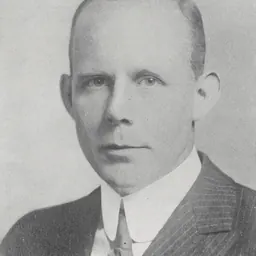
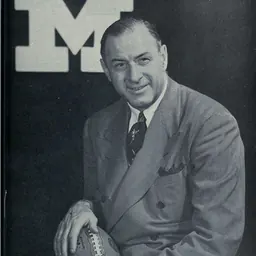
Related people
Same field, nearest in time
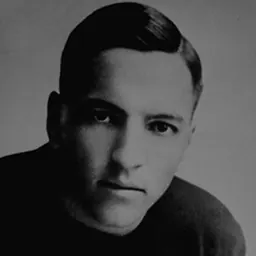
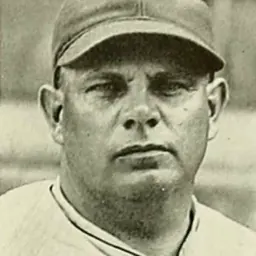

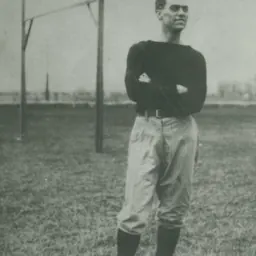

Contemporaries
People whose lives overlapped Miller Pontius's
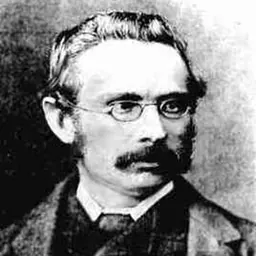
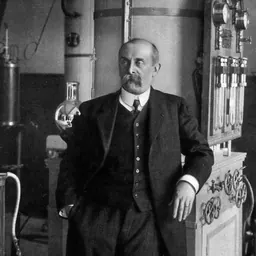


Frequently asked questions
Who was Miller Pontius?
American football player and coach (1891-1960)
When was Miller Pontius born?
Miller Pontius was born on 17 April 1891 in Circleville.
When did Miller Pontius die?
Miller Pontius died on 5 November 1960 in New York City.
What was Miller Pontius's occupation?
Miller Pontius was a baseball player, american football player and investment banker.
What nationality was Miller Pontius?
Miller Pontius was American.
Sources & further reading
Cite this page
APA: Biography.guide. (2026). Miller Pontius. https://biography.guide/miller-pontius/
MLA: "Miller Pontius." Biography.guide, https://biography.guide/miller-pontius/.
Chicago: "Miller Pontius." Biography.guide. https://biography.guide/miller-pontius/.
Data last updated: 2026-09-20 · Spot an error? Report a correction.
Page generated 2026-09-27 05:20 UTC