
About Milla Baldo-Ceolin
Lived 1924 – 2011 (aged 87). Milla Baldo-Ceolin was an Italian physicist, university teacher and particle physicist.
Massimilla "Milla" Baldo Ceolin (12 August 1924, Legnago, Italy – 25 November 2011) was an Italian particle physicist.
She was the daughter of the owner of a small mechanical workshop.
Career and research
In the 1950s, her research focused on the study of cosmic ray interactions in nuclear emulsions, which were exposed at high-altitude mountain laboratories or carried by balloon experiments. This activity culminated in the G-stack experiment, a large international collaboration that provided the first indications of strange particles. According to her own words: "Research groups emerging from the catastrophe of the war had little more than their enthusiasm to contribute at the forefront of physics research, but by using the nuclear emulsion technique, they were able to disclose phenomena whose existence no one had suspected."
In 1958, she published the discovery of the anti-Lambda hyperon, by exposing nuclear emulsions to a proton beam produced at the Berkeley Bevatron. The discovery of the anti-Lambda (the first anti-hyperon ever observed) was highly significant: Milla Baldo Ceolin conceived the experiment, performed the feasibility calculations, and correctly interpreted the event observed in the photographic plates exposed at the Bevatron. This result provided the first evidence of antimatter carrying strangeness.
Her research then focused on charged and neutral K mesons, first using nuclear emulsions and subsequently with bubble chambers at the Lawrence Berkeley National Laboratory, at CERN, and at ITEP in Moscow. Her work produced important results on quantum numbers, selection rules, and fundamental invariances, including tests of CPT symmetry from the study of K⁰ meson decays in the Xenon bubble chamber at ITEP.
In the 1970s, she turned to neutrino physics. Soon after the discovery of weak neutral currents by the Gargamelle collaboration at CERN, she proposed the NUE experiment at CERN, to firmly confirm the discovery of neutral weak leptonic currents. The experiment used spark chambers to detect the elastic scattering of neutrinos and antineutrinos on electrons, providing evidence of neutral weak leptonic currents and determining a value for the Weinberg angle. She subsequently participated in a series of experiments at the BEBC bubble chamber at CERN, filled with deuterium, including PS180, which established one of the first experimental limits on neutrino oscillations.
Following the publications on Grand Unified Theories in the early 1980s, she began planning experiments to search for one of their original predictions: the possible existence of neutron-antineutron oscillations. She proposed, designed and realized a series of two experiments on free neutrons generated at the nuclear reactor of the Institut Laue-Langevin at Grenoble. The first experiment established the earliest experimental bound on the neutron-antineutron oscillation time, s, while the second, with an upgraded setup, pushed the limit to s, the best experimental limit for free neutrons published to date.
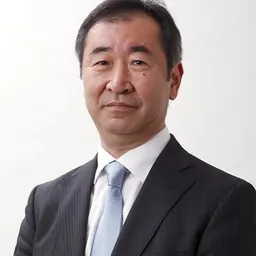
Afterwards she led the italian contribution to the WA96/NOMAD (Neutrino Oscillation MAgnetic Detector) experiment, which aimed to search for oscillations using high-energy neutrinos (predominantly νμ) from the CERN SPS. The experiment was motivated by the anomaly in the measured flux of atmospheric neutrinos reported by KamiokaNDE and by theoretical speculations about the possibility that the heaviest neutrino could be the hot dark matter component. In the same years (1998), evidence for oscillations was reported by the Super-Kamiokande experiment, with oscillation parameters not accessible to the NOMAD experiment. Takaaki Kajita was awarded the Nobel Prize in Physics in 2015 for this discovery. right
Eventually, she joined the ICARUS experiment, a neutrino experiment at the Gran Sasso National Laboratories (LNGS). It used a Time Projection Chamber filled with liquid argon (LAr-TPC), a technology developed by Carlo Rubbia, containing about 600 tons of active argon mass. The experiment received the CNGS neutrino beam from CERN, 730 km away.
In 1988, she initiated the series of International Workshops on Neutrino Telescopes at the Istituto Veneto di Scienze, Lettere ed Arti.
Awards Fellow of the Istituto Veneto di Scienze, Lettere ed Arti, (since 1977) , of the Accademia Nazionale dei Lincei (since 1987); of the Accademia Galileiana di Padova (since 1966) and Accademia delle Scienze di Torino (since 2008). 1976: Awarded the Feltrinelli Prize by the Accademia dei Lincei. 1980: Gold Medal as "Benemeriti della Scuola, della Cultura e dell'Arte" by the Italian Ministero della Pubblica Istruzione. 1984: Award of Italian Physical Society (SIF), for working in the field of weak interactions and getting outstanding physical results, in occasion of the 50th Anniversary of Fermi's Theory. 1993: Gold Medal as "Benemeriti della Scienza e Cultura" by the Italian Ministero della Pubblica Istruzione. In 1995, she was included in the UCLA archive titled "Contributions of the 20th Century Women to Physics" (CWP), a digital project created to document the major scientific achievements of female physicists (86 entries). 2007: Enrico Fermi Prize of the Italian Physical Society "per gli importanti lavori sulla fisica dei mesoni K e sui neutrini". 2012: The Department of Physics and Astronomy of the University and the Padova Division of INFN (National Institute of Nuclear Science) organized a symposium in her honor. In 2015, a biography was published. In 2021, Istituto Nazionale di Fisica Nucleare established the "Milla Baldo Ceolin" National Award to the ten best master's theses in theoretical physics. The award aims to promote the visibility and growth of young female researchers in theoretical physics. 2021: The Department of Physics and Astronomy of the University of Padua and the INFN Section of Padua commemorated Milla Baldo Ceolin, whose studies and pioneering, visionary research opened new horizons for modern physics and for the understanding of the structure of the Universe. The "Milla Baldo Ceolin" nursery school opened in Padua in September 2021 with the support of the Cariparo Foundation. In 2023, the students of the junior high school in Roncà, in the province of Verona, celebrated the scientist from Legnago, Massimilla Baldo Ceolin, choosing that their school should bear the name of the woman who, 60 years before, was the first to obtain a professorship at the University of Padua.
Don’t just read it —
keep it.
Full-length biographies made to live with: read them, listen on the way to work, watch them tonight.
- E-book
- Audio
- Video
Instant download · yours to keep · every purchase keeps this site free
Important facts
People in Milla Baldo-Ceolin's life
Named in this biography and alive at the same time


Related people
Same field, nearest in time


Contemporaries
People whose lives overlapped Milla Baldo-Ceolin's




Frequently asked questions
Who was Milla Baldo-Ceolin?
Italian physicist (1924–2011)
When was Milla Baldo-Ceolin born?
Milla Baldo-Ceolin was born on 12 August 1924 in Legnago.
When did Milla Baldo-Ceolin die?
Milla Baldo-Ceolin died on 25 November 2011 in Padua.
What was Milla Baldo-Ceolin's occupation?
Milla Baldo-Ceolin was a physicist, university teacher and particle physicist.
What nationality was Milla Baldo-Ceolin?
Milla Baldo-Ceolin was Italian.
Sources & further reading
· Wikipedia: Milla Baldo-Ceolin
Cite this page
APA: Biography.guide. (2026). Milla Baldo-Ceolin. https://biography.guide/milla-baldo-ceolin/
MLA: "Milla Baldo-Ceolin." Biography.guide, https://biography.guide/milla-baldo-ceolin/.
Chicago: "Milla Baldo-Ceolin." Biography.guide. https://biography.guide/milla-baldo-ceolin/.
Data last updated: 2026-09-22 · Spot an error? Report a correction.
Page generated 2026-09-27 05:17 UTC