
About Milič Čapek
Lived 1909 – 1997 (aged 88). Milič Čapek was a philosopher, writer, university teacher and non-fiction writer.
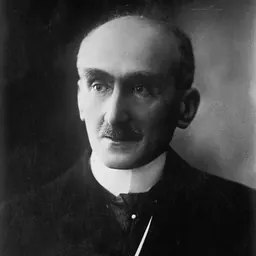
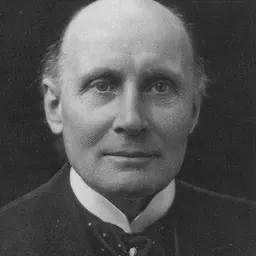
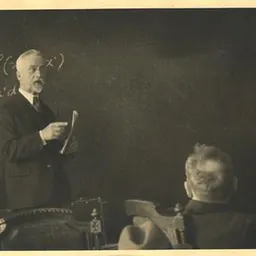
Milič Čapek (26 January 1909 – 17 November 1997) was a Czech–American philosopher. Čapek was strongly influenced by the process philosophy of Henri Bergson and to a lesser degree by Alfred North Whitehead. Much of his work was devoted to the relation of philosophy and modern physics, especially the philosophy of space and time and metaphysics.
Life Čapek was born in the municipality of Třebechovice in present-day Czech Republic (then part of Austria-Hungary).
He was married to Stephanie Čapek (born Štěpánka Řežábková), who was a school teacher in Czechoslovakia and later a housewife, and died on July 14, 1998 (aged 82), in Little Rock, Arkansas. Together they have a daughter, Dr. Stella M. Čapek from Conway, Arkansas.
In 1935 Čapek received his Ph.D. in philosophy at Charles University in Prague. Following the German occupation, he escaped from Czechoslovakia and studied at the Sorbonne in Paris, where he also directed Czech-language broadcasts back to his homeland. Ten days before the Nazi invasion, Čapek left Paris and went to America after an odyssey via Dakar, Casablanca and a Vichy concentration camp in Morocco. During the war he taught physics in the Army Specialized Training Program at the University of Iowa, the V-12 Navy College Training Program at Doan College, and at the University of Nebraska. After the war he returned to Czechoslovakia, where he taught briefly at the Palacký University of Olomouc. One month before the 1948 communist coup d'état he was fleeing once again, to take up permanent residence and citizenship in the United States. as well as of several books. Milič Čapek made major contributions to the understanding of the philosophical implications of relativity theory and quantum mechanics, and to the philosophy of time. Čapek stated that the reason why we think of time and space as "space-time" and rather than "time-space" is because we give priority to the spatial aspect in our effort to geometrize events and moments, or to render them "space-like", as Einstein said.
In The New Aspects of Time, Čapek investigates the longstanding attempt of philosophers and scientists to undermine the reality of time and the resistance this project encountered in the 20th century. The preference for a realm of perfect truth untouched by time is apparent in not only ancient philosophers such as Parmenides and Plato and Plotinus, all of whom regarded time (or process or becoming) as an illusion concealing the timeless reality, but modern thinkers such as Spinoza, Kant and Hegel . Čapek notes that Hegel regarded becoming as the synthesis of being and nonbeing, both of which are static . By reducing time to a sequence of durationless instants, Parmenides' student Zeno of Elea undermined its reality just as effectively as overt denial . How can anything happen when time is nothing more than instants, and instants have no duration? Kant echoed Zeno by defining the present as a mathematical point between past and future . Galileo, Descartes and Newton all characterized time as a mathematical continuum of point-instants . The widespread belief in determinism, articulated most famously by Laplace, annihilates time by eliminating novelty . What is the significance of time if it consists of nothing but the playing out of predetermined outcomes?
Čapek discusses the defense of the reality of time by 20th century philosophers William James, Henri Bergson and Alfred North Whitehead and also highlights supportive developments in physics. Laplace's demon, who can predict everything that will ever happen on the basis of current physical conditions, was defeated by the uncertainty principle of quantum mechanics. Because matter is inherently indeterminate, no one, not even a demon with infinite knowledge, can know where an electron will be located upon measurement . The inescapability of time is verified by the fact that a particle, rather than a "thing" that oscillates, is the oscillation itself. In other words, the micro-reality is events, not things . Far from charting a continuous path through space, an atom is a bundle of possible trajectories that periodically actualizes along an approximate trajectory. These "atoms of action" reveal that every instant takes up a certain duration, not a mathematical point but a "thick present." .
According to determinist philosopher Émile Boutroux, the idea of possibility, that an event might or not occur, is "an illusion caused by the interposition of time between our point of view and things in themselves." In response Čapek argues that our point of view is temporal precisely because things in themselves are temporal.
Don’t just read it —
keep it.
Full-length biographies made to live with: read them, listen on the way to work, watch them tonight.
- E-book
- Audio
- Video
Instant download · yours to keep · every purchase keeps this site free
Important facts
People in Milič Čapek's life
Named in this biography and alive at the same time
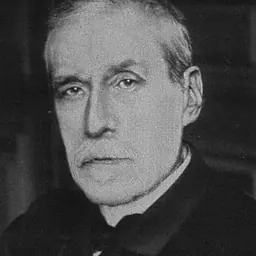
Related people
Same field, nearest in time
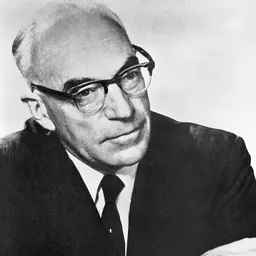

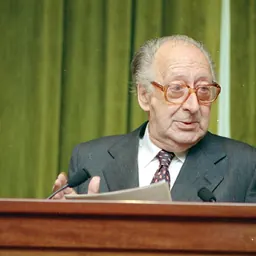



Contemporaries
People whose lives overlapped Milič Čapek's
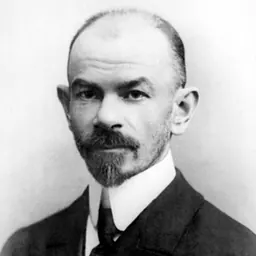


Frequently asked questions
Who was Milič Čapek?
Czech and American philosopher
When was Milič Čapek born?
Milič Čapek was born on 26 January 1909 in Třebechovice pod Orebem.
When did Milič Čapek die?
Milič Čapek died on 17 November 1997 in Little Rock.
What was Milič Čapek's occupation?
Milič Čapek was a philosopher, writer, university teacher and non-fiction writer.
Sources & further reading
Cite this page
APA: Biography.guide. (2026). Milič Čapek. https://biography.guide/milic-capek/
MLA: "Milič Čapek." Biography.guide, https://biography.guide/milic-capek/.
Chicago: "Milič Čapek." Biography.guide. https://biography.guide/milic-capek/.
Data last updated: 2026-09-20 · Spot an error? Report a correction.
Page generated 2026-09-27 05:19 UTC