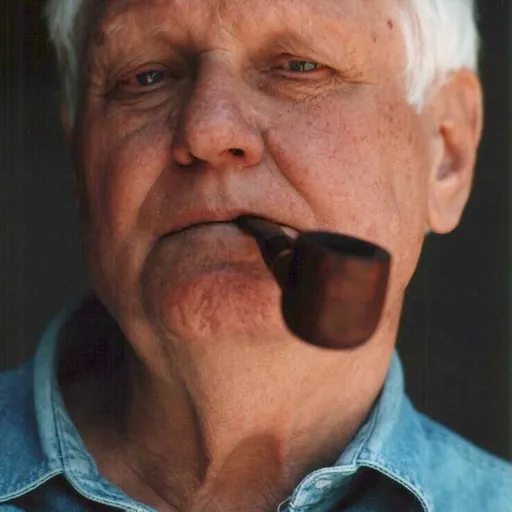
Miklós Jancsó
Hungarian film director and screenwriter
About Miklós Jancsó
Lived 1921 – 2014 (aged 92). Miklós Jancsó was a Hungarian film director, screenwriter, film screenwriter, film actor and director.
Miklós Jancsó (; 27 September 192131 January 2014) was a Hungarian film director and screenwriter. Jancsó achieved international prominence starting in the mid-1960s with works including The Round-Up (Szegénylegények, 1965), The Red and the White (Csillagosok, katonák, 1967), and Red Psalm (Még kér a nép, 1971).
Jancsó's films are characterized by long takes, historical and/or rural settings, and the recurring theme of the abuse of power. His works are often allegorical commentaries on Hungary under Communism and Soviet occupation, although some critics prefer to stress the universal dimensions of Jancsó's explorations. Towards the end of the 1960s and especially into the 1970s, Jancsó's work became increasingly stylized and overtly symbolic.
Early life Miklós Jancsó was born to a Hungarian father, Sándor Jancsó and a Romanian mother, Angela Poparada. After graduation he studied law in Pécs, receiving his degree in Kolozsvár in 1944. He also took courses in art history and ethnography, which he continued to study in Transylvania. After graduating, Jancsó served in World War II and was briefly a prisoner of war. but the festival was canceled due to the events of May 1968 in France. Internationally this film was Jancsó's biggest success, and received critical acclaim in Western Europe and the United States. It won the Best Foreign Film award from the French Syndicate of Cinema Critics. Along with Red Psalm (1971) it is featured in the book "1001 Films You Must See Before You Die".
Jancsó then made Silence and Cry (Csend és kiáltás) in 1968. The film stars András Kozák as young revolutionary who goes into hiding in the country after the failed 1919 Hungarian Revolution. Kozák is hidden by a sympathetic farmer who is suspected by and constantly humiliated by the White Army. The farmer's wife is attracted to Kozák and begins to poison her husband. Kozák's morality compel him to turn the farmer's wife over to the White Army.
The Tyrant's Heart (A zsarnok szíve, avagy Boccaccio Magyarországon, 1981) can be considered a transitional film between the famous historical works of the 1960s and '70s and Jancsó's later, more ironic and self-aware films. While it still has a historical setting (a 15th-century palace in Hungary), the film's ontological inquiry groups it more easily with the director's later period. The film deliberately undercuts the audience's ability to construct a notion of reality in the plot, which contradicts itself and includes many post-modern interventions to raise questions about its own manipulative nature.
His 1985 film Dawn (A hajnal) was entered into the 36th Berlin International Film Festival. In 1987, he was a member of the jury at the 15th Moscow International Film Festival.
Later in the decade, Jancsó dispensed with the historical rural settings of the Hungarian puszta and shifted to contemporary urban Budapest. Thus Season of Monsters (Szörnyek évadja, 1986) became the first Jancsó film with scenes in of contemporary Budapest since Cantata 23 years earlier. Although this film is set in a contemporary environment, very little of it is set in the city and much of it still on the puszta. While some new visual tropes were introduced (including a fascination with television screens that show clips of later or earlier action in the film), others, such as candles and naked women, were preserved. In later films of the decade Jancsó continued to use the surrealistic-parodistic style he developed in "Season". These films – at last – are set in an urban environment.
Although some critics reacted positively (Season of Monsters, for example, won an honorable mention at Venice for creating "a new picture language"), critical reaction generally to these films was very harsh indeed, with some critics labeling them as self-parody. More recently, critics have been kinder to these dense and often deliberately obtuse films, with some considering his 1980s work to be his most compelling, but a full rehabilitation has been hindered by the fact that these works are very rarely screened.
His 1989 film Jesus Christ's Horoscope was entered into the 16th Moscow International Film Festival.
1990s and 2000s
In the early 1990s, Jancsó made two films that thematically can be grouped with the works from the 1980s, God Walks Backwards (Isten hátrafelé megy, 1990) and Blue Danube Waltz (Kék Duna keringő, 1991). Although they continue the work of the previous decade, they are also reactions to the Hungary's new post-Communist reality and explore the inherent power struggles. After a long break from making full-length features, Jancsó returned with The Lord's Lantern in Budapest (Nekem lámpást adott kezembe az Úr Pesten, 1999), which proved to be a surprising come-back for the director. The film largely (but not entirely) dispenses with long takes and choreographed camera movements, and for this Jancsó started working with a new director-of-photography Ferenc Grunwalsky (who is also a director in his own right). The loose plot follows two gravediggers Pepe and Kapa as they try to make sense of the shifting realities of post-Communist Budapest. Despite mocking young Hungarians for their shallowness, the film proved a minor hit with them, helped by the performances by some of Hungary's top music acts in the film.
In the late 1990s, Jancsó's career revived with a series of improvised low-budget films that were witty and self-deprecating. As well as doing relatively well at the Hungarian box office for art house fare, these films have been popular with a new generation of younger viewers. The success of The Lord's Lantern in Budapest has led to a series of six "Pepe and Kapa" films. Although all of these films are rooted in the present, later ones have also seen Jancsó return to his earlier love of historical themes, including depictions of the Holocaust and Hungary's devastating defeat to the Ottomans in 1526, usually in the context of criticizing Hungarians for not understanding the meaning of their own history. These films have been highly popular among young cinephiles, mainly for the post-modernist, contemporary approach to filmmaking, the black, absurd humor and the appearance of several popular alternative and/or underground bands and persons. Jancsó has also cemented his reputation by making appearances in a number of films. As well as appearing as himself in the Pepe and Kapa films, he has also had guest roles in works by young, up-and-coming Hungarian directors.
In addition to feature films, Jancsó made a number of shorts and documentaries throughout his career and from 1971 into the 1980s also directed work for the theater. Miklós Jancsó has been honorary scholar at the University of Theatre and Film Arts in Budapest since 1988, and was an affiliate at Harvard between 1990 and 1992.
Politics During the Communist era, Jancsó was often criticized for being formalist, nationalist and generally against the Marxist-Leninist ideology. From the 1990s onwards, Jancsó became known for loudly supporting Hungarian liberal party SZDSZ. Many of his claims, like his wry dismissal of Hungary and its history made him a somewhat controversial figure. He also campaigned for the legalization of cannabis.
Personal life Jancsó married Katalin Wowesznyi in 1949; their two children are Nyika (Miklós Jancsó Jr., b.1952) and Babus (Katalin Jancsó, b.1955). After divorcing Wowesznyi, he married film director Márta Mészáros in 1958. In 1968, Jancsó met Italian journalist and screenwriter Giovanna Gagliardo in Budapest. They moved to Rome, where he worked for nearly a decade, with occasional, short periods in Budapest. In 1980, he separated from Gagliardo and married film editor Zsuzsa Csákány the following year. They had a son, the film editor Dávid, in 1982.
Jancsó died of lung cancer on 31 January 2014, at the age of 92. Fellow Hungarian director Béla Tarr called Jancsó "the greatest Hungarian film director of all time."
Awards Jancsó received five nominations for the Best Director Award at the Cannes Film Festival. winning for Red Psalm in 1972. In 1973 he was awarded the prestigious Kossuth Prize in Hungary. He received awards for his life work in 1979 and 1990, at Cannes and Venice respectively.
Filmography
Features The Bells Have Gone to Rome (1958) Cantata (1963) My Way Home (1965) The Round-Up (1966) The Red and the White (1967) Silence and Cry (1968) Decameron '69 (1969) The Confrontation (1969) Winter Wind (1969) The Pacifist (1970) Agnus dei (1971) La tecnica e il rito (TV movie, 1971) Red Psalm (1972) Roma rivuole Cesare (TV movie, 1974) Electra, My Love (1974) Private Vices, Public Virtues (1976) Hungarian Rhapsody (1978) Allegro barbaro (1979) The Tyrant's Heart (1981) Faustus doktor boldogságos pokoljárása (TV mini-series, 1984) Omega, Omega, Omega (TV movie, 1984) Dawn (1986) Season of Monsters (1987) Jesus Christ's Horoscope (1989) God Walks Backwards (1991) Blue Danube Waltz (1992) The Lord's Lantern in Budapest (1999) Mother! The Mosquitoes (2000) Last Supper at the Arabian Gray Horse (2001) Wake Up, Mate, Don't You Sleep (2002) A mohácsi vész (2004) Ede megevé ebédem (2006) So Much for Justice! (2010)
Documentaries and shorts 1960 Three Stars 1965 Jelenlét (short) 1966 Közelről: a vér (short) 1968 Vörös május 1970 Füst 1977 Laboratorio teatrale di Luca Ronconi (TV documentary) 1978 Második jelenlét (documentary short) 1984 Muzsika (TV movie) 1986 Harmadik jelenlét (documentary short) 1997 Hősök tere – régi búnk és... I (short) 1994 A kövek üzenete – Budapest (documentary series: part 1) 1994 A kövek üzenete – Máramaros (documentary series: part 2) 1994 A kövek üzenete – Hegyalja (documentary series: part 3) 1996 Szeressük egymást, gyerekek! (segment "Anagy agyhalal/The Great Brain Death") 1997 Hősök tere – régi búnk és... II (short) 1997 Játssz, Félix, játssz! (documentary) 1997 Hősök tere – régi búnk és... I (short) 1998 Sír a madár 2004 Európából Európába (documentary short) (segment 3)
Newsreel documentaries 1950 Kezünkbe vettük a béke ügyét 1951 A szovjet mezőgazdasági küldöttek tanításai 1952 A 8. szabad május 1 1953 Közös után 1953 Arat az orosházi Dózsa 1954 Ősz Badacsonyban 1954 Galga mentén 1954 Emberek! Ne engedjétek! 1954 Éltető Tisza-víz 1954 Egy kiállítás képei 1955 Varsói világifjúsági talákozó I-III 1955 Emlékezz, ifjúság! 1955 Egy délután Koppánymonostorban 1955 Angyalföldi fiatalok 1956 Móricz Zsigmond 1879–1942 1957 Színfoltok Kínából 1957 Peking palotái 1957 Kína vendégei voltunk 1957 Dél-Kína tájain 1957 A város peremén 1958 Derkovits Gyula 1894–1934 1959 Izotópok a gyógyászatban 1959 Halhatatlanság 1960 Az eladás művészete 1961 Indiántörténet 1961 Az idő kereke 1961 Alkonyok és hajnalok 1963 Hej, te eleven fa...
Don’t just read it —
keep it.
Full-length biographies made to live with: read them, listen on the way to work, watch them tonight.
- E-book
- Audio
- Video
Instant download · yours to keep · every purchase keeps this site free
Important facts
Family & relationships
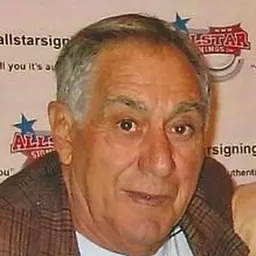
People in Miklós Jancsó's life
Named in this biography and alive at the same time



Related people
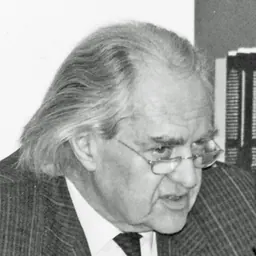
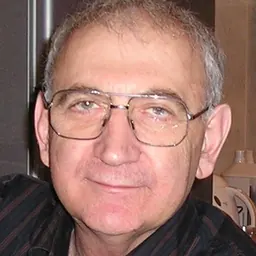
Same field, nearest in time



Contemporaries
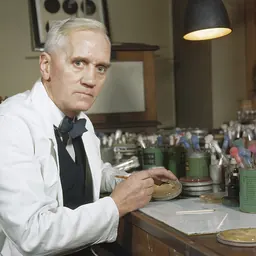
People whose lives overlapped Miklós Jancsó's


Frequently asked questions
Who was Miklós Jancsó?
Hungarian film director and screenwriter (1921–2014)
When was Miklós Jancsó born?
Miklós Jancsó was born on 27 September 1921 in Vác.
When did Miklós Jancsó die?
Miklós Jancsó died on 31 January 2014 in Budapest.
What was Miklós Jancsó's occupation?
Miklós Jancsó was a film director, screenwriter, film screenwriter, film actor and director.
What nationality was Miklós Jancsó?
Miklós Jancsó was Hungarian.
Sources & further reading
Cite this page
APA: Biography.guide. (2026). Miklós Jancsó. https://biography.guide/miklos-jancso/
MLA: "Miklós Jancsó." Biography.guide, https://biography.guide/miklos-jancso/.
Chicago: "Miklós Jancsó." Biography.guide. https://biography.guide/miklos-jancso/.
Data last updated: 2026-09-22 · Spot an error? Report a correction.
Portrait: Wikimedia Commons · author & licence
Page generated 2026-09-27 04:59 UTC