
About Mikhail Shchepkin
Lived 1788 – 1863 (aged 74). Mikhail Shchepkin was a Russian stage actor and actor.
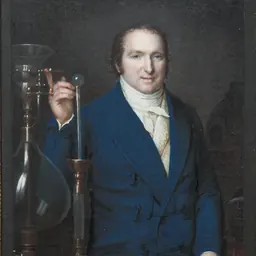
Mikhail Semyonovich Shchepkin (; — ) was a Russian actor. He is considered to be the most prominent Russian actor of the 19th century and the "father" of realist acting in Russia and, via the influence of his student, Glikeriya Fedotova, a major influence on the development of the 'system' of Konstantin Stanislavski. Shchepkin's significance to the Theatre of Russia is comparable to that of David Garrick to the English theatre.
He distinguished between two kinds of actors, both of whom are dedicated to the art of acting: those who have developed the art of pretense based on intelligence and reason; and those who express feelings experienced by the actor in performance and work based on "a flaming-soul, heavenly spark." Shchepkin considered the effect of the latter approach superior to that of the former. He was opposed to the principles advanced by the French playwright and philosopher Denis Diderot in his Paradox of the Actor (published posthumously in 1830), which inverted Shchepkin's evaluation.
Life Shchepkin was born in the village of , Kursk Governorate, to a serf family owned by Count G. S. Volkenshtein. Shchepkin's freedom had to be bought by his admirers in 1821. Three years later, he joined the Maly Theatre in Moscow, which he would dominate for the next 40 years—it became known as the 'House of Shchepkin'. Shchepkin was the first to play Famusov in the Woe from Wit (1831) and the Mayor in The Government Inspector (1836). His acting was acclaimed by Alexander Pushkin, Nikolai Gogol, Alexander Herzen, and Ivan Turgenev for its subtlety, with much attention given to realistic detail and understatement.
Acting philosophy Shchepkin argued that an actor ought to get into the skin of a character, identify with their thoughts and feelings, observe life, and have knowledge of their nature, which provides the source for an actor's work. Shchepkin's distinction between the 'actor of reason' and the 'actor of feeling' influenced the formation of the ideas about acting contained in the 'system' devised by Konstantin Stanislavski.
Family In 1812, Shchepkin married Elena Dmitrievna ("Alyosha") who was a Turkish captive during the Siege of Anapa. They had five children, including the philologist ; the publisher and teacher ; the lawyer Petr Mikhailovich; and the actresses Fyokla (Faina) Mikhailovna and Alexandra Mikhailovna.
Don’t just read it —
keep it.
Full-length biographies made to live with: read them, listen on the way to work, watch them tonight.
- E-book
- Audio
- Video
Instant download · yours to keep · every purchase keeps this site free
Important facts
People in Mikhail Shchepkin's life
Named in this biography and alive at the same time



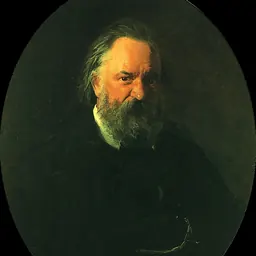
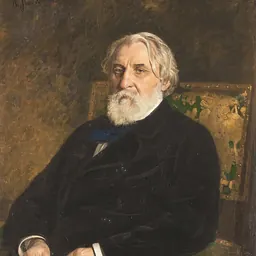
Related people
Same field, nearest in time


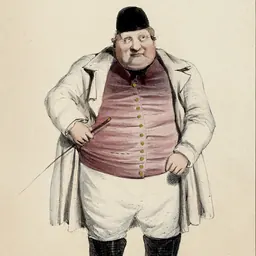


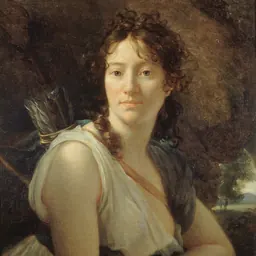
Contemporaries
People whose lives overlapped Mikhail Shchepkin's



Frequently asked questions
Who was Mikhail Shchepkin?
Russian actor (1788-1863)
When was Mikhail Shchepkin born?
Mikhail Shchepkin was born on 6 November 1788 in Krasnoye.
When did Mikhail Shchepkin die?
Mikhail Shchepkin died on 11 August 1863 in Yalta.
What was Mikhail Shchepkin's occupation?
Mikhail Shchepkin was a stage actor and actor.
What nationality was Mikhail Shchepkin?
Mikhail Shchepkin was Russian.
Sources & further reading
· Wikipedia: Mikhail Shchepkin
Cite this page
APA: Biography.guide. (2026). Mikhail Shchepkin. https://biography.guide/mikhail-shchepkin/
MLA: "Mikhail Shchepkin." Biography.guide, https://biography.guide/mikhail-shchepkin/.
Chicago: "Mikhail Shchepkin." Biography.guide. https://biography.guide/mikhail-shchepkin/.
Data last updated: 2026-09-20 · Spot an error? Report a correction.
Page generated 2026-09-27 05:26 UTC