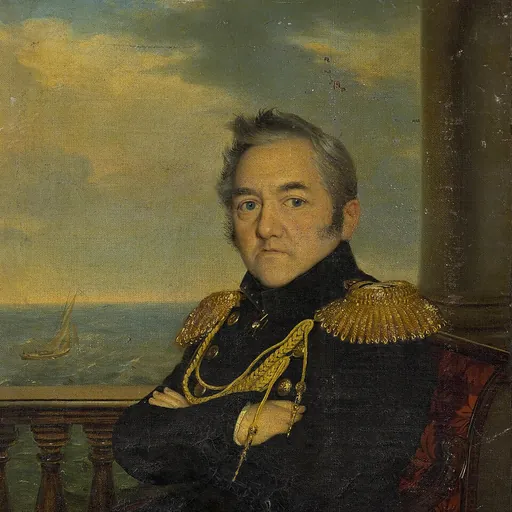
About Mikhail Lazarev
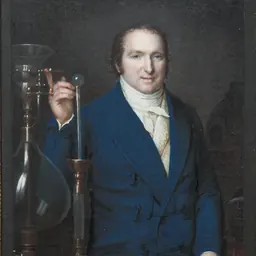
Lived 1788 – 1851 (aged 62). Mikhail Lazarev was a Russian explorer, military personnel and admiral.
Admiral Mikhail Petrovich Lazarev (; ) was a Russian fleet commander and explorer.
Education and early career Lazarev was born in the city of Vladimir, a scion of the old Russian nobility from the Vladimir region. In 1800, he enrolled in Russia's Naval Cadet Corps. Three years later, he was sent to the British Royal Navy, where he would stay for a continuous five-year navigation. From 1808 to 1813, Lazarev served in Russia's Baltic Fleet. He took part in the Russo-Swedish War of 1808–1809 and Patriotic War of 1812.
Career as an explorer Lazarev first circumnavigated the globe in 1813–1816, aboard the vessel Suvorov; the expedition began at Kronstadt and reached Alaska. During this voyage, Lazarev discovered the Suvorov Atoll.
As a commander of the ship and Fabian Gottlieb von Bellingshausen's deputy on his world cruise in 1819–1821 (Bellingshausen commanded ), Lazarev took part in the discovery of Antarctica and numerous islands. On 28 January 1820, the expedition discovered the Antarctic mainland, approaching the Antarctic coast at the coordinates and seeing ice-fields there.
In 1822–1825, Lazarev circumnavigated the globe for the third time on his frigate Kreyser, conducting broad research in the fields of meteorology and ethnography.
Wartime commands In 1826, Lazarev became commander of the ship , which would sail to the Mediterranean Sea as the flagship of the First Mediterranean Squadron under command of Admiral Login Petrovich Geiden and participated in the Battle of Navarino in 1827. Lazarev received the rank of rear admiral for his excellence during the battle.
In 1828–1829, he was in charge of the Dardanelles blockade. In 1830, Lazarev returned to Kronstadt and became a commander of naval units of the Baltic Fleet. Two years later, he was made chief of staff of the Black Sea Fleet. In February–June 1833, Lazarev led a Russian squadron to the Bosporus and signed the Treaty of Hünkâr İskelesi with the Ottoman Empire. In 1833, Lazarev was appointed commander of the Black Sea Fleet, the Black Sea ports, and also military governor of Sevastopol and Nikolayev.
Influence and legacy
Admiral Lazarev exercised great influence both in technical matters and as a mentor to younger officers. He advocated the building of a steam-powered fleet, but Russia's technical and economic backwardness hindered his plans. He tutored a number of Russian fleet commanders, including Pavel Nakhimov (1802–1855), Vladimir Alexeyevich Kornilov (1806–1854), Vladimir Istomin (1810–1855), and Grigory Butakov (1820–1882).
An atoll in the Pacific Ocean, capes in the Amur Liman and on the Unimak Island, a former island in the Aral Sea, a port in the Sea of Japan, bay and sea in the South Ocean, a settlement near Sochi and other locations bear Lazarev's name.
Russian and Soviet navies had ships named after the admiral: , a monitor of the Imperial Russian Navy built in 1867 and lead ship of her class A light cruiser ordered for the Imperial Russian Navy in 1914, completed and renamed after the Russian Revolution of 1917 , a built in the early 1950s The , renamed Admiral Lazarev after the 1991 dissolution of the Soviet Union
Lazarev is buried with his disciples Nakhimov, Kornilov and Istomin in the Admirals' Burial Vault in Sevastopol. A minor planet 3660 Lazarev, discovered by Soviet astronomer Nikolai Stepanovich Chernykh in 1978, is named after him.
Honours and awards Order of St. George, IV class Order of St. Vladimir, 1st class Order of St. Alexander Nevsky Order of White Eagle Companion of the Order of the Bath (United Kingdom) Military Order of St. Louis (France)
References and notes
Don’t just read it —
keep it.
Full-length biographies made to live with: read them, listen on the way to work, watch them tonight.
- E-book
- Audio
- Video
Instant download · yours to keep · every purchase keeps this site free
Important facts
People in Mikhail Lazarev's life
Named in this biography and alive at the same time

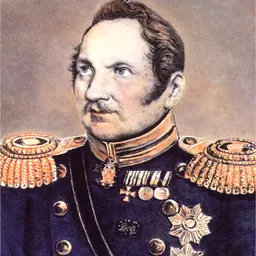


Related people
Same field, nearest in time
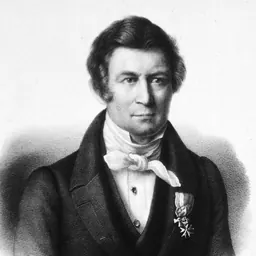
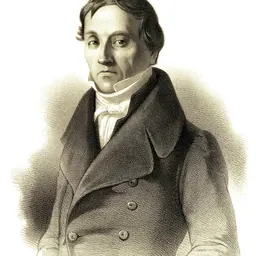


Contemporaries
People whose lives overlapped Mikhail Lazarev's


Frequently asked questions
Who was Mikhail Lazarev?
Russian fleet commander and explorer (1788-1851)
When was Mikhail Lazarev born?
Mikhail Lazarev was born on 3 November 1788 in Vladimir.
When did Mikhail Lazarev die?
Mikhail Lazarev died on 11 April 1851 in Vienna.
What was Mikhail Lazarev's occupation?
Mikhail Lazarev was an explorer, military personnel and admiral.
What nationality was Mikhail Lazarev?
Mikhail Lazarev was Russian.
Sources & further reading
Cite this page
APA: Biography.guide. (2026). Mikhail Lazarev. https://biography.guide/mikhail-lazarev/
MLA: "Mikhail Lazarev." Biography.guide, https://biography.guide/mikhail-lazarev/.
Chicago: "Mikhail Lazarev." Biography.guide. https://biography.guide/mikhail-lazarev/.
Data last updated: 2026-09-23 · Spot an error? Report a correction.
Portrait: Wikimedia Commons · author & licence
Page generated 2026-09-27 05:08 UTC