
Mikhail Bukinik
Ukrainian cellist, composer, music educator and music critic
About Mikhail Bukinik
Lived 1872 – 1953 (aged 80). Mikhail Bukinik was a Russian and American composer, music educator, cellist, music critic and musician.
Mykhailo Yevsiyovych Bukinik (; – 1947) was a Ukrainian cellist, composer, music educator and music critic of classical music.
His four concert études for the solo cello were compulsory works at the prestigious International Cello Competition in Markneukirchen in May 2005.
Biography Bukinik was born in 1872, in Dubno in Russian Empire (today in Rivne Oblast in Ukraine). Four of his family members, including his brother Isaac (violinist, teacher, music critic) and his two daughters decided that music would be their profession. From 1885 to 1890 Bukinik attended the music school in Kharkiv, where he was also a member of the Society for Russian Music. During these five years, he studied with Alfred von Glehn (who was also the teacher of Gregor Piatigorsky) at the Moscow Conservatory. In his solo performances and concerts as a member of the orchestra, he played together with musicians such as Sergei Taneyev, Nikolai Medtner, Konstantin Igumnov, Alexander Goldenweiser, Alexander Goedicke and W. Lambowskaja. Among his fellow students were well-known musicians such as Ferruccio Busoni, Alexander Scriabin and Sergei Rachmaninoff. Bukinik finished his studies in 1895.
He then went on tour in Russia with a symphony orchestra led by Dimitri Achscharumow. After a brief stay in Berlin, Bukinik came to Saratov in 1899, where he remained until 1904 as a teacher at the Mariinsky Institute. At the same time, he met with the famous painter Victor Borisov-Musatov, who became his lifelong friend. Pavel Kuznetsov was another painter with whom Bukinik was very close. In 1901, together with Borisov-Musatov, the field doctor and writers Vladimir Stanjukowitsch, and his wife Nadezhda, he founded the so-called English Club of Saratov. In the following two years (1904–1906) Bukinik lived in Germany, France and Switzerland.
From 1906, he had many appearances in Moscow. There he was also a cello teacher at the prestigious Gnessin School of Music (now the Gnessin Institute). After the Russian Revolution in October 1917, the school was temporarily closed. From 1919 to 1922 Bukinik was a professor at the Conservatory of Kharkiv. In 1922 he emigrated to the United States, where he worked with a Ukrainian string quartet and also played in a Ukrainian musical theater. In 1944 he published his memoirs; he died in 1947.
Bukinik was the first to play Rachmaninoff's Cello Sonata in G minor in Paris. He was the author of some cello works and edited several works by Russian composers.
Selected works New Shifting Studies Virtuoso Arpeggio Studies
Don’t just read it —
keep it.
Full-length biographies made to live with: read them, listen on the way to work, watch them tonight.
- E-book
- Audio
- Video
Instant download · yours to keep · every purchase keeps this site free
Important facts
People in Mikhail Bukinik's life
Named in this biography and alive at the same time


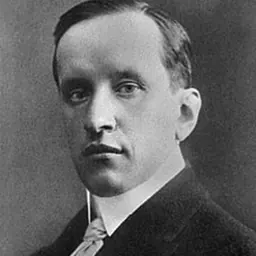
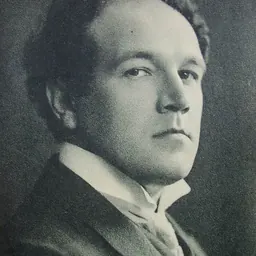


Related people
Same field, nearest in time
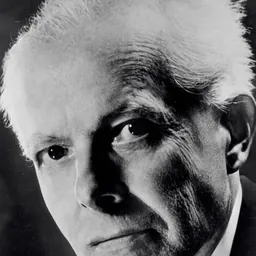
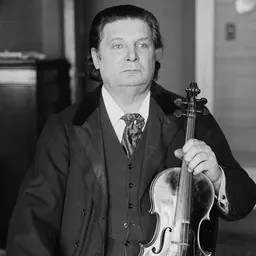


Contemporaries
People whose lives overlapped Mikhail Bukinik's


Frequently asked questions
Who was Mikhail Bukinik?
Ukrainian cellist, composer, music educator and music critic
When was Mikhail Bukinik born?
Mikhail Bukinik was born on 29 October 1872 in Kharkiv, Dubno.
When did Mikhail Bukinik die?
Mikhail Bukinik died on 22 July 1953 in New York City.
What was Mikhail Bukinik's occupation?
Mikhail Bukinik was a composer, music educator, cellist, music critic and musician.
What nationality was Mikhail Bukinik?
Mikhail Bukinik was Russian and American.
Sources & further reading
Cite this page
APA: Biography.guide. (2026). Mikhail Bukinik. https://biography.guide/mikhail-bukinik/
MLA: "Mikhail Bukinik." Biography.guide, https://biography.guide/mikhail-bukinik/.
Chicago: "Mikhail Bukinik." Biography.guide. https://biography.guide/mikhail-bukinik/.
Data last updated: 2026-09-20 · Spot an error? Report a correction.
Page generated 2026-09-27 04:59 UTC