
About Mikhail Alekseyev
Lived 1918 – 2007 (aged 89). Mikhail Alekseyev was a Russian writer, prose writer, editing staff and journalist.
Mikhail Nikolayevich Alekseyev (; 6 May 1918 – 21 May 2007) was a Russian Soviet writer and editor, writing mostly about the Great Patriotic War (Soldiers, 1951, 1959; My Stalingrad, 1993-1998, the Fatherland and Mikhail Sholokhov Prizes, respectively) and the life of Soviet peasantry (Unweeping Willow, 1970-1974, the USSR State Prize in 1976). His controversial Fighters novel was one of the few non-dissident works of the time to bring about the issue of the 1933 Soviet famine. In 1969-1990 Alekseyev edited Moskva magazine.
Biography Mikhail Alekseyev was born in Monastyrskoye village of the Saratov Governorate, into a peasant family. In 1933 his mother died of famine, a year later his father, a victim of political repressions, died in GULAG. In 1936 he enrolled in the training college, then got mobilized into the Red Army and was sent to Irkutsk. In 1940, not long before the demobilization he was sent to the two-month courses for politruks. It was followed by two short story collections (Our Lieutenant, 1955, There Were Two Friends, 1958), a novella (The Inheritors, 1957) and Divizionka (Division Newspaper), a 1959 book of documentary non-fiction. His 1961 novel The Cherry-Сoloured Pool, about the life of a Russian village, was welcomed by Mikhail Sholokhov, whom Alekseyev later cited as a major influence. In 1966 this book earned him the Maxim Gorky State Prize.
Alekseyev was a staunch communist and, during the ideological feuds between literary 'liberal' and 'patriotic' factions, invariably supported the latter. In 1969 he was among those who signed the infamous Ogoniok-published open letter condemning Novy Mir, and never repented. As a Moskva magazine's editor-in-chief he published Nikolay Karamzin's History of the Russian State in full, which at the time was regarded as a daring challenge to academician Alexander Yakovlev, perestroika's main ideologist. In 1990s Alekseyev criticized Boris Yeltsin and his team of reformists. Outraged by the demolition of the Russian Duma in October 1993, he reacted with the series of angry articles published by Zavtra, Sovetskaya Rossiya and Pravda. Alekseyev's last novel was The Occupants, a sequel to My Stalingrad.
Mikhail Alekseyev died on 21 May 2007 in Moscow and is interred in the Peredelkino Cemetery.
Don’t just read it —
keep it.
Full-length biographies made to live with: read them, listen on the way to work, watch them tonight.
- E-book
- Audio
- Video
Instant download · yours to keep · every purchase keeps this site free
Important facts
People in Mikhail Alekseyev's life
Named in this biography and alive at the same time
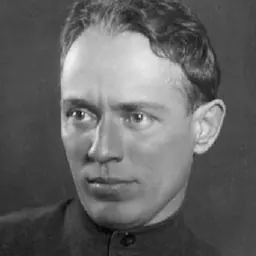
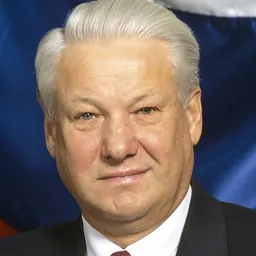
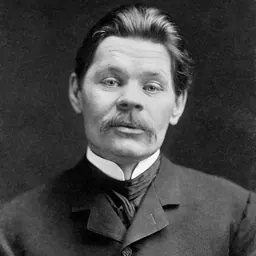

Related people
Same field, nearest in time
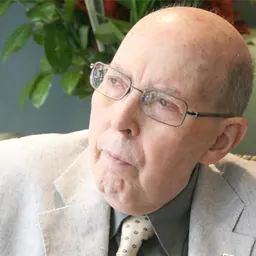

Contemporaries
People whose lives overlapped Mikhail Alekseyev's





Frequently asked questions
Who was Mikhail Alekseyev?
writer (1918–2007)
When was Mikhail Alekseyev born?
Mikhail Alekseyev was born on 6 May 1918 in Russian Socialist Federative Soviet Republic, Saratov Governorate.
When did Mikhail Alekseyev die?
Mikhail Alekseyev died on 19 May 2007 in Moscow.
What was Mikhail Alekseyev's occupation?
Mikhail Alekseyev was a writer, prose writer, editing staff and journalist.
What nationality was Mikhail Alekseyev?
Mikhail Alekseyev was Russian.
Sources & further reading
· Wikipedia: Mikhail Alekseyev
· DBpedia: Mikhail Alekseyev (writer)
Cite this page
APA: Biography.guide. (2026). Mikhail Alekseyev. https://biography.guide/mikhail-alekseyev-writer/
MLA: "Mikhail Alekseyev." Biography.guide, https://biography.guide/mikhail-alekseyev-writer/.
Chicago: "Mikhail Alekseyev." Biography.guide. https://biography.guide/mikhail-alekseyev-writer/.
Data last updated: 2026-09-20 · Spot an error? Report a correction.
Page generated 2026-09-27 04:57 UTC