
About Mike Quin
Lived 1906 – 1947 (aged 41). Mike Quin was an American writer and novelist.
"Mike Quin" (July 1906 – August 14, 1947) was the pen name of the American Communist writer Paul Ryan, who also used a second pen name, "Robert Finnegan". He is best known for his posthumously published book The Big Strike about the 1934 West Coast waterfront strike.
Background
Mike Quin was born Paul William Ryan in 1906 in the Mission District of San Francisco, California, shortly after the 1906 earthquake. His mother was an Irish-Jewish-French dressmaker. His father was an Irish-American traveling salesman "who drifted out of the family orbit" when Paul and his younger brother and sister were still children. Paul attended Pacific Heights Grammar School and Polytechnic High School. With his family struggling to make ends meet, he left school at age 15 to begin earning money.
Career Paul Ryan took various jobs until age 19, when he became a seaman and first got involved in maritime unions. In the late 1920s, he obtained a job in a Hollywood bookstore, which was frequented by local writers. One of the writers was a Marxist who helped radicalize Ryan, who then joined the John Reed Club chapter in Hollywood.
In 1933, Ryan began his lifelong pursuit of a writing career by having a short story, "The Sacred Thing", published in Scribner's Magazine. He also started contributing to the John Reed Club's Partisan magazine, as well as to New Masses and the Western Worker (predecessor of People's Daily World). It was at this time that "Mike Quin" was born. Under that pseudonym, he published a 1933 pamphlet, "And We Are Millions: The Story of Homeless Youth", a collection of testimonies from unemployed, Depression era youths convicted of vagrancy by the American justice system. The pattern he established was to use "Mike Quin" for his journalistic pieces, newspaper columns, and political essays. Then, late in life, he chose "Robert Finnegan" as his pen name for mysteries and pulp fiction.
Quin wrote extensively about the 1934 West Coast waterfront strike for publications such as the Dispatcher of the International Longshore and Warehouse Union (ILWU). In 1936–1937, he worked for the WPA Writers' Project, where he wrote about the history of the maritime and cotton-growing industries. which was established as a pro-neutrality group within the Maritime Federation of the Pacific. The committee's primary activity was dissemination of pamphlets urging labor union members to avoid the rising tide of "war fever". At the time, it was also the position of the CPUSA (in the wake of the Molotov–Ribbentrop Pact) for the U.S. to stay out of the European theater of World War II. Quin's pamphlet "The Yanks Are Not Coming!" (1940) "reached an enormous audience, attracting such nationwide attention that Walter Winchell referred to the author as one of America's most dangerous men." The pro-neutrality committee largely ceased to operate after the Nazi invasion of the Soviet Union in June 1941, and the December 1941 attack on Pearl Harbor.
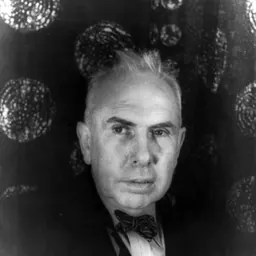
Quin's first published anthology, Dangerous Thoughts (1940), received a congratulatory letter from Theodore Dreiser, who wrote an introduction to the follow-up anthology, More Dangerous Thoughts (1941). Also in 1941, People's World published a collection of Quin's "The Enemy Within" serials. That August, he visited New York City and was interviewed by the Daily Worker, to which he contributed poems as early as 1938 and articles as early as 1940. In 1943, the CIO hired him as a scriptwriter for a radio show entitled Facts to Fight Fascism. From 1943 to 1945, the CIO made Quin their "CIO Reporter on the Air". One of his final assignments for the CIO was to cover the United Nations Conference on International Organization, which was held in San Francisco from 25 April–26 June 1945. In the autumn of 1945, he prepared a series of radio broadcasts for the National Maritime Union, and one also for the Marine Cooks and Stewards Union.
At the conclusion of WWII, Quin's job with the CIO ended. To earn money, he tried his hand at mystery writing under the pen name "Robert Finnegan". He achieved success with three novels: The Lying Ladies (1946), The Bandaged Nude (1946), and Many a Monster (published posthumously in 1948). As Alan Wald notes, "All concern Dan Banion, an ex-soldier turned newspaper reporter who is frequently at odds with the police in his investigations." The novels, written in the noir genre, depict the post-war atmosphere. They were translated into French and attracted a following among fans of hard-boiled detective fiction.
Works Quin wrote "The Yanks Are Not Coming" originally as a pamphlet for the 1940 CIO annual conference in San Francisco. "Did You Ever See a Dream Fighting?" (1941) "A Letter About Sam Darcy" (1941) "Investigation: A Poem"
Contributions to People's Daily World "Seeing Red" with song satirizing Henry Ford to the tune of "Yankee Doodle" (1938) "Seeing Red" with workers correspondence (1938) "Seeing Red" on economic slump (1938) "Seeing Red" on United Office and Professional Workers of America CIO (1938) "Seeing Red" on anti-communist journalism (1938) "Seeing Red" on International Longshore and Warehouse Union as example of trade union unity (1938) "Seeing Red" on agriculture in China and the USA (1938) "Seeing Red" on Jim Crow (1938) "Seeing Red" on mimeograph publications (1938) "Seeing Red" on the WPA's Federal Arts Committee and art for labor (1938) "Seeing Red" on free speech for labor unions on radio (1938) "Double Check" on benefits of unionizing (1938) "Double Check" on Maxwell Anderson's play Valley Forge (1938) "Double Check" on benefits of Big Business (1938) "Double Check" on Americans journeying to fight in the Lincoln Battalion during the Spanish Civil War (1938) "Double Check" on Americans now fighting in the Lincoln Battalion during the Spanish Civil War (1938)
Books as "Mike Quin" The C.S. Case Against Labor: The Story of the Sacramento Criminal Syndicalism Railroading (1935) Ashcan the M-Plan: The Yanks Are NOT Coming (1940) Dangerous Thoughts (1940) The Enemy Within (1941) More Dangerous Thoughts (1941) On the Drumhead: A Selection from the Writing of Mike Quin; A Memorial Volume (1948) The Big Strike (1949)
Books and Stories as "Robert Finnegan" The Lying Ladies (1946) The Bandaged Nude (1946) "Business Before Bullets" (1947) Many a Monster (1948)
Short Stories as Paul Ryan "The Sacred Thing" (1933)
Don’t just read it —
keep it.
Full-length biographies made to live with: read them, listen on the way to work, watch them tonight.
- E-book
- Audio
- Video
Instant download · yours to keep · every purchase keeps this site free
Important facts
People in Mike Quin's life
Named in this biography and alive at the same time





Related people
Same field, nearest in time





Contemporaries
People whose lives overlapped Mike Quin's


Frequently asked questions
Who was Mike Quin?
American writer (1906-1947)
When was Mike Quin born?
Mike Quin was born on 7 July 1906 in San Francisco.
When did Mike Quin die?
Mike Quin died on 14 August 1947 in Marin County.
What was Mike Quin's occupation?
Mike Quin was a writer and novelist.
What nationality was Mike Quin?
Mike Quin was American.
Sources & further reading
Cite this page
APA: Biography.guide. (2026). Mike Quin. https://biography.guide/mike-quin/
MLA: "Mike Quin." Biography.guide, https://biography.guide/mike-quin/.
Chicago: "Mike Quin." Biography.guide. https://biography.guide/mike-quin/.
Data last updated: 2026-09-20 · Spot an error? Report a correction.
Page generated 2026-09-27 05:22 UTC