
About Mikayil Mushfig
Lived 1908 – 1938 (aged 29). Mikayil Mushfig was a Russian poet, writer, translator and pedagogue.
Mikayil Mushfig (, born Mikayil Ismayilzade) (5 June 1908, Baku – 6 January 1938, Baku) was an Azerbaijani poet of the 1930s. Mikayil Mushfig is considered one of the founders of the new Azerbaijani poetic style.
Most of his poetry is about romance, nature, feelings. Despite this, he soon became one of the slandered and criticized poets in the Union of Soviet Azerbaijani Writers, and soon afterwards, Mushfig was arrested and executed by Soviet authorities at the age of 30 during the Stalinist purges in the USSR. In 1956, he was exonerated posthumously. Nikita Khrushchev era of de-stalinization has resulted in Mushfig's poetry being famous in Azerbaijani society.
Life and poetry
Mikayil Mushfig was born in the city of Baku of Baku Governorate in 1908. His father Mirza Abdulgadir Ismayilzade was a teacher and a poet. He lost his parents in early childhood, so he was brought up by the relatives. He received his elementary education at Russian-language School in Baku. After the establishment of the Soviet regime in Azerbaijan in 1920, he studied at Baku Teacher's School and in 1931, he graduated from the Department of Language and Literature of the Baku State University. Mushfig married Dilber Akhundzade in 1933.
Mikayil started his professional career as a school teacher. While being involved in teaching, he started writing poems. His first poem Bir Gün ("The Day") was published in the Ganj fahla newspaper in Baku in 1926. Mikayil Mushfig actively promoted traditional Azerbaijani musical instruments, which had been forbidden at that time.
In his poetry, Mushfig glorified the work of industrial workers and peasants and lauded the construction of industrial enterprises in Baku and other cities. According to Mushfig's wife, Dilbar Akhundzadeh, Mikayil welcomed the transition from the Perso-Arabic script to the Latin script that took place in Azerbaijan in 1927. His excitement was expressed in the following verse:
And at parting, My soul wants to tell you: "Goodbye! Your last day has come, Wretched old alphabet!"
When Stalin and Mir Jafar Baghirov decreed that traditional Azerbaijani musical instruments, including the tar, were to be banned, Mushfig wrote a poem in response titled "Sing Tar, Sing". The popularity of his poem with the public convinced the authorities to rescind the tar ban.
Arrest and execution
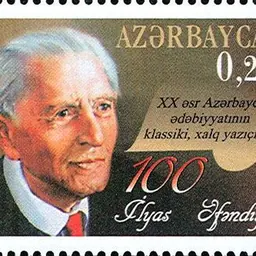
In the late 1930s, as confessed by writer Mehdi Huseyn in one of the Ilyas Afandiyev's memories, it was very common among poets and writers to slander each other and accuse each other of nationalism or spreading religious propaganda. The reasons of such slanders were generally connected with personal problems and bitter rivalries between certain poets and writers. Mushfig himself came under the barrage of criticism in the Azerbaijani Writers' Union along with some other literary figures of the era such as Huseyn Javid, Ahmed Javad and Yusif Vazir Chamanzaminli. Literary figures who were serving the interests of Stalin's regime in the USSR branded Mushfig as a "chauvinist" and a "petit-bourgeois poet". He was arrested in 1937, charged with treason as "the enemy of the state", and executed in 1939 in the Bayil prison near Baku.
Published works Küləklər ("The Winds"), 1930 Günün Səsləri ("The Voices of the Day"), 1932 Collection of Poems, 1934 Selected works (2 volumes), 1960 Duyğu Yarpaqları ("The Leaves of a Feeling"), 1966 Poems (2 volumes), 1968 and 1973 Yenə O Bağ Olaydı ("I wish it was that garden again"), 1976 Ədəbiyyat Nəğməsi ("The Song of literature"), 1978
Honours
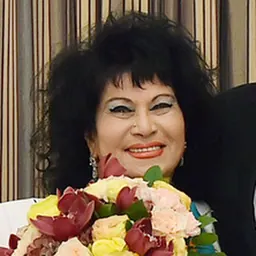
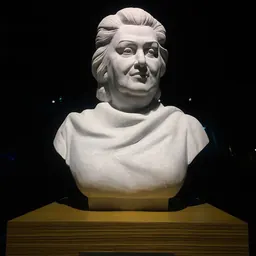
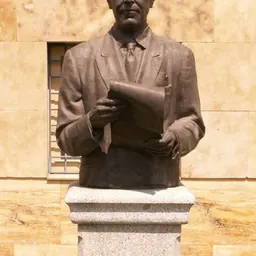
In 1968, Mushfig's wife Dilber Akhundzade published the memorial book, “My days with Mushfiq”, telling the story of Mushfig and Dilber's life after they met in 1931, as well as Dilber's life after Mushfig's arrest and execution. In 1977, “Mikayil Mushfig” dry cargo vessel was released into water by Caspian Shipping Company. In 1988, “The place of Mikayil Mushfig” was established at the house of Mushfig's father in Sayadlar village of Khizi raion by the initiative of Tofig Novruzov, Jabir Novruz, Aydın Zeynalov and Nabi Khazri. and the bust of Mushfig was placed in front of the school building. In 1989, the bust of the poet made by Munevver Rzayeva was laid in Sayadlar village of Khizi by the initiative of the philanthropist Abulhasan Ahmedov. In 2018, the President Ilham Aliyev issued a decree on marking the 110th anniversary of the birth of the prominent poet M.Mushfig.
School No.18 in Baku, No.14 in Ganja, No.34 in Sumgait, secondary school in Gilazi settlement in Khizi are named after Mikayil Mushfig.
Songs to Mikayil Mushfig's poems
"Qal sənə Qurban" performed by Zeynab Khanlarova "Sənin üçün" performed by Zeynab Khanlarova "Qurban olduğum" performed by Shovkat Alakbarova "Neçin gəlmədin" performed by Shovkat Alakbarova "Oxu Tar" performed by Gulagha Mammadov "Oxu sevdiciyim" performed by Nazakat Mammadova "Söylə" performed by Alim Gasimov
Don’t just read it —
keep it.
Full-length biographies made to live with: read them, listen on the way to work, watch them tonight.
- E-book
- Audio
- Video
Instant download · yours to keep · every purchase keeps this site free
Important facts
People in Mikayil Mushfig's life
Named in this biography and alive at the same time



Related people
Same field, nearest in time


Contemporaries
People whose lives overlapped Mikayil Mushfig's


Frequently asked questions
Who was Mikayil Mushfig?
Azerbaijani writer (1908-1938)
When was Mikayil Mushfig born?
Mikayil Mushfig was born on 5 June 1908 in Baku.
When did Mikayil Mushfig die?
Mikayil Mushfig died on 6 January 1938 in Baku.
What was Mikayil Mushfig's occupation?
Mikayil Mushfig was a poet, writer, translator and pedagogue.
What nationality was Mikayil Mushfig?
Mikayil Mushfig was Russian.
Sources & further reading
Cite this page
APA: Biography.guide. (2026). Mikayil Mushfig. https://biography.guide/mikayil-mushfig/
MLA: "Mikayil Mushfig." Biography.guide, https://biography.guide/mikayil-mushfig/.
Chicago: "Mikayil Mushfig." Biography.guide. https://biography.guide/mikayil-mushfig/.
Data last updated: 2026-09-20 · Spot an error? Report a correction.
Page generated 2026-09-27 05:21 UTC