
About Mihnea Turcitul
Lived 1564 – 1601 (aged 36–37). Mihnea Turcitul was a Romanian ruler.
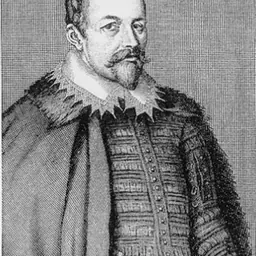
Mihnea II Turcitul ("Mihnea the Turned-Turk"; July 1564 – October 1601) was Prince (Voivode) of Wallachia between September 1577 and July 1583, and again from April 1585 to May 1591.
Rise to the throne
The only son of Alexandru II Mircea and Ecaterina Salvaresso, he ascended to the throne after events characteristic for the decline in prestige of local custom and princely power under pressure from the Ottoman Empire (Wallachia's suzerain): Mihnea had to compete with a foreign pretender, the Lombard physician Rosso, who claimed to be descended from a Wallachian ruler, and ultimately succeeded after enlisting the help of his grandmother, the influential Lady Chiajna. Unpopular taxation policy
He, Ecaterina Salvaresso and Chiajna subsequently established what would become a highly unpopular rule, which followed the political guidelines imposed by Alexandru II, and saw a major increase in taxes — around 1583, the pressure was leading peasants to abandon their plots and flee to Transylvania in large numbers. Exile to Tripoli
Local boyars unsuccessfully petitioned the Porte citing Mihnea's youth, began talks with a certain Pătrașcu or Radul Popa (who claimed to be the son of Pătrașcu cel Bun), and eventually rebelled in Oltenia (under the leadership of the Craiovești family). A more powerful pretender was the real son of Pătrașcu cel Bun, Petru Cercel, who held the throne from 1583 to 1585, provoking Mihnea's exile to Tripoli (where he was kept in custody by Ottoman authorities). Financial promises to the Ottoman Grand Vizier and the Sultan
His wealthy mother's family gave gifts to the officials of the sultan, in order to purchase back the throne. The obligations he contracted in order to have Petru removed (around 700,000 scudi) forced Mihnea to increase the fiscal burden, and especially the quit-rent, to even higher levels upon his return to Bucharest. In addition, Mihnea allegedly promised Grand Vizier Koca Sinan Pasha as many gold coins as 600 horses could carry, in order to have Petru killed; in March 1590, his request was granted by Sultan Murad III, who ordered Petru's execution, in exchange for 70,000 gold coins. After moving to Anatolia, he bade without success for the throne in Moldavia. These un-traditional gestures did not prevent his youngest son, Radu Mihnea, from becoming Prince in 1601. Death in Istanbul He died in Istanbul in 1601 and was buried in an unmarked grave.
Don’t just read it —
keep it.
Full-length biographies made to live with: read them, listen on the way to work, watch them tonight.
- E-book
- Audio
- Video
Instant download · yours to keep · every purchase keeps this site free
Important facts
Family & relationships
People in Mihnea Turcitul's life
Named in this biography and alive at the same time
Related people
Same field, nearest in time



Contemporaries
People whose lives overlapped Mihnea Turcitul's



Frequently asked questions
Who was Mihnea Turcitul?
Prince of Walalchia (1564-1601)
When was Mihnea Turcitul born?
Mihnea Turcitul was born in 1564 in Constantinople.
When did Mihnea Turcitul die?
Mihnea Turcitul died on 1 October 1601 in Istanbul.
What was Mihnea Turcitul's occupation?
Mihnea Turcitul was a ruler.
What nationality was Mihnea Turcitul?
Mihnea Turcitul was Romanian.
Sources & further reading
Cite this page
APA: Biography.guide. (2026). Mihnea Turcitul. https://biography.guide/mihnea-turcitul/
MLA: "Mihnea Turcitul." Biography.guide, https://biography.guide/mihnea-turcitul/.
Chicago: "Mihnea Turcitul." Biography.guide. https://biography.guide/mihnea-turcitul/.
Data last updated: 2026-09-26 · Spot an error? Report a correction.
Page generated 2026-09-27 05:15 UTC