
Miguel Díaz-Canel
First Secretary of the Communist Party of Cuba and top leader of Cuba since 2021
About Miguel Díaz-Canel
Born 1960. Miguel Díaz-Canel is a Cuban engineer, lecturer and politician.
Leader of Cuba (2021–present)
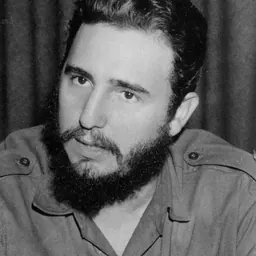
On 19 April 2021, Díaz-Canel officially became the First Secretary of the Communist Party of Cuba after the resignation of Raúl Castro making him the leader of Cuba in fact as well as in name. BBC News said that Díaz-Canel is loyal to the Castros' ideologies. In July 2021, Díaz-Canel said that the United States embargo against Cuba and economic sanctions were responsible for the conditions that led to the 2021 Cuban protests. He urged government-supporting citizens to take to the streets in counter-protest to respond to the demonstrations, saying in a special television broadcast: "The order to fight has been given – into the streets, revolutionaries!"
During the 2022 Russian invasion of Ukraine, the Cuban government blamed the United States for the crisis in Ukraine and backed Russia's right to self-defense against NATO expansion, but did not endorse the invasion, saying the conflict should be resolved diplomatically. Díaz-Canel visited Vladimir Putin in Moscow in November 2022, and the two leaders criticized Western sanctions against Cuba and Russia. They also opened a monument to Fidel Castro in one of Moscow's districts.
A 2022 Ipsos survey of 297 opinion leaders and prominent journalists from Argentina, Bolivia, Brazil, Chile, Colombia, Ecuador, Guatemala, Mexico, Panama, Peru, Puerto Rico, and the Dominican Republic found that Díaz-Canel's administration had a low approval rating, with 78% expressing disapproval and 14% expressing approval.
On 19 April 2023, Díaz-Canel was re-elected by the National Assembly for a second term. Salvador Valdés was elected as vice president. He was reelected with a landslide: 97.66% backing Díaz-Canel's and 93.4% supporting Valdés. Díaz-Canel condemns the genocide of Palestinians in Gaza, and refers to Israel as a "terrorist state". He has led multiple pro-Palestinian demonstrations in Cuba. The 2024–2025 Cuba blackouts were the most severe crisis that the country has experienced since the dissolution of the Soviet Union in 1991. Díaz-Canel blamed the blackout on the United States embargo against Cuba, which he said prevented much needed supplies and replacement parts from reaching Cuba. Díaz-Canel stated that any protests to the government's response would not be tolerated and that all protesters would be "processed rigorously under our revolutionary law". Shortly after protests started in October 2024, Díaz-Canel and prime minister Manuel Marrero Cruz appeared on a televised address in military fatigues claiming "counter-revolutionaries from abroad" were fomenting protests in Cuba. Díaz-Canel said that "we are not going to accept and we will not allow anyone to act by provoking vandalistic acts, much less disturbing the peace of our people, and that is a conviction and that is a principle of our revolution".
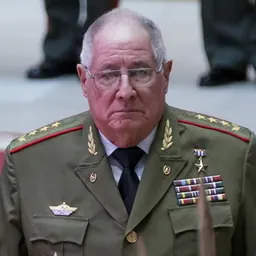
The United States imposed sanctions on Díaz-Canel on 11 July 2025. Defense Minister Álvaro López Miera and Interior Minister Lázaro Álvarez Casas were also sanctioned for their "regime's brutality". On 5 June 2026, the US imposed additional sanctions on Díaz-Canel and his wife.
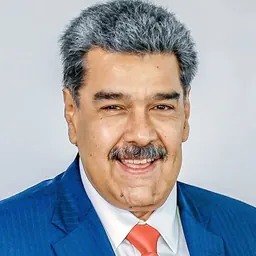
In January 2026, Díaz-Canel strongly condemned the U.S. military strikes in Venezuela and the subsequent capture of President Nicolás Maduro, labeling the actions as "state terrorism". On 15 January 2026, he was present, alongside Raúl Castro, 94, in a ceremony in Havana paying tribute to 32 Cuban soldiers killed in the United States intervention in Venezuela.
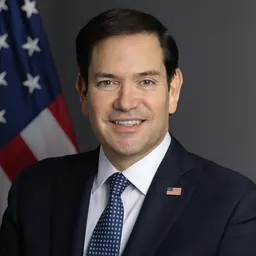
In March 2026, Díaz-Canel publicly confirmed for the first time that his government was engaged in diplomatic talks with the United States aimed at addressing a severe U.S.‑imposed oil and energy blockade that had left Cuba facing crippling fuel shortages and widespread power outages. The announcement came after years of frosty bilateral relations and was framed as an effort to find “solutions through dialogue” to longstanding differences between the two nations while respecting each side’s sovereignty and political systems. Díaz‑Canel said the discussions were in early stages and focused on alleviating the humanitarian and economic impact of the energy crisis. The talks were reported to involve U.S. officials including Secretary of State Marco Rubio, and were accompanied by actions such as the release of 51 political prisoners, in a move described as a goodwill gesture. The energy shortages worsened after the United States halted Venezuelan oil supplies to Cuba following the ousting of Venezuelan President Maduro, who had been a key energy supplier to the island.
Honours and awards Foreign honours
Personal life
Díaz-Canel has two children from his marriage to his first wife, Marta Villanueva, which ended in divorce. He lives with his second wife, Lis Cuesta Peraza. On 23 March 2021, he obtained a PhD degree in technical sciences, defending a thesis titled "Government Management System Based on Science and Innovation for Sustainable Development in Cuba".
Don’t just read it —
keep it.
Full-length biographies made to live with: read them, listen on the way to work, watch them tonight.
- E-book
- Audio
- Video
Instant download · yours to keep · every purchase keeps this site free
Important facts
People in Miguel Díaz-Canel's life
Named in this biography and alive at the same time



Related people
Same field, nearest in time

Contemporaries
People whose lives overlapped Miguel Díaz-Canel's


Frequently asked questions
Who is Miguel Díaz-Canel?
First Secretary of the Communist Party of Cuba and top leader of Cuba since 2021
When was Miguel Díaz-Canel born?
Miguel Díaz-Canel was born on 20 April 1960 in Placetas.
What is Miguel Díaz-Canel's occupation?
Miguel Díaz-Canel is an engineer, lecturer and politician.
What nationality is Miguel Díaz-Canel?
Miguel Díaz-Canel is Cuban.
Sources & further reading
· Wikipedia: Miguel Díaz-Canel
Cite this page
APA: Biography.guide. (2026). Miguel Díaz-Canel. https://biography.guide/miguel-diaz-canel/
MLA: "Miguel Díaz-Canel." Biography.guide, https://biography.guide/miguel-diaz-canel/.
Chicago: "Miguel Díaz-Canel." Biography.guide. https://biography.guide/miguel-diaz-canel/.
Data last updated: 2026-09-26 · Spot an error? Report a correction.
Page generated 2026-09-27 05:15 UTC