
Miguel Báez y Espuny
Spanish torero
About Miguel Báez y Espuny
Lived 1930 – 2022 (aged 91). Miguel Báez y Espuny was a Spanish bullfighter.
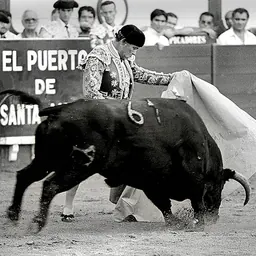
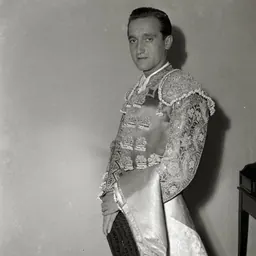
Miguel Báez Espuny (5 October 1930 – 18 May 2022), better known as "El Litri", was a Spanish bullfighter, a descendant of one of Huelva's foremost bullfighting dynasties.
His grandfather, his father, and his half-brother were likewise bullfighters, although it was he himself who outshone them all in fame and recognition. His fame became so great that in 1960, he made his own film, entitled Litri and His Shadow (Spanish: El Litri y su sombra), in which he tells the story of the whole saga, with himself as the protagonist and the cornerstone for having been the one to reach the greatest height.
Early life Báez's father, Miguel Báez Quintero "El Litri", a matador who enjoyed a certain level of fame in Huelva, had faith in his son Manuel's future, as his skill with the sword put him among the most promising young bullfighters at that time, but then, on 11 February 1926, Manuel was gored by a bull named Extremeño during a bullfight in Málaga, and died of his wounds in hospital a week later.
By this time, the elder Miguel Báez was a widower, for his first wife had died, and, now crushed by his only son's death, he fell into a deep depression. It was then that he met and got to know one of his late son's young admirers, Ángela Espuny Lozar, who had been born in Tavernes de la Valldigna in the Valencian Community, although she now lived in Gandia. From this union was born Miguel Báez Espuny. While on his deathbed in 1932, the elder Miguel made his wife promise to see to it that their young son would not follow in his forebears' footsteps into the world of bullfighting.
Early bullfighting success Nevertheless, as he grew, the younger Miguel became an avid bullfighting fan and would soon make it known that he wanted to become a bullfighter. His career in this profession began on 17 August 1947 in Valverde del Camino in the Province of Huelva, and at which bullfights the bulls were supplied by Gerardo Ortega. He presented himself at the Merced bullring in Huelva, and with resounding success, on 28 March 1948, once again sharing the billing with "Costillares" and Juan Barranco Posada, the latter of whom, who was himself from Huelva, would also be his companion on many bullfighting afternoons. That day, the three of them fought bulls supplied by Gerardo Ortega and Esteban González del Camino.
Such was the passion that Báez's fellow countrymen showed him in the way they received him in the city, in the events organized by the Tertulia Litri, which was headquartered in the city's central San Sebastián neighbourhood, when Pepe Ramos would launch his rockets to celebrate the bullfighter's successes, wherever Báez had been fighting bulls, and in other ways, that the Huelva maestro Félix Trujillo wrote a pasodoble in his honour, the Pasodoble del Litri, with lyrics by Domingo Manfredi and Alejandro Wilke.
By 1950, José Flores "Camará" had become Báez's apoderado (manager, or agent). Flores had been Manolete's apoderado. Installed at the bullring is a glazed tile by the painter Florencio Aguilera that commemorates that corrida. It was placed on 6 May 2010, on the occasion of the ring's sesquicentenary, and attending the ceremony was Báez himself, serving as the Galeonero de Honor.
After three years as a novillero (novice bullfighter who fights yearling bulls), Báez stood out in the 1949 bullfighting season with more than one hundred novilladas (fights), with countless bullfights throughout Spain, but mainly at the bullrings in Huelva, Barcelona, A Coruña, Córdoba, Seville, Jerez de la Frontera, Valencia, Zaragoza, and others. On 18 May 1950, Báez had one of his greatest professional triumphs, coming out through the Great Gate at Las Ventas in Madrid after fighting the yearling bull Alpargatero from Manuel González's ranch.
Career as a matador Báez took his alternativa on 12 October 1950 with resounding success at the Valencia bullring, cutting four ears and two tails in his fights. Standing as his "godfather" was Joaquín Rodríguez "Cagancho" and as witness, Julio Aparicio Martínez. The bulls belonged to Antonio Urquijo's ranch.
Báez's presentation as a matador came in Seville on 17 April 1951, His triumph in Madrid continued at the Police Social Collective Fund bullfights on 28 June, when he cut three ears. In this bullfighting season, Báez fought in 67 corridas, and the next season (1952) in 59.
In 1967, Báez saw his last full bullfighting season, with 35 corridas. He performed again in Madrid and Seville, earning one ear at the Seville bullring in his first bullfight there — and getting wounded in the next.
On 29 July 1984, Báez dressed in a suit of lights for the revival of Huelva's Plaza de Toros de La Merced, performing at the Columbian Festivals, sharing billing with Curro Romero and Pepe Luis Vázquez Silva. The bulls bore the Jandilla brand.
Báez's last appearance as a bullfighter came on 26 September 1987 on the occasion of his son's alternativa at the Arena of Nîmes (an Ancient Roman arena, nowadays used as a bullring) in France.
On 19 January 2002, a sculptural group was unveiled in the city of Huelva as a homage to the "Litri" bullfighting dynasty, which began its historic steps with Manuel Báez Aráuz's modest bullfighting work (he was nicknamed Mequi, and lived 1830-1873), followed by his son Miguel Báez Quintero (1869-1932), who was succeeded by his nephew José Rodríguez Báez, "Litri II" (1891-1958), and his son Manuel Báez Fernández, who died in the bullring (1905-1926), and bearing witness to the saga was Miguel Báez Espuny himself, who further passed the family's tradition on to another brave man, the last link in the "Litri" chain, Báez's own son, Miguel Báez Spínola. The monument is sculptor Alberto Germán Franco's work, and can be found at the square that bears the saga's name.
Huelva city council awarded Báez the title of the city's Adoptive Son, conferring this distinction upon him on 21 January 2000. Furthermore, the Government Council of the Regional Government of Andalusia awarded him in 2007 the Medal of Andalusia, and in 2010 he also received the gold medal of the province from the Provincial Deputation of Huelva "as representative of a whole dynasty of bullfighters who have always been ambassadors of the province of Huelva".
Throughout Báez's long life, he received no end of homages and recognition from Huelva's and the surrounding province's bullfighting aficionados, also being named in 2010 Adoptive Son of the municipality of Punta Umbría.
Religious affiliations Linked as he was since childhood to his city's customs and traditions, Báez belonged to the Hermandad de la Borriquita ("Brotherhood of the Little Jenny-Ass"), in which he was an Elder Brother, coming to be included in their governing bodies at certain times. Greatly in the fore throughout his career was Báez's predisposition to collaborate with these bodies as a disinterested party in organizing charitable festivals.
Death Báez died in Madrid on 18 May 2022 at the age of 91, Báez's wife, Concha Spínola, died less than three weeks later, on 6 June 2022, at the age of 71.
Don’t just read it —
keep it.
Full-length biographies made to live with: read them, listen on the way to work, watch them tonight.
- E-book
- Audio
- Video
Instant download · yours to keep · every purchase keeps this site free
Important facts
People in Miguel Báez y Espuny's life
Named in this biography and alive at the same time





Related people
Same field, nearest in time
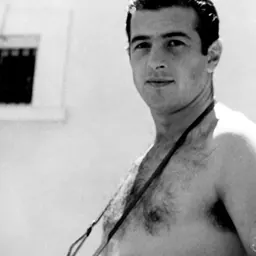
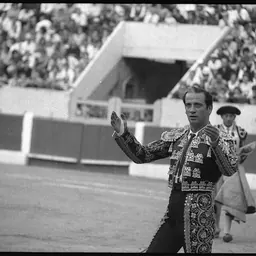

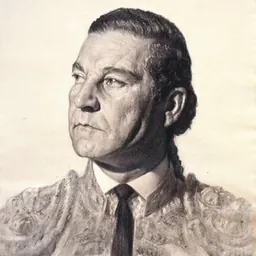
Contemporaries
People whose lives overlapped Miguel Báez y Espuny's
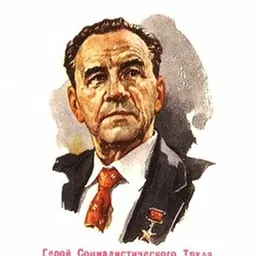
Frequently asked questions
Who was Miguel Báez y Espuny?
Spanish torero
When was Miguel Báez y Espuny born?
Miguel Báez y Espuny was born on 5 October 1930 in Gandia.
When did Miguel Báez y Espuny die?
Miguel Báez y Espuny died on 18 May 2022 in Madrid.
What was Miguel Báez y Espuny's occupation?
Miguel Báez y Espuny was a bullfighter.
What nationality was Miguel Báez y Espuny?
Miguel Báez y Espuny was Spanish.
Sources & further reading
· Wikipedia: Miguel Báez y Espuny
Cite this page
APA: Biography.guide. (2026). Miguel Báez y Espuny. https://biography.guide/miguel-baez-y-espuny/
MLA: "Miguel Báez y Espuny." Biography.guide, https://biography.guide/miguel-baez-y-espuny/.
Chicago: "Miguel Báez y Espuny." Biography.guide. https://biography.guide/miguel-baez-y-espuny/.
Data last updated: 2026-09-20 · Spot an error? Report a correction.
Page generated 2026-09-27 05:24 UTC