
About Miguel Arteche
Lived 1926 – 2012 (aged 86). Miguel Arteche was a Chilean poet, writer, prose writer, literary critic, diplomat and university teacher.
Miguel Salinas Arteche (4 June 1926 – 22 July 2012), best known as Miguel Arteche, the name he adopted after legally reversing his maternal and paternal surnames in 1972, was a Chilean poet and novelist. He was born in Nueva Imperial, Cautín, 9th Region, on June 4, 1926, but spent most of his adult life in Santiago, Chile working as an academic. He was also awarded government positions, both in Chile and abroad. His writings appeared first in the Anthology of the Generation of 1950, compiled by Enrique Lafourcade, a well-known Chilean writer.
Biography He studied Law in the Universidad de Chile, but shortly dropped to study Literature at the Universidad de Madrid, Spain from 1951 to 1944. His work ranges from poetry to novels and short stories.
In 1947 he published his first book, Invitación al olvido. After publishing a number of poetry books, he published Cantata del desterrado in 1951 before departing to Europe. The experience of living in Spain was fundamental to his writing, approaching him to his family roots and the intellectual world of Europe. After some years he returned to Chile, where he continued his literary career. In 1976 he published one of his most celebrated books, Destierros y tinieblas.
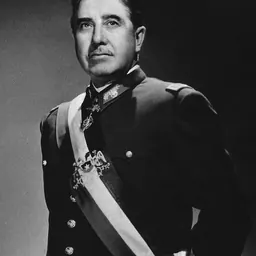
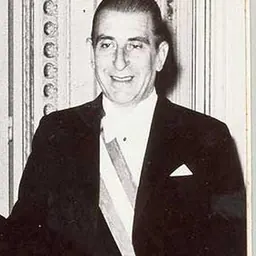
In 1956, Chilean president Eduardo Frei Montalva nominated him to the Chilean Embassy in Madrid, where he remained until 1970, later being added to the Chilean Embassy in Honduras, where he worked until 1971, staying for an additional period as a Visiting Professor. After returning to Chile, he opposed the military government of Augusto Pinochet, which led to the marginalization of his work, which would prevent him from publishing in Chile until the return of democracy.
In 1996 he was awarded the Premio Nacional de Literatura, the greatest literary award in Chile.
Literary generation of 1950
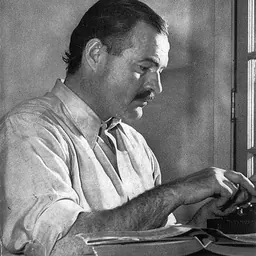
Miguel Arteche is one of the authors of the so-called Generación literaria de 1950. Writers in this category were born between 1920 and 1934. This classification was proposed by author Enrique Lafourcade in 1954. Prominent writers of this generation were Miguel Arteche, Enrique Lafourcade, Pablo Neruda, Vicente Huidobro, Humberto Díaz Casanueva, Rosamel del Valle, Jorge Edwards, Claudio Giaconi, et al. These writers were influenced by authors such as Walt Whitman, William Faulkner and Ernest Hemingway. Miguel Arteche also stated the Spanish Siglo de oro as one of his main influences. He taught his students the traditional art of metrical writing against the use of free verse.
Works El agua (the water), from Destierros y Tinieblas (Exiles and Darkness), 1963, is one of his most renowned poems; he had it in display hand-carved in wood at the entrance of his studio. Translated by Walter Hilliger, one of his students from the 90s:
+ EL AGUA THE WATER A media noche desperté. Toda la casa navegaba. Era la lluvia con la lluvia de la postrera madrugada. Toda la casa era silencio, y eran silencio las montañas de aquella noche. No se oía sino caer el agua. Me vi despierto a medianoche buscando a tientas la ventana; pero en la casa y sobre el mundo no había hermanos, madre, nada. Y hacia el espacio oscuro y frío y frío el barco caminaba conmigo. ¿Quién movía todas las velas solitarias? Nadie me dijo que saliera. Nadie me dijo que me entrara, y adentro, adentro de mí mismo me retiré: toda la casa. Me vio en el tiempo que yo fui, y en el seré la vi lejana, y ya no pude reclinar mi juventud sobre la almohada. A medianoche busqué mientras la casa navegaba. Y sobre el mundo no se oyó sino caer el agua. I woke up at midnight the whole house set sail. In the early morning, there was rain with rain. The house was in silence, the mountains restrained, that night, one could hear but the falling rain. I saw me that night searching vents in vain; at home, and the world, no brothers, mum, friends. The space was dark, cold, and cold the ship stayed with me. Who moved all lonely candle flames? No one told me, go, No one told me, stay, inside, within me, Home, I left away. She saw who I was, she seemed far someday. I couldn't lean back on the pillow's surface. That midnight I searched while the house sailed straight. Above the world hearing but the fall of rain.
Poetry
La invitación al olvido, 1947 Oda fúnebre, 1948 Una nube, 1949 El sur dormido, 1950 Cantata del desterrado, 1951 Solitario, mira hacia la ausencia, 1953 Otro continente, 1957 Quince poemas, 1961 Destierros y tinieblas, 1963 De la ausencia a la noche, 1965 Resta poética, 1966 Para un tiempo tan breve, 1970 Antología de veinte años, 1972 Noches, 1976 Cantata del Pan y la Sangre, 1980, 1981, 1986 Variaciones alemanas, 1986 Variaciones sobre versos de Karol Wojtyla, 1987 Monólogo en la Torre, 1989 Siete canciones, 1989 Tercera antología, 1991 Fénix de madrugada, 1975–1992 Poemas para nietos, 1996 Para un tiempo tan breve, 1997 Jardín de relojes, 2002
Novel
La otra orilla, 1964 El Cristo hueco, 1969 La disparatada vida de Félix Palissa, 1975 El alfil negro, 1992 (unpublished)
Short Story
Mapas del otro mundo, 1977 Las naranjas del silencio, 1987
Autobiography
Los ángeles de la provincia, 1975
Essay
Notas para la vieja y la nueva poesía chilena, 1958 La extrañeza de ser americano, 1962 Discurso de incorporación a la Academia Chilena de la Lengua, 1965 El extraño caso de Gabriela Mistral, 1968 Tres visiones de Carlos Droguett. 1971 Alfonso Calderón o cuarenta años después, 1978 Llaves para la poesía, 1984 Algunos de mis fantasmas, 1985 Algo acerca de la experiencia poética, 1988 La crítica poética y el crítico único, 1988 Exposición sobre un taller de poesía, 1988 La fuente dividida de Gabriela Mistral, 1989 El nombre perdido y buscado en América, 1989 Cómo leer un poema, 1989 Gabriela Mistral: seis o siete materias alucinadas, 1989 Escribir como niño para niños, 1990 De modo inseguro y problemático, 1990 Los coléricos hijos de Damaso Alonso, 1990 Algunos aprendices de brujo, 1989 Palabras en Alberti, 1991.
Don’t just read it —
keep it.
Full-length biographies made to live with: read them, listen on the way to work, watch them tonight.
- E-book
- Audio
- Video
Instant download · yours to keep · every purchase keeps this site free
Important facts
People in Miguel Arteche's life
Named in this biography and alive at the same time




Related people
Same field, nearest in time

Contemporaries
People whose lives overlapped Miguel Arteche's
Frequently asked questions
Who was Miguel Arteche?
poet (1926-2012)
When was Miguel Arteche born?
Miguel Arteche was born on 4 June 1926 in Nueva Imperial.
When did Miguel Arteche die?
Miguel Arteche died on 22 July 2012 in Santiago.
What was Miguel Arteche's occupation?
Miguel Arteche was a poet, writer, prose writer, literary critic, diplomat and university teacher.
What nationality was Miguel Arteche?
Miguel Arteche was Chilean.
Sources & further reading
Cite this page
APA: Biography.guide. (2026). Miguel Arteche. https://biography.guide/miguel-arteche/
MLA: "Miguel Arteche." Biography.guide, https://biography.guide/miguel-arteche/.
Chicago: "Miguel Arteche." Biography.guide. https://biography.guide/miguel-arteche/.
Data last updated: 2026-09-20 · Spot an error? Report a correction.
Page generated 2026-09-27 05:18 UTC