
About Midori Naka
Lived 1909 – 1945 (aged 36). Midori Naka was a Japanese actor and actress.
Midori Naka (; 19 June 1909 – 24 August 1945) was a Japanese stage actress of the Shingeki style. She initially survived the atomic bombing of Hiroshima on 6 August 1945, but died 18 days later. She was the first person in the world whose death was officially certified to be a result of radiation poisoning. Her notability helped publicize the adverse effects of exposure to radiation and encouraged more research on this area.
Biography
Early life and acting career Midori Naka (far left in the middle row) in a January 1945 photo of the Sakura Corps that includes several members who died later that year at Hiroshima. Midori (Japanese for "green") Naka was born in the Nihonbashi district of Chūō, Tokyo in Japan, the third of four daughters of a military officer. She graduated from Osaka Jogakuin College, before joining the Asakusa samurai drama group in 1928. In 1931, she entered the newly formed Tsukiji Shokekijo (Tsukiji Little Theater) and distinguished herself as an actress of the Shingeki style, especially for her performances as the titular character in the production of Lady of the camellias. In the mid-1930s, she helped her sisters run a coffee shop in the Asakusa district in Tokyo. In 1940, the Tsukiji troupe was shut down by the police. She joined the Kuraku-za (Pain and Pleasure) theater company in 1942. Tokyo air raids made activity difficult, and the troupe disbanded in January 1945. In March 1945, Naka became lead actress in the Sakura-tai (Japanese for "Cherry Blossom Unit"), a newly formed mobile theater group organized by actor Sadao Maruyama. The nine members of the troupe rented a house that was located about from the ground zero of the atomic bombing of August 1945. They shared this house with members of another theater troupe of six members, the Sangoza.
Naka and sixteen of her colleagues were at the house in Hiroshima on 6 August 1945, when an atomic bomb detonated over the city. Thirteen of the seventeen actors were killed instantly. Naka survived, along with Sadao Maruyama, Keiko Sonoi and Shozo Takayama. Naka later described her experience:
When it happened, I was in the kitchen, since it was my turn to make breakfast for the company that morning. I was wearing a light housecoat, colored red and white and had a scarf tied about my head. When a sudden white light filled the room, my first reaction was that the hot water boiler must have exploded. I immediately lost consciousness. When I came to, I was in darkness and I gradually became aware that I was pinned beneath the ruins of the house. When I tried to work my way free, I realized that apart from my small panties, I was entirely naked. I ran my hand over my face and back: I was uninjured! Only my hands and legs were slightly scratched. I ran just as I was to the river, where everything was in flames. I jumped into the water and floated downstream. After a few hundred yards, some soldiers fished me out.
Illness and death A few days later, thanks to her fame as an actress, Naka was able to find a seat into one of the rare trains that were then travelling to the capital. On August 16, Naka voluntarily entered the hospital of Tokyo University where she was examined by some of the foremost radiation experts in Japan at the time. Naka provided the first testimony of the Hiroshima bombing to be widely publicized in the media.
Legacy Midori Naka was the first person in the world whose death was officially certified to be a result of "atomic bomb disease" (radiation poisoning). Journalist Robert Jungk argues that the publicity surrounding the illness of Midori Naka, owing to her status as a public figure, was instrumental in catapulting the so-called "radiation sickness" to the public eye. Until Naka's story came forward, there was confusion and obscurity surrounding the mysterious "new sickness" from which many of the atomic bombing survivors were suffering. Jungk argues that, thanks to the prominence of Naka and her personal story, proper investigation and examination of the radiation poisoning phenomenon commenced, potentially saving the lives of many of the people exposed to radiation during the bombings. The long poem was first published in the literary journal Europe: Revue Littéraire Mensuelle in 1970.
In 1988, a docudrama that dealt with the formation of the Sakura-tai and the fate of its members was released. The film, Sakura-tai Chiru was directed by Kaneto Shindō.
Don’t just read it —
keep it.
Full-length biographies made to live with: read them, listen on the way to work, watch them tonight.
- E-book
- Audio
- Video
Instant download · yours to keep · every purchase keeps this site free
Important facts
People in Midori Naka's life
Named in this biography and alive at the same time

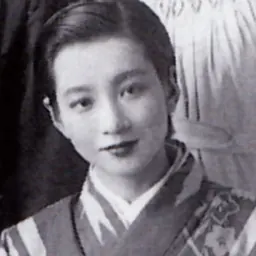

Related people
Same field, nearest in time

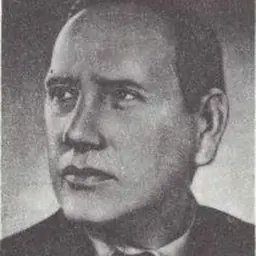




Contemporaries
People whose lives overlapped Midori Naka's



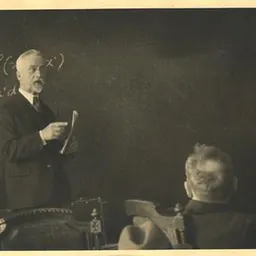
Frequently asked questions
Who was Midori Naka?
Japanese actress (1909–1945)
When was Midori Naka born?
Midori Naka was born on 19 June 1909 in Nihonbashi-ku.
When did Midori Naka die?
Midori Naka died on 24 August 1945 in Tokyo.
What was Midori Naka's occupation?
Midori Naka was an actor and actress.
What nationality was Midori Naka?
Midori Naka was Japanese.
Sources & further reading
Cite this page
APA: Biography.guide. (2026). Midori Naka. https://biography.guide/midori-naka/
MLA: "Midori Naka." Biography.guide, https://biography.guide/midori-naka/.
Chicago: "Midori Naka." Biography.guide. https://biography.guide/midori-naka/.
Data last updated: 2026-09-22 · Spot an error? Report a correction.
Page generated 2026-09-27 05:32 UTC