
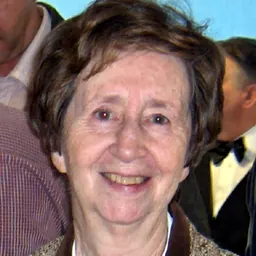
Michelle Monje
American neurologist and researcher
About Michelle Monje
Born 1978. Michelle Monje is an American neurologist, neuroscientist and university teacher, known for Diffuse intrinsic pontine glioma.
Michelle Monje-Deisseroth is a neuroscientist and neuro-oncologist. She is a professor of neurology at Stanford University and an investigator with the Howard Hughes Medical Institute. Her research program focuses at the intersection of neuroscience, immunology and brain cancer biology with an emphasis on neuron-glial interactions in health and oncological disease. In addition to her fundamental neuroscience work on brain development and plasticity, she is widely credited for pioneering the field of Cancer Neuroscience. She develops new treatments for brain cancers such as diffuse intrinsic pontine glioma and other diffuse midline gliomas.
Early life and education Monje wanted to be a physician from the age of five, when she was in kindergarten. She grew up in the San Francisco Bay Area and became interested in biology as a child. Monje was a figure skater during her childhood and taught figure skating to children with developmental disabilities whilst in Junior High. She was an undergraduate student at Vassar College. She completed her internship at Stanford before leaving to join Harvard Medical School as a medical resident in neurology. Monje worked in the Brigham and Women's Hospital as well as the Massachusetts General Hospital. She completed a fellowship at the Stanford University School of Medicine, where she was mentored by Philip A. Beachy, and was board certified in neurology in 2008 and in neuro-oncology in 2013. She looks at how the neural circuits responsible for cognitive and motor functions are developed, and how the microenvironment of a tumour impacts the transition of precursor cells to diseased cells. She studies brainstem tumours as a paradigm for paediatric gliogenesis. Monje works at Stanford University, where she has developed new treatments for brain cancer since 2011. She has extensively investigated Diffuse Intrinsic Pontine Glioma (DIPG), a cancer for which it is difficult to identify effective chemotherapy and impossible to remove surgically, as the tumour grows in the brainstem. In 2009 she grew the first laboratory cultures of DIPG from deceased donors, which allowed her and her team to monitor the cell's growth and test chemotherapy agents. The tumour tissue resources developed in Monje's laboratory are shared with researchers all around the world. Her lab discovered that neuronal activity similarly promotes the progression of malignant gliomas, driving glioma growth through both paracrine factors Together with her former mentee Humsa Venkatesh, Monje also discovered that small cell lung cancer brain metastases similarly form bona fide synapses with neurons and are driven by neuronal activity.
Monje has led several of her discoveries from basic molecular discoveries to clinical trials. Monje led a Phase 1 clinical trial of panobinostat, a drug which slows the growth of DIPG and has been shown to increase survival rates in mice. She has also leveraged engineered immune cells called chimeric antigen receptor T (CAR-T) cells to eradicate brain tumours. This work involved screening DIPG tumour cultures for surface molecules that could be targets for CAR-T cells. Monje found that GD2 is present on the surface of 80% of DIPG tumours. Over expression of the sugar molecule GD2 is caused by the H3K27M mutation, which drives the growth of tumour. Crystal Mackall developed CAR-T cells that attack the GD2. Working together, Monje and Mackall discovered that GD2-CAR T cells kill cultured DIPG cells which carry the H3K27M mutation. that has shown promise in early reports.
She was board certified by the American Board of Psychiatry and Neurology in Neurology in 2018. She was recognised by State senator Jerry Hill with a Certificate of Recognition in June 2019. Monje serves on the advisory board of Abbie's Army and ChadTough Defeat DIPG Foundation, non-profits that fight for a cure for DIPG.
Monje's work has led to a new recognition of the important roles that the nervous system plays in cancer and has been foundational for the new field of Cancer Neuroscience. a MacArthur Fellowship,
Awards and honors 2025 Member, National Academy of Sciences 2021 MacArthur Fellowship 2021 Member, National Academy of Medicine 2019 Presidential Early Career Award for Scientists and Engineers 2017 Neuro-Oncology Investigator Award, American Academy of Neurology
Selected publications
Gibson EM, Purger D, Mount CW, Goldstein AK, Lin GL, Inema I, Miller SE, Bieri G, Zuchero JB, Barres BA, Woo PJ, Vogel H, Monje M (2014) Neuronal activity promotes adaptive oligodendrogenesis and myelination in the mammalian brain. Science, 344 (6183):487; 344:1252304 PMID 24727982 Gibson E.M., Nagaraja S., Ocampo A, Tam L.T., Wood L.S., Pallegar P.N., Greene J.J., Geraghty A.C., Goldstein A.K., Ni. L., Woo P.J., Barres B.A., Liddelow S., Vogel H., Monje M. (2019) Methotrexate chemotherapy induces persistent tri-glial dysregulation that underlies chemotherapy-related cognitive impairment, Cell, 176 (1), 43–55. Geraghty A.C., Gibson E.M., Reem G., Greene J., Ocampo A., Goldstein A.K., Ni L., Yang T., Marton R.M., Pasca S.P., Greenberg M.E., Longo F.M., Monje M. (2019) Loss of adaptive myelination contributes to methotrexate chemotherapy-related cognitive impairment. Neuron, 103(2):250-265 Fernandez-Castaneda, A., Lu, P., Geraghty, A.C., Song, E., Lee, M.H., Wood, J., O'Dea, M.R., Dutton, S., Shamardani, K., Nwangwu, K., Mancusi R, Yalçın B, Taylor KR, Acosta-Alvarez L, Malacon K, Keough MB, Ni L, Woo PJ, Contreras-Esquivel D, Toland AMS, Gehlhausen JR, Klein J, Takahashi T, Silva J, Israelow B, Lucas C, Mao T, Peña-Hernández MA, Tabachnikova A, Homer RJ, Tabacof L, Tosto-Mancuso J, Breyman E, Kontorovich A, McCarthy D, Quezada M, Vogel H, Hefti MM, Perl DP, Liddelow S, Folkerth R, Putrino D, Nath A., Iwasaki A.*, Monje M.* (2022). Mild respiratory COVID can cause multi-lineage neural cell and myelin dysregulation. Cell. 185(14):2452-2468 10.1016/j.cell.2022.06.008. Taylor, KR, Barron T, Hui A, Spitzer A, Yalcin B, Ivec AE, Geraghty AC, Hartmann, Arzt M, Gillespie S, Ni L, Zhang H, Venkatesh HS, Du P, Mancusi R, Chau IJ, Ponnuswami A, Aziz-Bose R, Tirosh I, Suva ML, Monje M (2023) Glioma synapses recruit mechanisms of adaptive plasticity, Nature 623, 366–374 Barron, T., Yalcin, B., Su, M., Byun, Y.G., Gavish, A., Shamardani, K., Xu, H., Ni, L., Soni, N., Mehta, V., Maleki Jahan, S., Kim, Y.S., Taylor, K.R., Keough, M.B., Quezada, M.A., Geraghty, A.C., Mancusi, R., Vo, L.T., Castaneda, E.H., Woo, P.J., Petritsch, C.K., Vogel, H., Kaila, K., and Monje, M. (2025). GABAergic neuron-to-glioma synapses in diffuse midline gliomas. Nature. 639(8056): 1060-1068 Drexler R, Drinnenberg A, Gavish A, Yalçin B, Shamardani K, Rogers AE, Mancusi R, Trivedi V, Taylor KR, Kim YS, Woo PJ, Soni N, Su M, Ravel A, Tatlock E, Midler A, Wu SH, Ramakrishnan C, Chen R, Ayala-Sarmiento AE, Fernandez Pacheco DR, Siverts L, Daigle TL, Tasic B, Zeng H, Breunig JJ, Deisseroth K, Monje M. Cholinergic neuronal activity promotes diffuse midline glioma growth through muscarinic signaling. Cell. 2025 Aug 21;188(17):4640-4657.e30. doi: 10.1016/j.cell.2025.05.031. PMID 40541184. Savchuk S, Gentry KM, Wang W, Carleton E, Biagi-Junior CAO, Luthria K, Yalçın B, Ni L, Farnsworth HC, Davis RA, Drexler R, Melms JC, Liu Y, Acosta-Alvarez L, Hartmann GG, Pavarino EC, LaBelle J, Woo PJ, Toland AM, Qu F, Kim YS, Filbin MG, Krasnow MA, Ligon KL, Izar B, Sage J, Sabatini BL, Monje M*, Venkatesh HS* (2025). Neuronal-Activity Dependent Mechanisms of Small Cell Lung Cancer Pathogenesis. Nature 646(8087):1232-1242. doi: 10.1038/s41586-025-09492-z. PMID 40931074
Don’t just read it —
keep it.
Full-length biographies made to live with: read them, listen on the way to work, watch them tonight.
- E-book
- Audio
- Video
Instant download · yours to keep · every purchase keeps this site free
Important facts
more
Michelle L. Monje-Deisseroth, Michelle L Monje-Deisseroth, M. L. Monje-Deisseroth, M L Monje-Deisseroth, M. Monje-Deisseroth, M Monje-Deisseroth, Monje-Deisseroth, Monje-Deisseroth M, Monje-Deisseroth M., Monje-Deisseroth M. L., Monje-Deisseroth ML, Michelle L Monje, M. L. Monje, M L Monje, M. Monje, M Monje, Monje, Monje M, Monje M., Monje M. L., Monje MLFamily & relationships
People in Michelle Monje's life
Named in this biography and alive at the same time



Related people
Same field, nearest in time






Contemporaries
People whose lives overlapped Michelle Monje's





Frequently asked questions
Who is Michelle Monje?
American neurologist and researcher
When was Michelle Monje born?
Michelle Monje was born on 21 March 1978 in San Francisco Bay Area.
What is Michelle Monje's occupation?
Michelle Monje is a neurologist, neuroscientist and university teacher.
What is Michelle Monje known for?
Michelle Monje is known for Diffuse intrinsic pontine glioma.
What nationality is Michelle Monje?
Michelle Monje is American.
Sources & further reading
Cite this page
APA: Biography.guide. (2026). Michelle Monje. https://biography.guide/michelle-monje/
MLA: "Michelle Monje." Biography.guide, https://biography.guide/michelle-monje/.
Chicago: "Michelle Monje." Biography.guide. https://biography.guide/michelle-monje/.
Data last updated: 2026-09-25 · Spot an error? Report a correction.
Page generated 2026-09-27 05:12 UTC