
About Michał Rola-Żymierski
Lived 1890 – 1989 (aged 99). Michał Rola-Żymierski was a Polish military officer, politician and soldier.
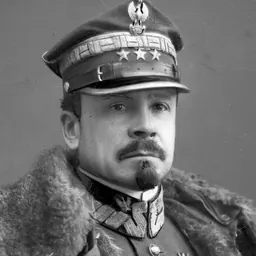
Michał Rola-Żymierski (; 4 September 189015 October 1989) was a Polish high-ranking Communist Party leader, communist military commander and NKVD secret agent. He was appointed as Marshal of Poland, and served in this position from 1945 until his death.
Early life Rola-Żymierski was born Michał Łyżwiński in Kraków under the Austrian Partition, to the family of railway clerk, Wojciech Łyżwiński. He joined the Zarzewie and later joined the Polish Rifle Squads. At the age of 20, he enrolled at the law faculty of the Jagiellonian University in 1910, but was drafted a year later.
Military career World War I
When World War I erupted in 1914, he joined the Polish Legions. He initially served as a company and battalion commander of the 1st Brigade. Żymierski fought in the Battle of Laski and Anielin and in the vicinity of the Dęblin Fortress, where on October 23, 1914 he was seriously wounded. In the summer of 1915, after his promotion to the rank of major, he served as commander of Polish Military Organisation. After the Oath Crisis of 1917, he retired from the Austro-Hungarian army with rank of lieutenant colonel and returned to Kraków, where he graduated from the Kraków Trading School. He later became the commander of the 2nd Infantry Regiment in the Polish Auxiliary Corps.
In February 1918, after the signing of Treaty of Brest, he was the initiator of the rebellion of 2nd Legion Brigade and its breakthrough through the front during the Battle of Rarańcza. Then he handed over the command of this formation to General Józef Haller. After the front had passed, he became the chief of staff of the Polish II Corps in Russia following his promotion to the rank of colonel. After the corps was disarmed by the Germans after the Battle of Kaniów in May 1918, he served in command positions in the Polish Military Organization in Russia. He was the commander of the 2nd Infantry Regiment in the 4th Polish Rifle Division.
Polish-Soviet war In 1918, he joined the reborn Polish Army. In March 1919, he was appointed commander of the Ciechanów Military District. In August 1919, in connection with the outbreak of the First Silesian Uprising, he became the head of the branch of the Supreme Command for the Silesian Uprising with the task of managing the insurgent action in Upper Silesia. During the Polish-Soviet War, he took over a section of the front near the Berezina River. He served as the commander of the 2nd Brigade and then the 2nd Legions Infantry Division. For his performance during this phase of the war, he was awarded the Virtuti Militari V class.
Post war
After the war, he was sent to Paris, where he graduated from École spéciale militaire de Saint-Cyr. He then completed an internship at the French General Staff. Upon his return, he was promoted to General. Żymierski served in Warsaw as the Deputy Chief of Administration of the Polish Army. Żymierski was appointed deputy head of the Army Administration for Armaments, where he was responsible for finances and purchases of military equipment at the Ministry of Military Affairs. "A very good officer of the General Staff in the higher commands, talented, very dutiful, very active, excellent educator of the officer corps, very good administrator, with great initiative."
During the 1926 coup d'état, he defended the democratically elected government of Stanisław Wojciechowski. After the coup, in 1927, the new sanacja regime of Marshal Józef Piłsudski charged him with bribery and embezzlement. Following an official investigation, he was court-martialled and demoted to private first class, expelled from the army and sentenced to five years in prison. Karol Popiel later claimed that accusing Żymierski of corruption was a kind of political revenge on the part of Józef Piłsudski and was supposed to indirectly discredit Władysław Sikorski.
Upon his release in 1931, Żymierski went to France. He was recruited by Soviet intelligence and became a well-paid secret agent delivering information about the Franco-Polish alliance. He joined the Communist Party of Poland. His secret engagement with Moscow was discontinued when Stalin ordered the dissolution of the Polish Communist Party (KPP) in 1938 during the Great Purge.
Under the pseudonym "Rola", he engaged in the Soviet dealings with Nazi German Gestapo secret police. In 1943, by Soviet executive order, he was named the deputy commander of the Communist and Soviet-backed Gwardia Ludowa, and from 1944, the commander of Armia Ludowa. He was promoted by the Communist-backed Polish Committee of National Liberation back to the rank of General and became the commander-in-chief of the Polish Army fighting alongside the Soviet Union (the Polish Armed Forces in the East). He was Minister of Defence in the Provisional Government of the Republic of Poland (Rząd Tymczasowy Rzeczypospolitej Polskiej, January–June 1945). On 3 May 1945, he was promoted to the rank of Marshal of Poland.
From 1946, Żymierski served as head of the Commission of State Security. He was responsible for repressions against the former resistance fighters, members of the Polish 2nd Corps and non-communist politicians, as well as for the deployment of the Polish Army against Poland's Freedom and Independence fighters; and the roundup of Ukrainian families in Operation Vistula against the OUN-UPA. Until 1949, he also held the post of Minister of National Defence. In this year, he was replaced by the Polish-born Soviet Marshal, Konstantin Rokossovsky, who received the rank of Marshal of Poland and held his office until 1956. As a consequence of Stalinist purges organised in Poland by Bolesław Bierut, Żymierski was arrested in 1952. However, he was released in 1955 without any charges. He was rehabilitated by the Polish government in 1956.
After the end of Stalinism in Poland, he held various posts, including deputy head of the National Bank of Poland (between 1956 and 1967) and the honorary head of the ZBoWiD (Society of Fighters for Freedom and Democracy, an organisation of Polish war veterans). He was also a member of the Polish United Workers' Party and, after Wojciech Jaruzelski's introduction of martial law in Poland, Żymierski also became a member of its Central Committee and of the Front of National Unity.
He died in Warsaw on 15 October 1989 and was the last person to hold the rank of Marshal of Poland. He was buried with full military honors at Powązki Military Cemetery in Warsaw. Żymierski's grave was desecrated twice by unknown perpetrators.
Promotions
Honours and awards
Poland
USSR
Other countries
Honorary Citizen Żymierski received the title of 'Honorary Citizen' of cities Bielsko-Biała, Kraków, Włocławek, Płock, Chełm, Toruń, Kłodzko, Bydgoszcz, Łęczyca and Sosnowiec. Following the fall of communist rule in Poland on 1989, city councils of Bielsko-Biała, Kraków, Włocławek, Płock and Chełm passed resolutions that declared the withdrawal of Żymierski's honorary citizenship because of his role in implementing the communist regime in Poland.
Don’t just read it —
keep it.
Full-length biographies made to live with: read them, listen on the way to work, watch them tonight.
- E-book
- Audio
- Video
Instant download · yours to keep · every purchase keeps this site free
Important facts
People in Michał Rola-Żymierski's life
Named in this biography and alive at the same time
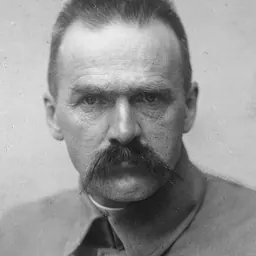

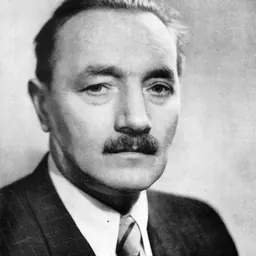

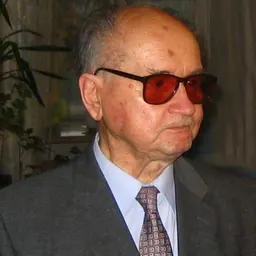
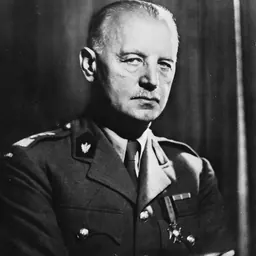
Related people
Same field, nearest in time



Contemporaries
People whose lives overlapped Michał Rola-Żymierski's


Frequently asked questions
Who was Michał Rola-Żymierski?
Marshal of Poland (1890-1989)
When was Michał Rola-Żymierski born?
Michał Rola-Żymierski was born on 4 September 1890 in Kraków.
When did Michał Rola-Żymierski die?
Michał Rola-Żymierski died on 15 October 1989 in Warsaw.
What was Michał Rola-Żymierski's occupation?
Michał Rola-Żymierski was a military officer, politician and soldier.
What nationality was Michał Rola-Żymierski?
Michał Rola-Żymierski was Polish.
Sources & further reading
· Wikipedia: Michał Rola-Żymierski
· DBpedia: Michał Rola-Żymierski
Cite this page
APA: Biography.guide. (2026). Michał Rola-Żymierski. https://biography.guide/michal-rola-zymierski/
MLA: "Michał Rola-Żymierski." Biography.guide, https://biography.guide/michal-rola-zymierski/.
Chicago: "Michał Rola-Żymierski." Biography.guide. https://biography.guide/michal-rola-zymierski/.
Data last updated: 2026-09-20 · Spot an error? Report a correction.
Page generated 2026-09-27 05:33 UTC